
Japan tests AI as ageing workforce strains economy
Tokyo infrastructure operators and AI start-ups are part of Japan’s push to use automation against labour shortages and revive tech competitiveness.
By Daniel Okafor · Business Editor
3 min read
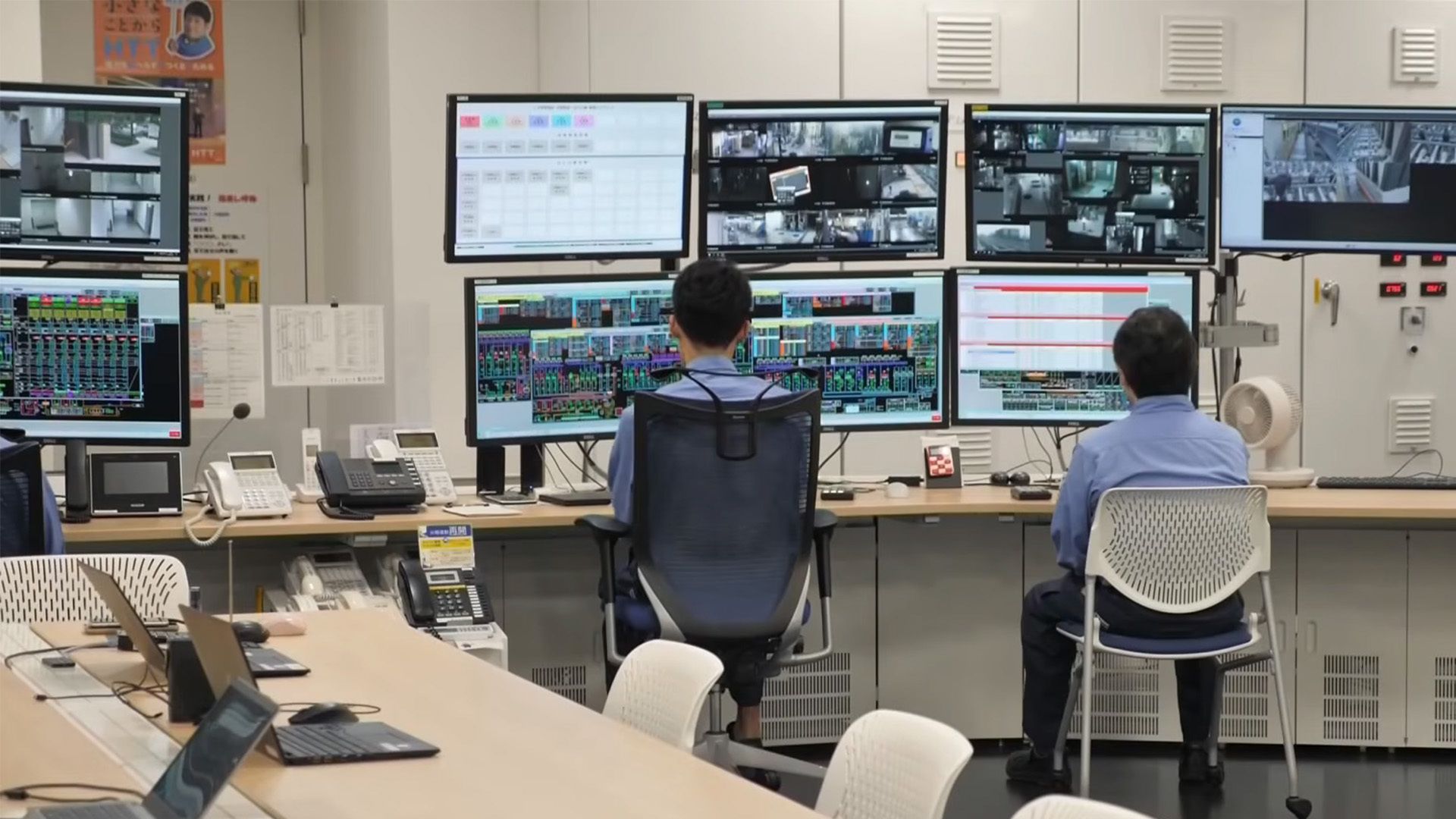
Japan is testing artificial intelligence in key infrastructure as companies and policymakers seek ways to ease labour shortages tied to an ageing population, Al Jazeera reported. The effort matters because it connects day-to-day plant operations with a broader national push to keep productivity up as experienced workers retire.
One trial is under way beneath Tokyo’s Otemachi district, where Marunouchi Heat Supply Company runs a 30km network of heating and cooling pipes serving offices, commercial buildings and transport facilities, according to Al Jazeera. The company is using AI to help operate that system and aims for more automated operations by 2027.
The system, called PlantPilot, was developed with Tokyo-based Preferred Networks, Al Jazeera reported. It draws on past operating records and the know-how of veteran engineers, then uses sensor readings and forecasts to recommend ways to run the network more efficiently.
Preserving skills as workers retire
Hidetaka Yagi, assistant general manager in Marunouchi’s development and engineering department, told Al Jazeera that the company’s central problem is finding people with the right technical skills. He said retirements create a risk that hard-won operating knowledge will disappear, and that AI can help capture that expertise for younger workers.
Al Jazeera reported that Japan’s labour shortages reach across manufacturing, logistics, energy and healthcare. In that setting, Japanese companies are using AI as support for workers who remain in the system, with engineers still part of decision-making rather than being pushed aside.
The Marunouchi project shows that approach in practice, according to Al Jazeera. The company is using AI to process large amounts of plant data and speed up decisions while keeping human judgment in the loop.
Start-ups seek a different route
Japan’s AI push also reflects a bid to regain ground in the global technology race, where Al Jazeera reported the country has lagged behind the United States and China in producing high-profile digital companies. The US has about 690 unicorn start-ups, China has about 160 and Japan has about eight, according to figures cited by Al Jazeera.
Sakana AI, a Tokyo-based artificial intelligence start-up, is among the companies trying to change that picture, Al Jazeera reported. The company grew from about 50 employees to 150 in a year and has moved into commercial products including Sakana Chat, Sakana Marlin and Sakana Fugu.
Ren Ito, chairman of Sakana AI, told Al Jazeera that Japan should not try to mirror Silicon Valley’s model. He said Japan needs its own ideas, stronger recruitment of researchers and new ways to build innovation.
Ito also told Al Jazeera that AI leadership may not depend only on building the biggest models with the largest budgets. He said Japan’s opportunity lies in applying AI to concrete problems, rather than trying to create a domestic version of OpenAI.
Government money and research pressure
The Japanese government has made AI part of its economic strategy, with plans to mobilise about 370 trillion yen, or $2.3 trillion, in public and private investment by 2040, Al Jazeera reported. The money is aimed at artificial intelligence, semiconductors and advanced research.
Al Jazeera reported that funding alone may not restore Japan’s technology influence. The country also faces pressure to improve its research base, compete for talent and strengthen universities and research institutions.
Japan’s AI strategy is shaped by both demographic pressure and industrial ambition, according to Al Jazeera. AI is not presented as a complete answer to the country’s economic strain, but it is becoming one of the tools Japan is using to remain productive and competitive.
This story draws on original reporting from Al Jazeera.