
India launches first hydrogen train on Haryana route
The domestically built NaMo Green Rail will run daily between Jind and Sonipat as India seeks cleaner options for parts of its rail network.
By Sofia Marchetti · World Affairs Correspondent
2 min read
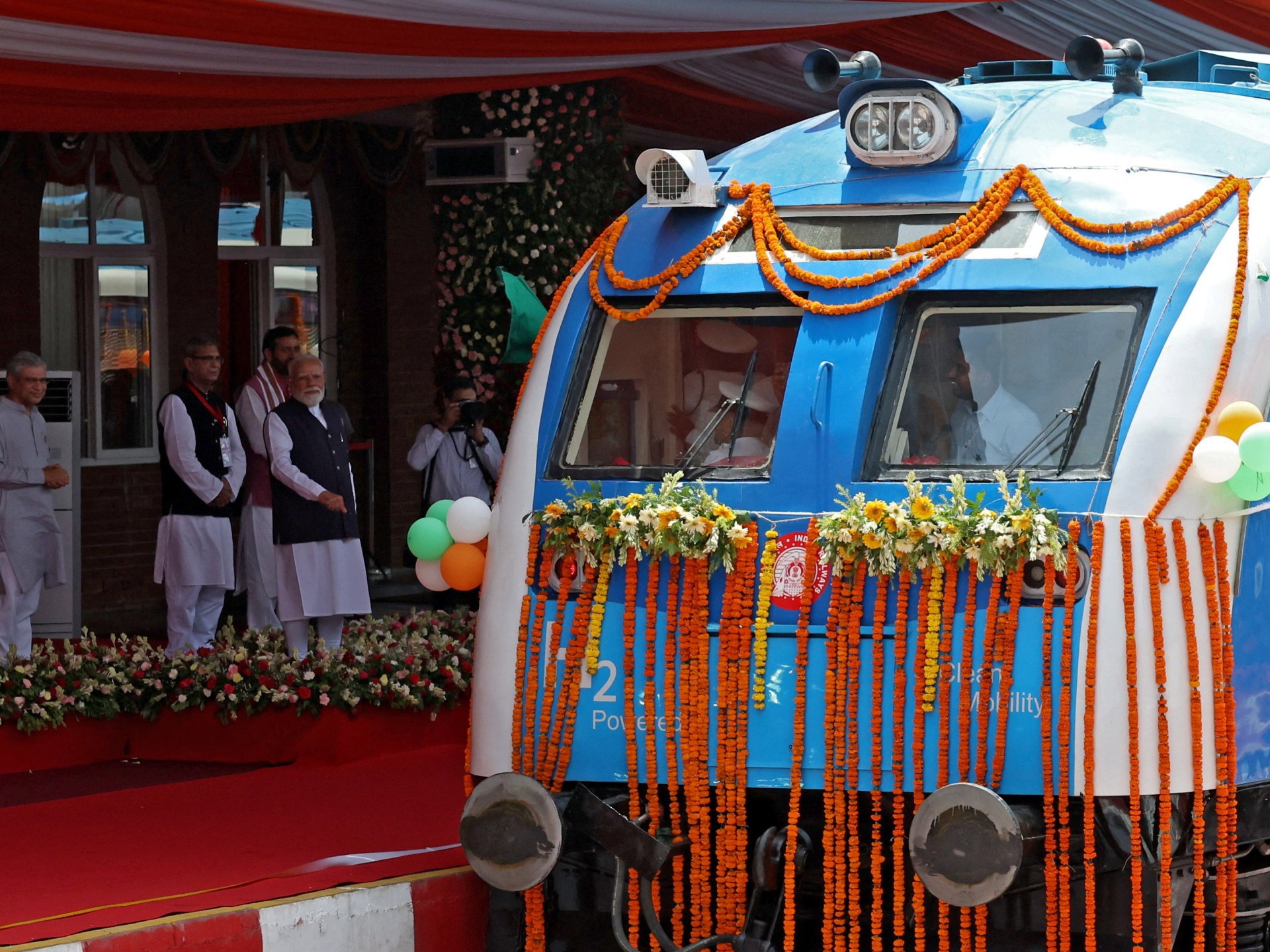
India has put its first domestically built hydrogen-powered train into service, adding a zero-emission option to one of the world’s largest rail systems. Reuters and The Associated Press reported that Prime Minister Narendra Modi inaugurated the train on Friday as the government works to expand clean energy use and reduce rail emissions.
The train, called NaMo Green Rail, is scheduled to operate on a 90km route between Jind and Sonipat in the northern state of Haryana, according to Reuters and AP. The agencies reported that it will make two round trips a day.
Modi flagged off the train ahead of its first run and described the launch as an important moment for India’s push toward self-reliance and sustainability, Reuters and AP reported. The name includes an abbreviation of the prime minister’s first and last names.
A new role for hydrogen on the rails
The 10-coach train can carry about 2,600 seated passengers and reach speeds of up to 75km/h, according to Reuters and AP. The train was designed, engineered and built in India.
Hydrogen-powered trains emit heat and water vapour while operating, Reuters and AP reported, making them a cleaner replacement for diesel trains on suitable routes. The technology remains limited globally, with India joining a small group of countries that have deployed hydrogen trains in rail service.
Japan, China, the United States and Germany are among the countries operating hydrogen-powered trains, according to Reuters and AP. Germany launched what was described as the world’s first hydrogen-powered train fleet in 2022.
Part of India’s emissions target
India has electrified almost all of its 70,000km railway network, Reuters and AP reported. Hydrogen trains could still be used in places where electrification is difficult or unavailable.
The launch fits into India’s broader effort to increase hydrogen use and cut carbon emissions, according to Reuters and AP. The government has set a goal of making Indian Railways net-zero by 2030.
Modi has also promoted other clean-energy efforts, including renewable power expansion and the development of India’s nuclear energy programme, Reuters and AP reported. The agencies noted that India continues to face challenges in putting effective climate policy into practice.
The Haryana service gives India a working hydrogen rail project as it tests where the technology can support its broader transport and energy goals. Reuters and AP reported that the rollout marks another step in the country’s shift toward cleaner infrastructure.
This story draws on original reporting from Al Jazeera.