
G7 leaders take up Ukraine and Middle East crises at France summit
Leaders meeting in Evian-les-Bains face talks on Ukraine, Iran and the Strait of Hormuz, with Volodymyr Zelenskyy joining as a guest.
By James Whitfield · Staff Writer
3 min read
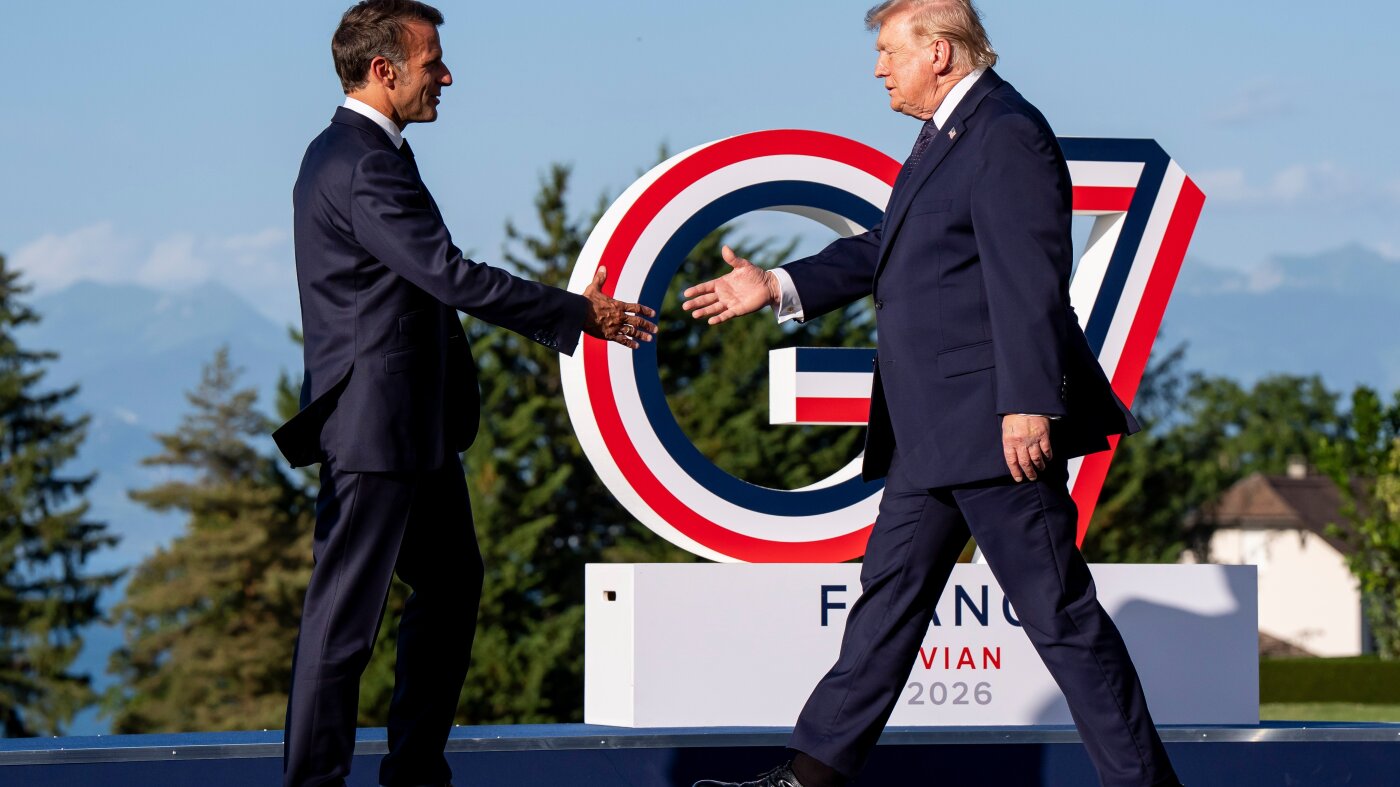
Group of Seven leaders opened their first full day of summit talks in France with Ukraine and the Middle East at the center of the agenda, according to The Associated Press. The meetings in Evian-les-Bains come as U.S. President Donald Trump says Washington has reached an agreement to end its 3 1/2-month war with Iran.
Ukrainian President Volodymyr Zelenskyy is attending at the invitation of French President Emmanuel Macron, the AP reported. The war in Ukraine has received less attention in recent weeks as the conflict involving Iran drew focus from Western capitals.
Trump said Monday during a meeting with Macron that he had spoken Sunday with both Zelenskyy and Russian President Vladimir Putin. “Now that this (Iran) is finished, we’re going to be focusing on that,” Trump said, according to the AP.
Macron presses for Ukraine support
Macron said he would try to persuade Trump to keep backing Ukraine and to put more pressure on Russia to reach a peace deal, the AP reported. Before the summit began, Russia launched hundreds of drones and dozens of missiles at major Ukrainian cities, killing 11 people and setting fire to a religious landmark, according to the AP.
The calls between Trump, Zelenskyy and Putin suggested that U.S. diplomatic efforts on the war have continued, the AP reported. Macron said on French television that the proper format for talks would include Ukraine and Russia at the table, with both Europeans and Americans present.
During his campaign to return to office, Trump said he could end the Ukraine war within 24 hours of taking power, the AP reported. He has since said the effort has been harder than he expected.
Ukraine on Monday formally began European Union membership negotiations, according to the AP. The process is expected to require years of political changes while Kyiv continues to fight Russia’s invasion. Ukraine views EU membership as a security guarantee after the war, while NATO membership remains blocked by the Trump administration and viewed cautiously by others as the fighting continues, the AP reported.
Middle East talks focus on stability
Tuesday’s summit schedule also includes a working session on ending crises and supporting stability in the Middle East, according to the AP. Leaders from Egypt, Qatar and the United Arab Emirates are expected to join that discussion.
Trump’s Iran policy has caused friction with European leaders, the AP reported. Macron, British Prime Minister Keir Starmer, German Chancellor Friedrich Merz and Italian Prime Minister Giorgia Meloni objected to Trump’s decision to go to war without consulting them, and Trump threatened reprisals including reductions in U.S. troop levels in their countries.
France, Germany, Italy, the United Kingdom and Canada issued a joint statement before the G7 meeting congratulating the United States, Iran and mediators on what they called a “diplomatic breakthrough,” the AP reported. The leaders said detailed negotiations were needed and urged quick implementation so tanker traffic can resume through the Strait of Hormuz.
Macron said France and other Western partners were ready to act quickly to help reopen the strait peacefully, according to the AP. France and Britain have supported a maritime security mission there when conditions permit.
Trump appeared to play down the need for a large international military presence. “I don’t think we’re gonna need much help,” he told Macron, while saying that “a ship or two” from several countries could be useful, according to the AP.
The G7 consists of France, the United States, Canada, Germany, Italy, Japan and the United Kingdom. The AP reported that Brazil, India, Kenya and South Korea were also invited to take part in some sessions as partner countries.
This story draws on original reporting from NPR.