
FIFA World Cup stakes plan draws UEFA backlash
FIFA wants outside investors to buy minority stakes in a new events arm, triggering criticism from UEFA, CONCACAF and the UK prime minister.
By Sofia Marchetti · World Affairs Correspondent
3 min read
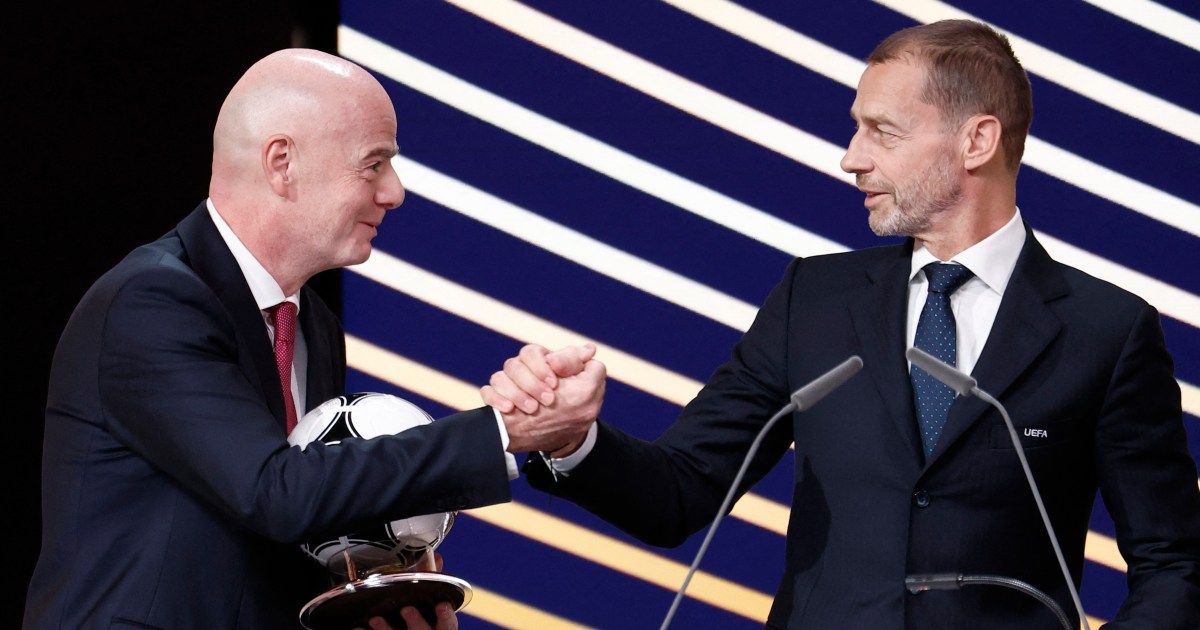
FIFA’s plan to sell FIFA World Cup stakes to private investors has opened a new fight over who should control football’s most valuable competition. FIFA says the proposal would raise money for the sport, while UEFA and other critics say it risks turning a public sporting institution into an asset for investors.
FIFA said Tuesday it wants to create a commercial subsidiary called FIFA Forward Enterprise, or FFE, valued at $20bn to run the World Cup and other events. Under the proposal, FIFA would keep a majority holding while selling minority stakes to outside investors to raise as much as $4.2bn.
Why does FIFA want to sell World Cup stakes?
FIFA says the World Cup is its main source of funding for football development, including grassroots programmes, administration and major international tournaments. The governing body says outside investment would help increase the money available for the game worldwide.
FIFA President Gianni Infantino said in a statement that football’s popularity has created major commercial value in parts of the sport. He said FIFA’s role is to ensure football grows in “every corner of the world” through sustainable and inclusive development.
The proposal comes after the 48-team 2026 World Cup in the United States, Canada and Mexico, where FIFA faced criticism over ticket prices, transport costs and other issues. Critics said many ordinary supporters were being priced out of the tournament, while FIFA defended the World Cup as essential to funding the global game.
How would FIFA Forward Enterprise work?
FIFA says FFE would handle commercial rights for the World Cup and other events while the governing body retained control of football governance, match calendars, competitions, regulations and sporting decisions. Minority investors would buy into the events business, not take over FIFA itself.
The model resembles ownership structures used in other sports competitions, where investors buy stakes in teams or commercial arms. The Indian Premier League in cricket is one example cited in the debate; Al Jazeera reported that the IPL’s business value rose more than 11 percent this year to $20.6bn.
FIFA said Thrive Eternal, a US venture capital firm, has been proposed to lead the investor group. The firm was founded by Joshua Kushner, brother of Jared Kushner, who is married to US President Donald Trump’s daughter.
Who is opposing the plan?
UEFA sharply criticised the proposal and said football’s governance and identity should not be traded. The European governing body said the plan crossed a line and questioned the lack of transparency over who would benefit financially.
UK Prime Minister Andy Burnham also rejected the idea in a post on X, saying football belongs to supporters rather than investors. He said the World Cup was not a product and should not be sold in any form.
CONCACAF said Wednesday it had not been informed about FIFA’s proposed sale of equity to outside investors. The North and Central American and Caribbean confederation said it was “deeply concerned” about what it described as a lack of due process.
What happens next?
Any change would need approval from FIFA’s 211-member national associations. UEFA accounts for 55 of those members and is expected to hold an emergency meeting to discuss the proposal.
One possible UEFA response, if FIFA pushes ahead, would be a boycott of FIFA competitions, according to Al Jazeera. Europe holds significant competitive weight: European teams have won six of the last eight World Cups, with Argentina and Brazil the only non-European winners in that span.
This story draws on original reporting from Al Jazeera.