
China’s LineShine tops global supercomputer ranking
The Shenzhen-based system passed the US El Capitan machine, giving China its first TOP500 leader since 2017.
By Daniel Okafor · Business Editor
3 min read
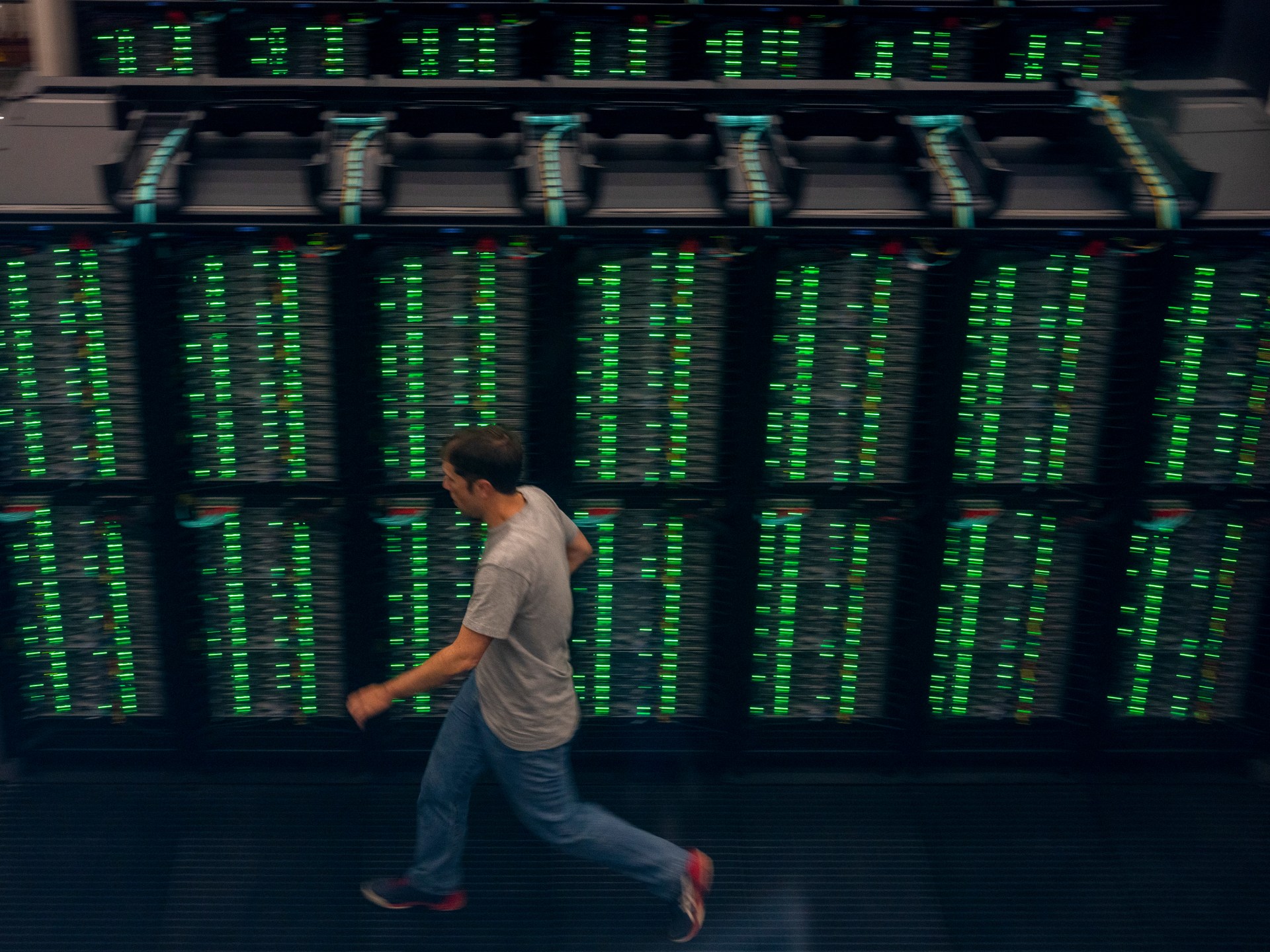
China’s LineShine has taken first place on the TOP500 ranking of the world’s fastest supercomputers, according to the list announced Tuesday in Hamburg, Germany. The result puts a Chinese system ahead of the United States at a time when the two countries are competing hard over advanced computing and artificial intelligence.
TOP500 said LineShine, housed at the National Supercomputing Centre in Shenzhen, reached 2.198 exaflops. That means it can carry out more than 2 quintillion calculations a second, Al Jazeera reported.
The new ranking ended the run of El Capitan, the US system based at Lawrence Livermore National Laboratory in California. Al Jazeera reported that El Capitan had held the top spot since November 2024.
LineShine leads by 20 percent
LineShine’s measured performance was about 20 percent higher than El Capitan’s, according to TOP500 figures cited by Al Jazeera. It is the first Chinese system to lead the list since Sunway TaihuLight ranked No. 1 in 2017.
El Capitan placed second in the latest ranking. Frontier, at Oak Ridge National Laboratory in Tennessee, ranked third, followed by Aurora at Argonne National Laboratory in Illinois and Jupiter at the Jülich Supercomputing Centre in Germany, according to TOP500.
Al Jazeera reported that systems in the top 20 also came from the United Kingdom, Japan, South Korea, Italy, the Netherlands and Switzerland. The list remains one of the best-known measures of high-performance computing, though its place in the AI era is more contested.
A CPU-only system at exascale
LineShine stands out because it runs on general-purpose central processing units, according to TOP500. Al Jazeera reported that other leading supercomputers often rely on graphics processing units, which are better suited to many complex workloads, including the AI models behind systems such as ChatGPT and Claude.
TOP500 said LineShine is the only CPU-only system to exceed 2 exaflops. That design makes its result notable even beyond the change at the top of the ranking.
The TOP500 project has published rankings twice a year since 1993, when computer scientists Erich Strohmaier and Hans Meuer began compiling global supercomputing statistics ahead of a conference, according to Al Jazeera. The list uses the LINPACK Benchmark, which measures how quickly a system solves a dense set of linear equations.
AI race shapes the backdrop
Al Jazeera reported that some experts view TOP500 as less central than it once was because AI development now depends heavily on systems built by companies as well as government and academic labs. Microsoft and Amazon are among the corporate technology firms active in AI computing, while TOP500 mainly includes systems submitted by participating institutions.
The ranking comes amid a broader contest between Beijing and Washington over advanced technology. Al Jazeera reported that both governments have used sanctions and export controls as they try to limit each other’s progress in areas such as AI.
Stanford University’s 2026 AI Index Report, released in April, said China had “effectively closed” the performance gap with the United States in AI models. The report found that the US still produces more leading AI models, while China leads in patents and industrial robot installations, according to Al Jazeera.
This story draws on original reporting from Al Jazeera.