
Andy Burnham’s Manchester record frames his likely rise to No. 10
The Greater Manchester mayor is widely expected to replace Keir Starmer, bringing a northern Labour pitch shaped by class, devolution and city growth.
By James Whitfield · Staff Writer
4 min read
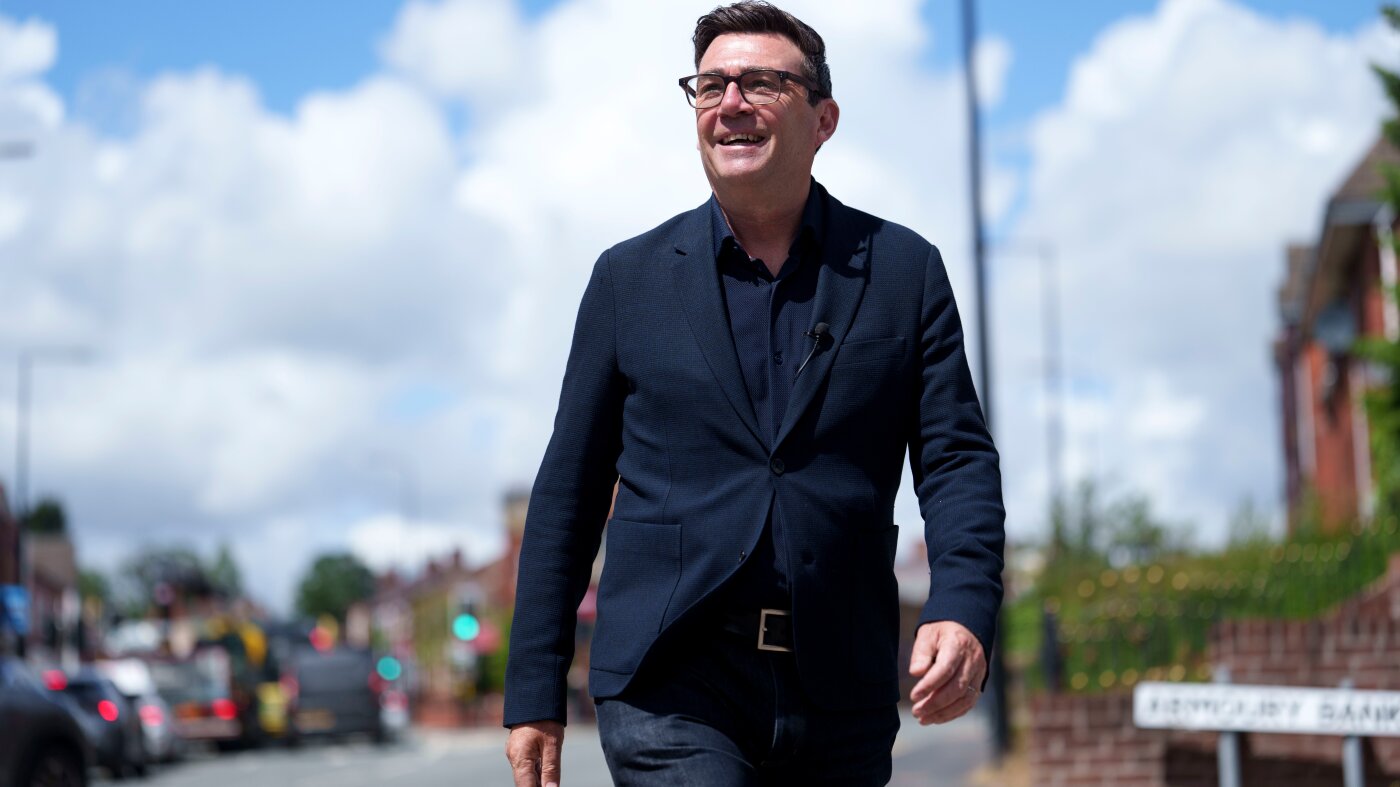
Andy Burnham is widely expected to become Britain’s next Labour leader and prime minister, NPR reported, putting a northern English politician with a working-class pitch on the edge of national power. His record as Greater Manchester mayor has made him a test case for whether city-led growth and devolution can be turned into a national program.
Burnham, 56, was born near Liverpool to a telephone engineer and a receptionist, according to NPR. He grew up between Liverpool and Manchester before studying English literature at Cambridge, where professor John Mullan told The Times of London that Burnham stood out for wearing a soccer jersey in a college setting where that was unusual.
Mullan recalled Burnham as absorbed by soccer and Shakespeare, and said he dated Marie-France van Heel, who later became his wife, according to The Times. NPR reported that the public image Burnham later built in politics drew heavily on the same northern, working-class identity.
Hillsborough shaped his early national profile
Burnham entered Parliament at 31 as a Labour lawmaker for a northern constituency, NPR reported. Under Prime Minister Gordon Brown, he served as culture, media and sport secretary, a role that put him before grieving Liverpool families in 2009 on the 20th anniversary of the Hillsborough disaster.
The 1989 stadium crush killed nearly 100 soccer fans and was the deadliest sports accident in British history, according to NPR. Many survivors and families believed officials had failed to investigate properly, while victims had been stereotyped as hooligans.
At the Liverpool memorial, Burnham was heckled and abandoned his prepared speech as the crowd demanded justice, NPR reported. Charlotte Wildman, a University of Manchester historian who studies the working class, told NPR that Burnham was among the first politicians to listen seriously to the families.
Burnham later opened a government inquiry that found police failures, rather than the fans, caused the disaster, according to NPR. Wildman said the episode helped challenge entrenched portrayals of northern working-class men as violent or criminal.
Manchester became his political base
Burnham twice ran unsuccessfully for Labour leader while in Parliament, NPR reported, including a 2015 campaign in which Keir Starmer nominated him. He left Parliament after 16 years and was elected mayor of Greater Manchester in 2017.
As mayor, Burnham inherited a city already undergoing redevelopment and pushed further, according to NPR. Wildman told NPR that Manchester’s regeneration was partly about changing a negative image tied to urban decline.
NPR reported that Burnham took control of city buses and persuaded the central government to give cities such as Manchester more authority over areas including education and housing. Greater Manchester now has one of the fastest-growing municipal economies in the United Kingdom, according to the Greater Manchester Combined Authority.
Burnham has promoted his approach as “Manchesterism,” a model he says can spread growth beyond London. In a June 29 policy speech cited by Reuters, he called for “good growth in every postcode” and said he would shift power toward cities and regions, including by opening a Downing Street branch in northern England.
NPR reported that Burnham has also promised lower tax rates for retail businesses, the largest public housing program since World War II and welfare cuts he describes as fair and lasting. Rose Marley, chief executive of Co-operatives UK and a former Burnham adviser, told NPR that she sees “Manchesterism” as collective action and an end to neoliberalism.
Covid confrontation raised his profile
Burnham became a wider national figure during the pandemic, when Manchester faced tighter restrictions than many other places under the U.K. government’s local lockdown system, NPR reported. In October 2020, an aide handed him news of another lockdown during a live televised news conference, prompting him to accuse the central government of mishandling the crisis and forgetting lower-paid workers.
Joshi Herrmann, founder of the Manchester news site The Mill, told NPR that the moment helped Burnham present himself as a different kind of British politician. Herrmann said he doubts Burnham would now be heading toward Downing Street without that confrontation.
NPR reported that Burnham remains one of Britain’s most popular politicians, citing YouGov. Herrmann also warned that national office will bring problems beyond a mayor’s reach, including weak growth, high energy costs, defense spending pressure linked to Russia’s war in Ukraine and dealings with Donald Trump.
This story draws on original reporting from NPR.