
Mouse study challenges chromosome-length rule for genetic crossovers
Cornell-led research finds sex-specific mechanisms shape DNA exchange during egg and sperm formation in mice.
By Tom Brennan · Health & Medicine Correspondent
3 min read
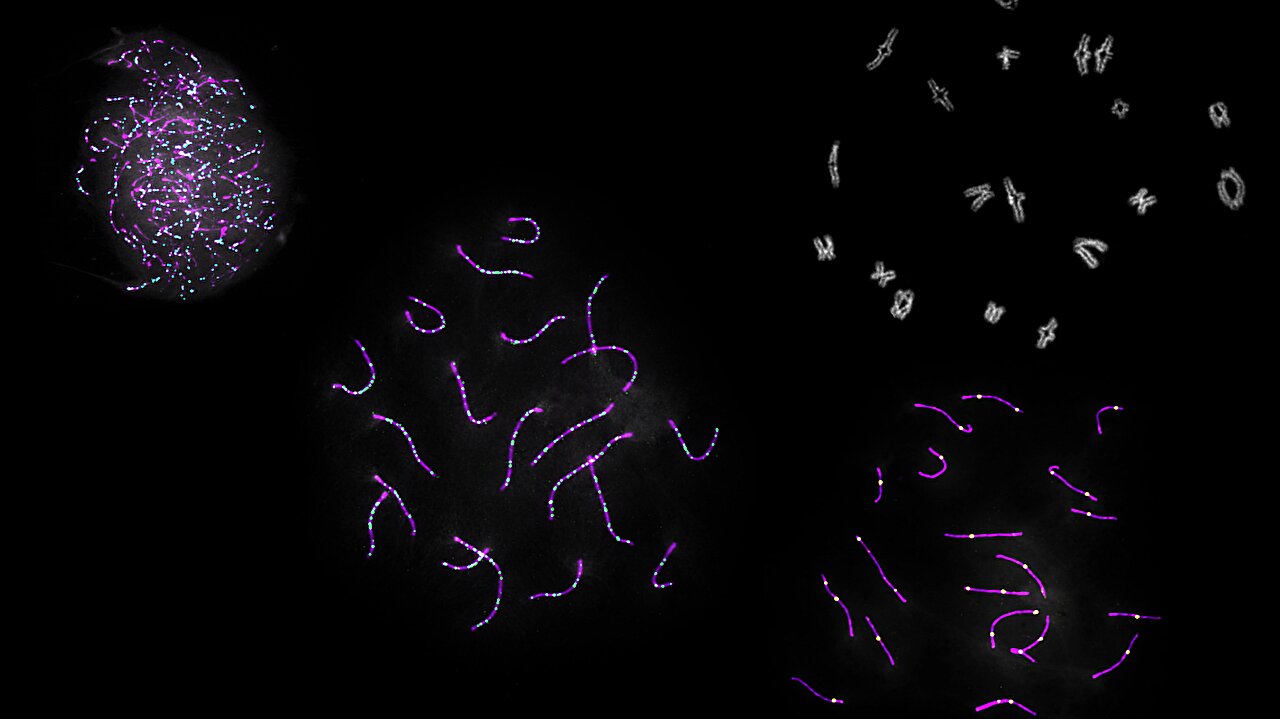
A Cornell-led study reports that chromosome length alone cannot explain how often male and female mice exchange DNA while making eggs and sperm. The findings, published in Molecular Biology and Evolution, may help researchers study crossover errors that Cornell geneticist Paula Cohen said are linked to infertility, miscarriage and chromosome disorders.
The work focused on meiosis, the cell division process that produces eggs and sperm. During meiosis, matched chromosomes trade segments of DNA through crossovers, a process the study says promotes genetic variation and helps chromosomes separate properly into reproductive cells.
Scientists have long treated chromosome length as a major guide to crossover patterns, according to the Cornell report. Longer chromosome structures were expected to carry more crossovers, helping explain differences seen between males and females.
Mouse strain tested the old model
Tegan Horan, a research associate in Cohen’s lab and lead author of the study, led the analysis of five genetically diverse mouse strains, according to Cornell University. The team compared males and females across several stages of recombination, measuring chromosome structure, DNA repair activity and the formation of crossovers.
One strain, called PWD, did not fit the length-based model, the researchers reported. In that strain, male mice produced more crossovers than females even though their chromosome structures were shorter.
The team concluded that the difference could not be explained by chromosome size alone. According to the study, males and females varied in how efficiently early DNA repair steps became mature crossovers, and they also showed sex-specific differences in the molecular routes that control where crossovers form.
Horan said the PWD strain showed that another force was shaping the process because males were placing more crossovers on shorter chromosome structures despite normal limits on crossover formation, according to Cornell.
Relevance to chromosome errors
The study also examined a less common class of crossovers, according to the researchers. Although that group represents only a small share of crossover events, the team found it helps ensure each chromosome pair receives at least one crossover.
That safeguard matters because chromosome pairs that fail to separate correctly can produce aneuploidy, a condition in which cells carry the wrong number of chromosomes, Cohen said. Cohen said aneuploidy is a leading cause of infertility, miscarriage and genetic disorders.
Cohen also said the processes studied in mice are broadly similar across mammals, while humans show much higher error rates. According to Cornell, studies estimate that 30% to 70% of human eggs may have the wrong number of chromosomes because of mistakes in crossover formation or regulation.
Many affected eggs are not fertilized, Cohen said, while some can be involved in miscarriages or chromosomal conditions such as Down syndrome. She said mouse studies are needed before researchers can better understand why crossover-related errors are so common in human females.
Horan said the results show meiosis does not follow one universal pattern across sex and genetic background, according to Cornell. The study reports that the same molecular machinery can be used differently depending on biological context.
The paper, “Molecular assessment of recombination processing across genetically diverse mouse strains reveals sexually dimorphic determinants of crossover distribution beyond chromosome length,” was published in Molecular Biology and Evolution.
This story draws on original reporting from Phys.org.