
T. rex auction highlights tension between fossil sales and science
Sotheby’s opened bidding on a 67-million-year-old T. rex expected to sell for up to $30 million, raising concerns over private fossil ownership.
By Hana Yoshida · Markets Reporter
2 min read
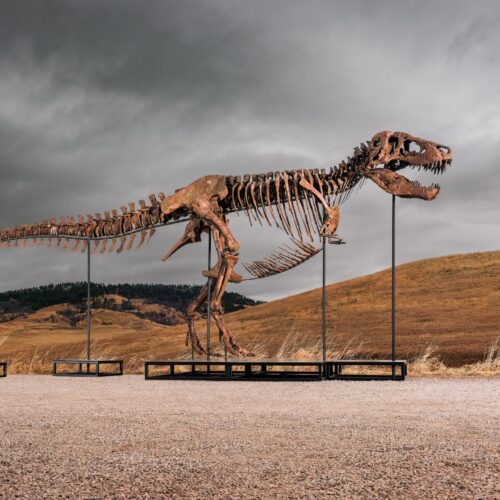
Sotheby’s opened live bidding July 14 on a group of fossils led by a rare Tyrannosaurus rex skeleton, a sale that could put a major dinosaur specimen into private hands. Paleontologists cited in coverage of the auction say the growing role of wealthy collectors and auction-house promotion can remove important fossils from scientific study.
The T. rex, known as Gus, is listed as lot 20 and is expected by Sotheby’s to sell for as much as $30 million. The auction house says the buyer could be either a public museum or a private collector, with the skeleton going to whoever places the top bid.
Sotheby’s describes Gus as one of the largest and most complete T. rex specimens found. According to the auction listing, the dinosaur lived about 67 million years ago and was discovered on a ranch in South Dakota.
The auction house says the specimen includes 183 fossil bone elements and is about 61% complete when measured by bone count. The missing pieces have been filled in with replicas, and the fossil bones have been mounted on a custom steel frame.
The finished display presents the animal in a running pose with its jaws open. Sotheby’s is marketing the skeleton as the centerpiece of a broader fossil sale.
Private sales draw scrutiny
The sale has renewed a long-running dispute over commercial fossil auctions. Paleontologists say fossils bought as prestige objects can become unavailable to researchers, limiting future study of material that may contain evidence about extinct animals and ancient environments.
Private collectors have become more visible in fossil purchases, according to paleontologists cited in the report. They argue that auction houses help drive that shift by building public attention around rare specimens and treating them as high-end collectibles.
The concern is most acute for scientifically notable fossils such as a large T. rex. If a specimen is bought by a museum, researchers may be able to study it and the public may eventually see it; if it enters a private collection, access depends on the owner.
Sotheby’s description emphasizes Gus’s size, completeness and display quality. Scientists’ objections center on what happens after the hammer falls: whether the skeleton remains available for research or becomes a luxury asset outside the reach of paleontology.
This story draws on original reporting from Ars Technica.