
States test 3D printer controls in fight over ghost guns
New York and California are pushing firearm-detection software for 3D printers, raising enforcement hopes and surveillance fears.
By James Whitfield · Staff Writer
4 min read
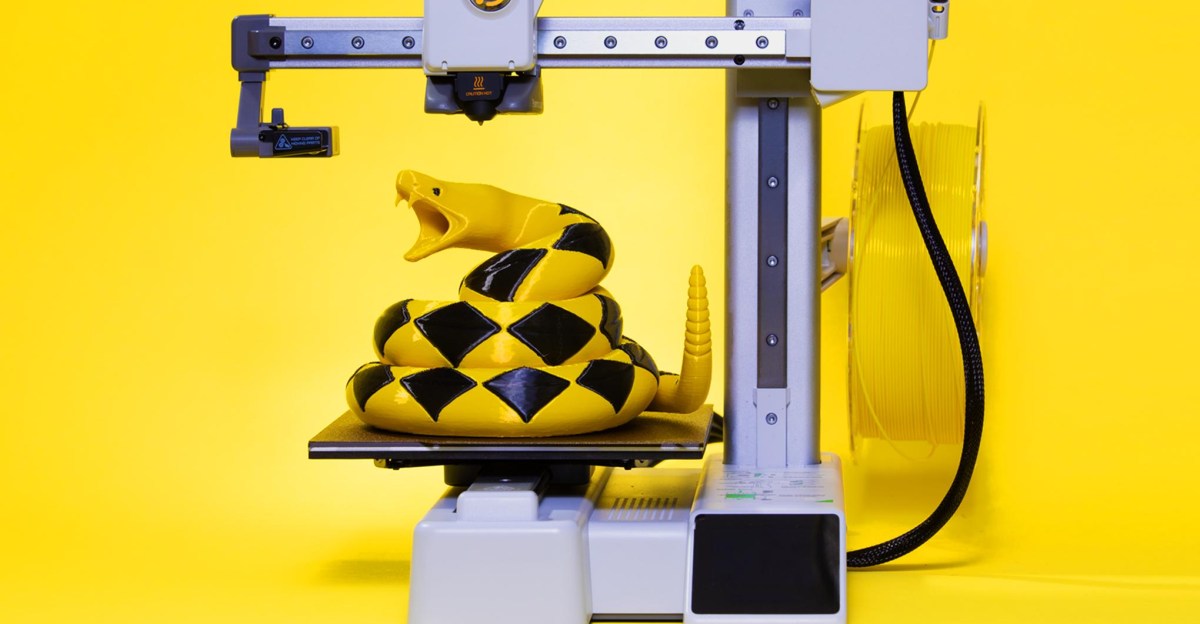
New York and California are moving to regulate 3D printers as part of a new push against homemade firearms that can be made without serial numbers. The proposals matter because they shift enforcement from online gun files to the machines that turn those files into physical parts.
New York Gov. Kathy Hochul signed a law in May requiring 3D printers sold in the state to include software meant to stop users from printing firearms or firearm components, according to the governor’s office and state budget documents. The measure also applies to CNC machines and makes it a felony to distribute gun files to anyone who is not a licensed gunsmith.
California lawmakers are considering a similar measure, AB 2047, that would require the state Department of Justice to keep a roster of approved 3D printers equipped with certified gun-blocking technology, according to the bill text. Printers sold after March 1, 2029, that are not on the roster would be illegal to sell in California, with civil penalties of up to $25,000 per violation.
The California bill passed the Assembly on May 26, according to Everytown for Gun Safety, but still needs Senate approval and Gov. Gavin Newsom’s signature. The bill also would allow misdemeanor penalties for people who knowingly disable or bypass the required blocking software.
Cases drive pressure for new rules
Federal prosecutors have cited recent cases involving 3D-printed gun parts and illegal conversion devices. The Justice Department said former Army National Guard member Andrew Scott Hastings was charged with attempting to provide al-Qaida with weapons after allegedly making firearm lower receivers and more than 100 switches, devices that can convert semiautomatic guns into automatic weapons.
In Colorado Springs, federal authorities accused two men of running a 3D-printed machine-gun conversion device operation and shipping products to buyers across the country, according to KRDO and federal charging information. The Verge also reported that the killing of UnitedHealthcare CEO Brian Thompson renewed attention on the issue after investigators alleged suspect Luigi Mangione used a partially 3D-printed Glock-style frame and a 3D-printed suppressor.
Supporters say printer-level blocking could address a gap in existing laws, since illegal printing often happens in private. Everytown has backed the measures, and former Everytown law and policy executive Nick Suplina told The Verge that 3D-printed gun technology has advanced enough to justify earlier intervention.
Police recovery data cited by The Trace and Everytown show growth from a small base. The New York Police Department said it recovered one 3D-printed gun in 2021 and 109 in 2024, while Everytown reported increases over the same period in Seattle and Detroit.
Technology details remain unsettled
Neither New York nor California spells out exactly how printer-blocking systems must work. New York’s law calls for a working group to set minimum safety standards and to state whether the technology is feasible, according to state legislation.
One possible method would compare files against a database of known gun-file hashes, a technique similar to systems used by tech platforms to detect known child sexual abuse material. Critics say small file changes can defeat hash matching while leaving the printed object usable.
A more expansive method would use software to analyze a design file and predict whether the finished object would be a banned gun part. Print&Go, a Spain-based company, says its tools can detect modified ghost-gun files that are not already in a database.
That approach has alarmed hobbyists, right-to-repair advocates and digital rights groups. Jeremy Hanson of Seattle Makers told The Verge he views the idea as an opening for broader control over manufacturing, while Electronic Frontier Foundation policy researcher Cliff Braun said the bills would create infrastructure that could later be used for wider file scanning.
Backers argue the goal is to make gun printing harder for inexperienced users, rather than to stop every determined person. Rutgers University professor Daniel Semenza told The Verge that lawmakers are trying to raise the technical bar so a novice cannot download a file and print a gun part with minimal effort.
This story draws on original reporting from The Verge.