
Atlas V’s remaining rockets are tied to Starliner flights
ULA’s Atlas V finished its Amazon Leo work, leaving six rockets reserved for Boeing’s delayed Starliner program.
By Maya Lindqvist · Senior Technology Correspondent
3 min read
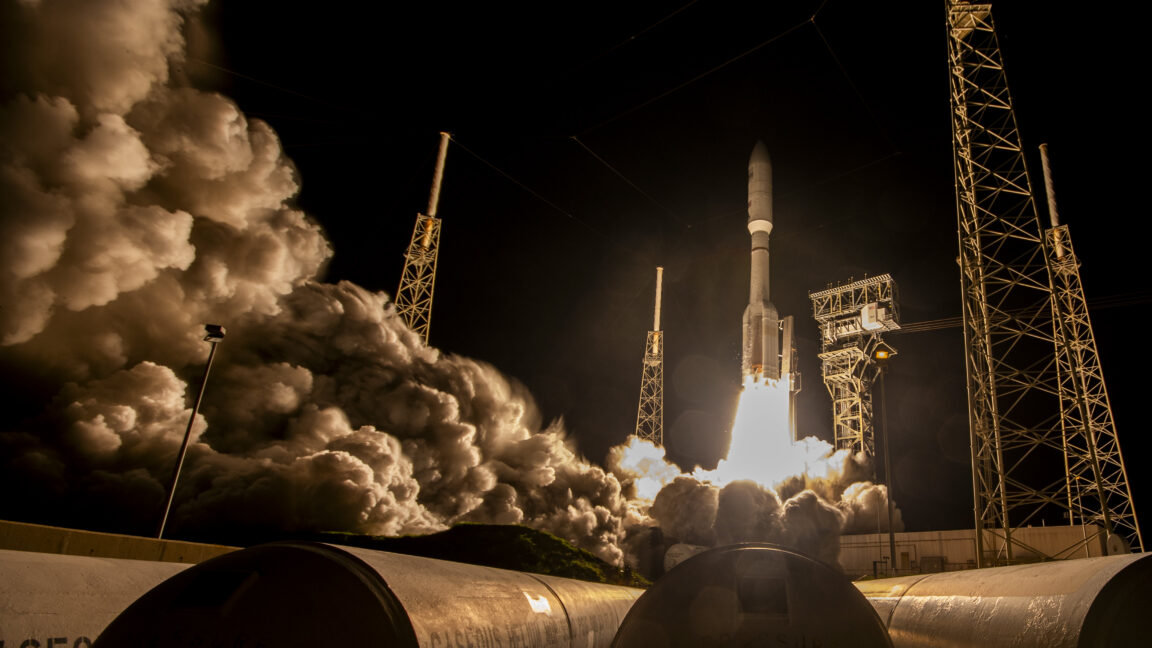
United Launch Alliance’s Atlas V has completed its final launch for Amazon’s Leo broadband network, leaving the rocket’s remaining inventory committed to Boeing’s Starliner program, Ars Technica reported. That narrows ULA’s options at a time when Amazon is trying to speed deployment of its satellite internet constellation.
The last Atlas V mission for Amazon Leo lifted off from Cape Canaveral Space Force Station in Florida at 12:30 a.m. EDT on Thursday, according to Ars Technica. The rocket carried 29 satellites, all of which separated less than an hour after launch and are expected to raise themselves from about 289 miles to 392 miles above Earth using onboard propulsion.
Ars Technica reported that the flight was the ninth Atlas V mission for Amazon Leo and the fourth Atlas V launch in less than three months. It was also the 110th Atlas V launch since the rocket entered service in 2002.
Six rockets remain, all for Starliner
ULA still has six Atlas V rockets left, but Ars Technica reported that they are allocated to Boeing’s Starliner crew capsule missions to the International Space Station under NASA’s commercial crew program. NASA reduced the number of guaranteed Starliner missions from six to four last year after repeated delays in the program, according to Ars Technica.
The next Starliner flight is expected to carry cargo to the ISS, which would use one of the remaining Atlas Vs, Ars Technica reported. If Boeing does not need every rocket assigned to Starliner, ULA may have limited ability to redirect them to other customers.
A ULA spokesperson told Ars Technica that the payload fairing being built for ULA’s newer Vulcan rocket is “not interchangeable” with the Atlas V fairing, which is no longer in production. Ars Technica reported that Starliner launches do not use a payload fairing because the spacecraft flies exposed on top of the rocket.
The remaining Atlas Vs also use dual-engine upper stages suited to low Earth orbit missions, Ars Technica reported. ULA has enough stored solid rocket boosters to put two on each remaining Starliner launch, but Thursday’s Amazon mission was the final Atlas V flight using the rocket’s most powerful five-booster version.
Amazon waits on other rockets
Amazon bought nine Atlas V launches from ULA in 2021 as the Atlas program was winding down, according to Ars Technica. One carried two prototype satellites in 2023, and the other eight launched operational Amazon Leo spacecraft.
Amazon later booked most of its remaining Leo launches on ULA’s Vulcan, Europe’s Ariane 6 and Blue Origin’s New Glenn, Ars Technica reported. The company has also reserved 13 SpaceX Falcon 9 launches, even though SpaceX’s Starlink is a rival broadband network.
Vulcan is meant to handle a large share of Amazon Leo missions, with Amazon reserving 38 launches and funding a dedicated rocket assembly hangar at Cape Canaveral, according to Ars Technica. Vulcan has been grounded since February because of solid booster problems, while Blue Origin’s New Glenn is out of service after a launch pad explosion in Florida in late May, Ars Technica reported.
Melissa Wuerl, Amazon Leo’s director of launch systems, said in a statement cited by Ars Technica that Atlas V launched 224 satellites across eight operational Leo missions with a 100 percent success rate. Wuerl said Amazon is preparing to increase launch and deployment cadence using a dedicated vertical integration facility for Vulcan missions.
Amazon has purchased more than 100 launches for the Leo constellation, Ars Technica reported. Fifteen have flown so far, placing 398 satellites in orbit, including two demonstration spacecraft that are not part of the operational fleet.
Chris Weber, Amazon Leo’s vice president for business and product, wrote on X that the 396 production satellites in orbit are enough to support continuous service across initial latitudes. Ars Technica reported that Amazon plans an initial service rollout later this year, with the first-generation constellation eventually reaching 3,232 satellites.
This story draws on original reporting from Ars Technica.