
Solid-state transformers draw interest from AI data centers
AI data centers may provide an early market for solid-state transformers that combine voltage conversion and AC-to-DC power conversion.
By Maya Lindqvist · Senior Technology Correspondent
3 min read
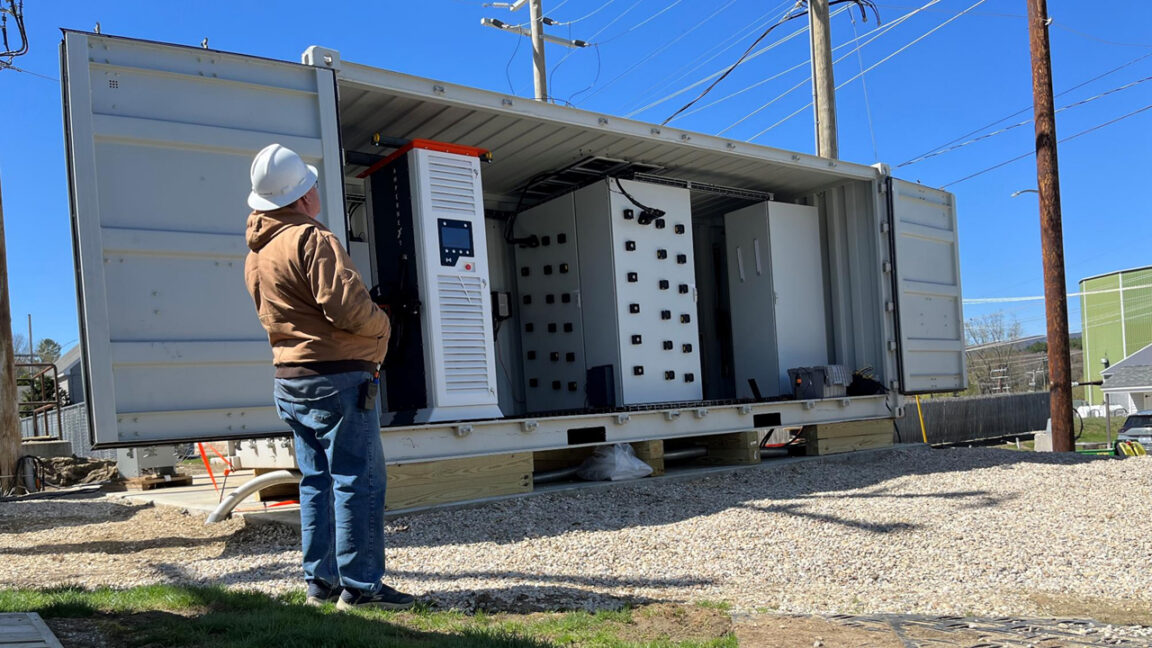
Solid-state transformers for data centers are drawing attention as builders of AI facilities look at direct-current power systems for densely packed computing racks. North Carolina State University engineering professor Srdjan Lukic told Ars Technica that data centers are the technology's current “killer application,” though engineering and commercialization work remains before wider deployment.
The appeal is a shorter power path. A solid-state transformer can convert alternating current from a local distribution grid into the direct current used by a data center, potentially removing the need for separate AC-to-DC conversion equipment, according to Ars Technica's report.
How do solid-state transformers work in data centers?
Conventional transformers change the voltage of alternating current using copper coils wound around a steel core. They raise voltage for long-distance transmission or lower it for homes and businesses; the largest units are custom-built for utility substations, Ars Technica reported.
Solid-state designs instead use high-frequency semiconductor switching to change voltage. The systems can use materials including silicon carbide and can combine several power-electronics functions in one device. For a data center designed around DC distribution, that means one system could both step down grid power and convert it from AC to DC.
That configuration may reduce equipment, wiring and space used in a project, Lukic told Ars Technica. He also said a single conversion point could avoid some control conflicts that arise when separate equipment is trying to regulate the same power system. Those are prospective design benefits, rather than established results across all facilities.
Why are conventional transformer supplies under pressure?
Traditional transformers are labor-intensive to make, and manufacturing limits have collided with the need to expand and update U.S. power infrastructure. Ars Technica reported that utilities and other buyers can face waits of several years for new units, delaying both new grid capacity and replacement of aging equipment.
Solid-state devices could eventually broaden the manufacturing base because they are closer to electronics products than the specialized, large conventional transformers now used by utilities, Lukic said. Whether that eases the supply constraint will depend on successful commercialization.
A 1-megawatt test points to another use
Lukic and colleagues have demonstrated a grid-connected solid-state transformer handling as much as 1 megawatt while supporting electric-vehicle battery charging, Ars Technica reported. The unit performed both voltage step-down and AC-to-DC conversion at an Electric Power Research Institute power-delivery laboratory in Lenox, Massachusetts.
The test stems from a collaboration with the New York Power Authority that began in 2018. The reported system uses a modular setup with a grid-facing front end, an AC/DC converter and a high-frequency isolation transformer.
Data-center adoption could help establish the technology for EV charging, grid upgrades and, potentially, DC distribution in homes, Lukic said. Those uses remain conditional on overcoming the outstanding engineering and business hurdles.
This story draws on original reporting from Ars Technica.