
MSI Claw outpaces Steam Deck OLED in tests but Windows drags it down
The Verge found MSI’s $1,799 handheld ran demanding games faster than Valve’s device, while software friction and hardware tradeoffs limited its appeal.
By Hana Yoshida · Markets Reporter
3 min read
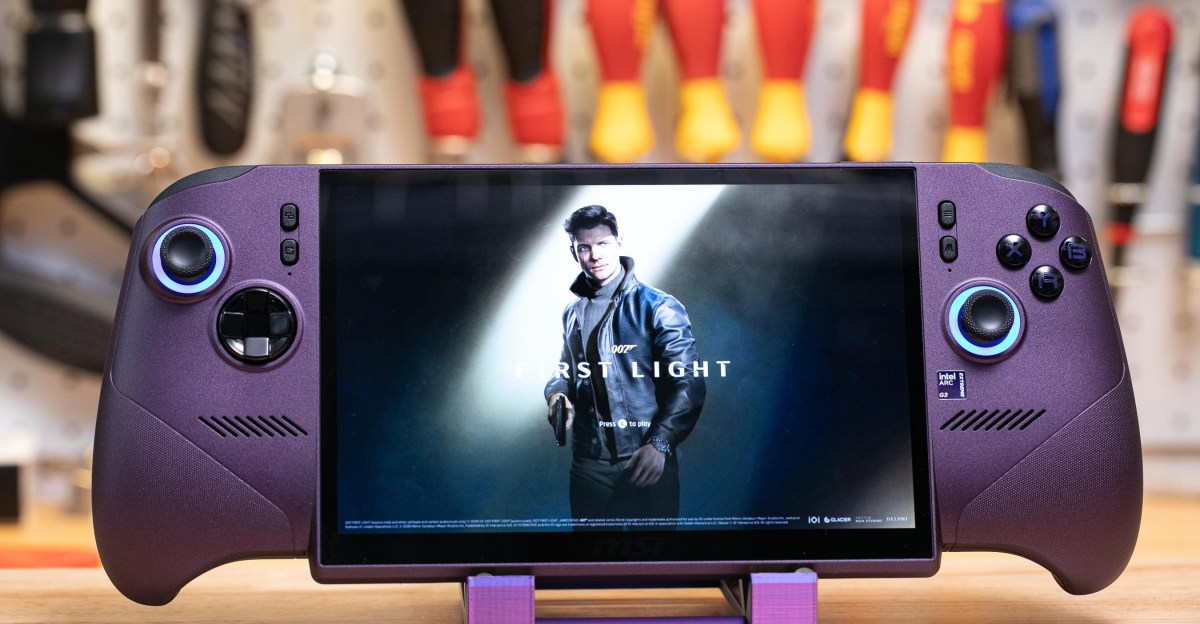
MSI’s Claw 8 EX AI Plus showed a clear performance lead over Valve’s Steam Deck OLED in early testing by The Verge, giving PC handheld buyers a look at what Intel’s new portable gaming chip can do. The same testing found that Windows remains a major weak spot for the device, especially beside Valve’s simpler SteamOS setup.
The Verge’s Jay Peters tested the Claw as a regular Steam Deck OLED user rather than in a full review. The handheld is the first model available with Intel’s Arc G3 Extreme handheld gaming chip, according to The Verge, and carries a $1,799 price that puts it far above the $789 Steam Deck OLED cited in the report.
Peters compared the two handhelds using several games that strain the Steam Deck OLED, including 007 First Light, Final Fantasy VII Remake Intergrade and Clair Obscur: Expedition 33. According to The Verge, all testing was done on battery power.
The Claw’s advantage was most visible in demanding games. The Verge said Final Fantasy VII Remake Intergrade looked cleaner on the MSI handheld, with sharper character detail than on the Steam Deck OLED. In 007 First Light, Peters reported that the improved image made it easier to spot enemies during a firefight.
Frame rates also favored MSI’s device in The Verge’s testing. In Final Fantasy VII Remake Intergrade, both handhelds initially defaulted to 30 frames per second, but after settings changes the Claw ran at roughly 70 to 100fps, while the Steam Deck had trouble holding 60fps, according to Peters.
In 007 First Light, The Verge recorded about 80 to 90fps on the Claw during a busy scene at the game’s Grand Carpathian Hotel, compared with about 35fps on the Steam Deck. With visual settings raised to Ultra on the Claw, the game still ran around 60 to 70fps, Peters said.
Clair Obscur: Expedition 33 was a more mixed result. The Verge said the game appeared much sharper on the Claw than on the Steam Deck, and that Intel’s XeSS upscaling and frame generation features raised perceived smoothness to about 70 to 90fps from a default range around 30 to 40fps. Peters also saw distracting graphical artifacts around characters and objects in close-up battle and cutscene shots.
The performance came with higher power draw. The Verge said 007 First Light used about 35 watts on the Claw and about 22 to 23 watts on the Steam Deck. Because the Claw has an 80Whr battery versus the Steam Deck OLED’s 50Whr battery, Peters estimated both machines would last about two hours in that case.
For lighter play, the Claw did not show the same benefit. In Balatro, The Verge measured about 14 watts on the Claw and 9 watts on the Steam Deck. After lowering each chip’s TDP while keeping 60fps, Peters estimated both handhelds would run a little over six hours.
The biggest complaint in the report was software. Peters said the Claw required about an hour and a half of Windows setup, downloads and updates before he could begin installing and setting up Steam. The Verge described the experience as split between Windows, Xbox Mode, MSI’s own software and Steam, making it less direct than SteamOS on the Deck.
The hardware comparison was also uneven. The Verge said the Claw offers an 8-inch screen, Hall effect analog sticks and textured grips, while the Steam Deck OLED has a more vibrant OLED display, lower weight at 640 grams versus 785 grams, and built-in touchpads. Peters also found the Claw’s Menu and View buttons slightly hard to reach and disliked the joystick lighting, though he noted it can be disabled.
The Verge’s conclusion was cautious: the Claw delivered stronger game performance, but its price, Windows friction and hardware compromises made it hard to recommend as an easy upgrade over the Steam Deck OLED.
This story draws on original reporting from The Verge.