
AI mammogram risk trends may help predict breast cancer years ahead
A Radiology study found AI risk scores from serial mammograms rose years before diagnosis while remaining stable in women without breast cancer.
By Tom Brennan · Health & Medicine Correspondent
3 min read
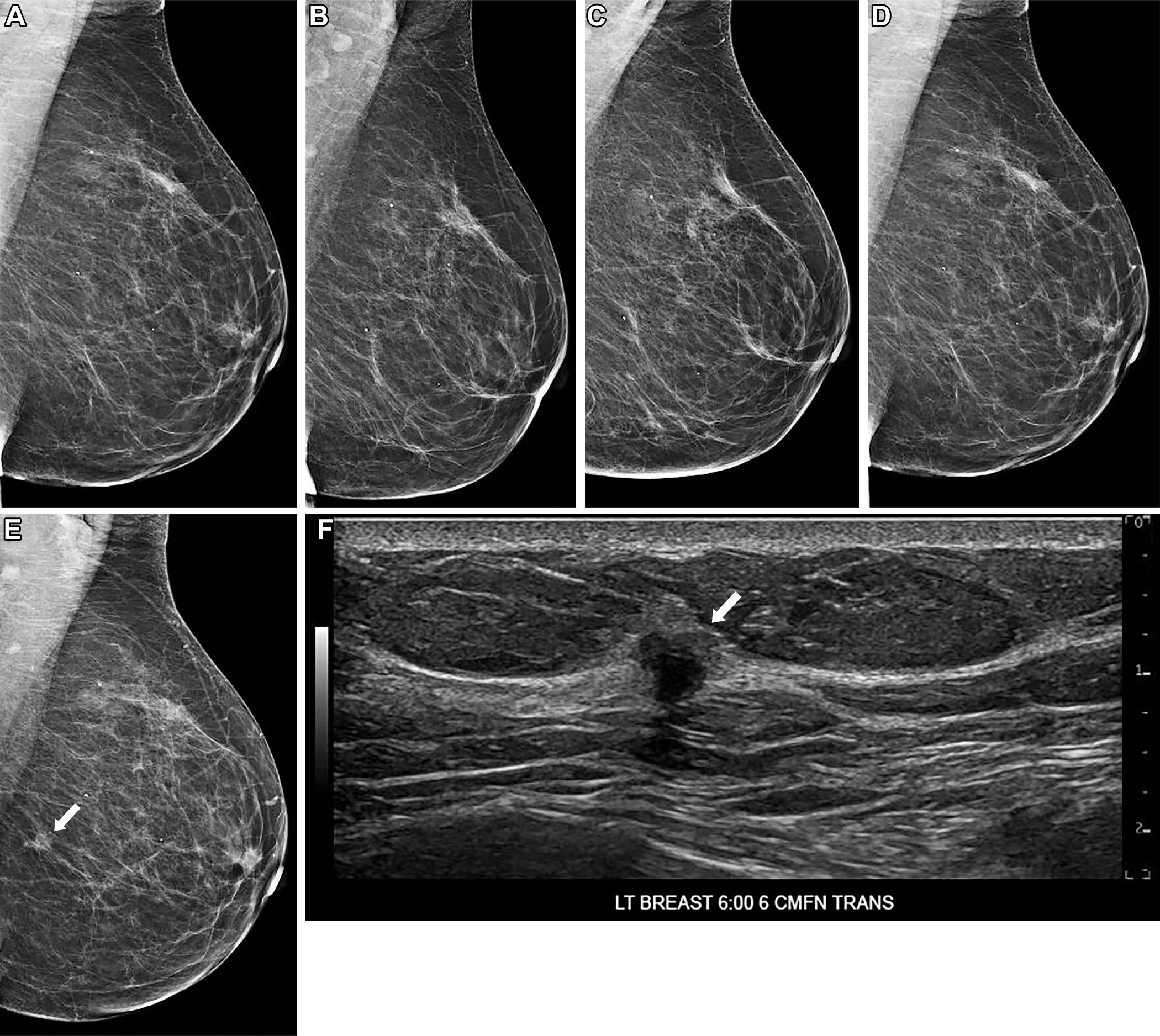
Changes over time in AI-generated breast cancer risk scores from mammograms may help identify women who later develop the disease, according to research published in Radiology. The findings point to a more flexible approach to risk assessment that uses repeated imaging rather than a single snapshot.
The study, reported by the Radiological Society of North America, tested whether a deep learning model could detect risk patterns in standard screening mammograms alone. The model did not use demographics, clinical history or earlier imaging reports, according to the researchers.
Constance D. Lehman, a professor of radiology at Harvard Medical School and CEO of Clairity Inc., led the research. Lehman said the team examined how image-only AI breast cancer risk scores changed across multiple mammograms in a large screening group.
Large screening cohort
The study included women screened between 2009 and 2019 at six imaging sites, including urban tertiary, community-based and rural practices, according to RSNA. The exams were standard two-dimensional bilateral full-field digital mammograms, performed with or without digital breast tomosynthesis.
Researchers initially reviewed 239,703 consecutive 2D screening mammograms from 89,882 patients. After exclusions, the final analysis included 54,014 women with a median age of 61, including 817 women diagnosed with breast cancer and 53,197 women who were not diagnosed during follow-up.
Each participant had one index exam. For cancer patients, that was the last screening mammogram within a year before diagnosis; for cancer-free controls, it was the last mammogram in the five-year study period. The analysis also included up to six prior annual mammograms per woman, for 158,807 mammograms in all.
A validated open-source deep learning model generated continuous five-year breast cancer risk scores from the images. The median number of mammograms per woman was three, according to the study.
Scores rose before diagnosis
Among the 817 women diagnosed within 365 days of the index exam, 451 had invasive cancer, 118 had ductal carcinoma in situ and 248 had an unknown cancer type, according to the researchers. RSNA said 682 of the cancers were screen-detected and 135 were interval cancers.
The researchers compared scores among women with invasive cancer or ductal carcinoma in situ against scores for cancer-free controls. Lehman said the groups showed clinically meaningful differences, with rising scores visible as early as six years before diagnosis and widening closer to diagnosis.
For cancer patients, median AI risk scores increased from 2.1 in the first five to six years of the study period to 6.6 at the index exam. Among cancer-free women, median scores stayed largely steady, ranging from 1.8 to 2.2 across the study period.
The rise was steepest in the final years before diagnosis, according to the study. Researchers said score patterns remained consistent across subgroups defined by age and breast density.
Potential role in screening
Lehman said the findings suggest mammogram images contain signals that are not visible to clinicians but may help forecast future breast cancer risk. She also noted that most women diagnosed with breast cancer do not have a known genetic mutation or significant family history.
Traditional risk models have limited ability to separate higher- and lower-risk women in population screening, according to the researchers. Deep learning models that analyze the full mammogram image have previously outperformed traditional models and breast density alone in estimating five-year risk, RSNA said.
The 2026 National Comprehensive Cancer Network guidelines include AI image-based risk scores, according to RSNA. The guidelines recommend that beginning at age 35, women with an elevated five-year risk score above 1.7% consider breast MRI in addition to annual mammography.
RSNA said an FDA-approved AI image-based five-year risk-scoring model is already being used at select health care institutions in the United States.
This story draws on original reporting from Medical Xpress.