
Mount Toba eruption evidence challenges human-extinction theory
A Lake Chala sediment record points to about 18 months of regional disruption, challenging claims of a prolonged Toba volcanic winter.
By Maya Lindqvist · Senior Technology Correspondent
3 min read
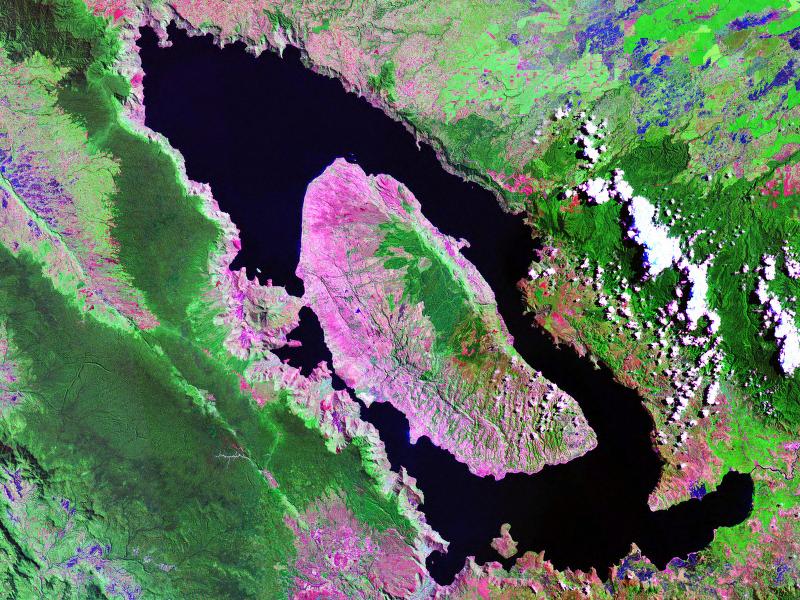
New evidence on the Mount Toba eruption human extinction debate points to a shorter and milder regional climate shock than the long volcanic winter once proposed. A sediment record from East Africa indicates that disruption linked to the eruption about 74,000 years ago lasted roughly 18 months and cooled the area by about 0.5C, according to Ars Technica.
The finding does not settle whether Toba contributed to any ancient human population decline. It does challenge one proposed mechanism: a severe, sustained cooling episode that could have threatened early humans across wide areas.
Did the Mount Toba eruption nearly cause human extinction?
Researchers cannot answer that question from one lake record alone. The Lake Chala findings concern climate near the Kenya-Tanzania border, rather than global temperatures or the size of human populations, but they add to evidence against a straightforward near-extinction account.
Toba, on what is now Sumatra, was the largest volcanic eruption of the past 2.6 million years, Ars Technica reported. The caldera expelled thousands of cubic kilometers of magma in about two weeks, and some earlier interpretations held that the event produced intense global cooling that put human survival at risk.
Why Lake Chala offers a sharper test
Lake Chala is a steep-walled crater lake whose bottom waters do not fully mix, allowing annual layers of sediment to remain intact. That matters because conventional lake and seafloor cores can blend deposits from different years, obscuring a volcanic climate effect that may last only one to three years.
The research team identified a sharp concentration of microscopic glass shards associated with Toba ash, Ars Technica reported. Around that layer, the sediments showed signs consistent with stressed algae, followed by a strong dry-season diatom bloom and weaker rains.
By the third year, however, the annual layers had returned to their usual form. The researchers estimated a total disturbance of about 18 months and compared chemical changes in the core with ice-age conditions to infer cooling of approximately 0.5C in the region.
Why eruption size may not predict cooling
Volcanoes can cool climate when sulfur dioxide reaches the stratosphere and forms sunlight-reflecting sulfate particles. Yet Ars Technica reported that, at very large eruption sizes, larger sulfate aerosols may fall out of the atmosphere more quickly, limiting how effectively they scatter sunlight.
That proposed process means the scale of Toba's eruption cannot by itself establish the length or intensity of a volcanic winter. The Lake Chala record supports a brief regional impact, not a reconstruction of worldwide conditions.
Archaeological evidence from South Africa also complicates claims of a universal human disaster. Educational material from Becoming Human reports continuous occupation at the Pinnacle Point site across the Toba event, with no evidence in that record that daily life was disrupted. That is evidence from one location, not proof that all populations escaped harm.
A 2015 lecture hosted by Harvard's Peabody Museum presented the older view that Toba caused severe environmental degradation and population losses among humans and Neanderthals. The newer Lake Chala evidence does not disprove every possible population effect, but it narrows the case for treating a prolonged catastrophic volcanic winter as established fact.
This story draws on original reporting from Ars Technica.