
How snails engineer slime with collagen and calcium
A Science study finds brown-lipped snails alter collagen and calcium chemistry to make five kinds of mucus for movement, defense and protection.
By Maya Lindqvist · Senior Technology Correspondent
2 min read
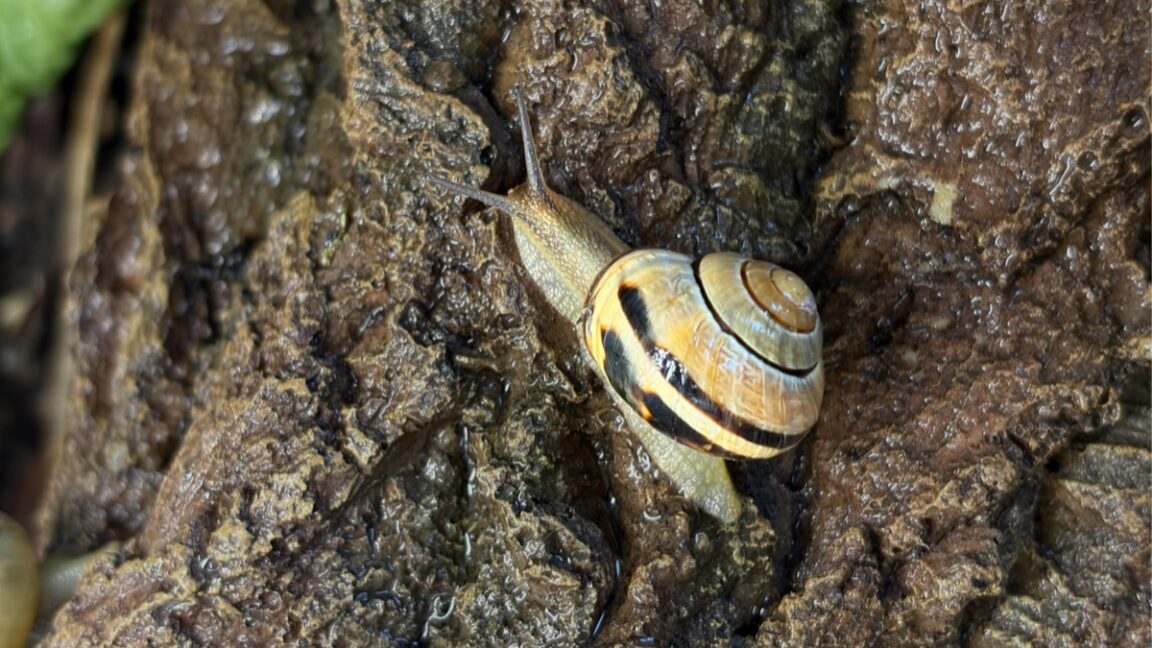
How snails engineer slime has a materials-science answer: brown-lipped snails change the amounts and state of collagen and calcium in mucus to give it different physical properties, according to a study published Aug. 6 in Science. The finding explains how one animal can produce secretions for gliding, sticking, protection and defense from a broadly shared set of ingredients.
The researchers studied Cepaea nemoralis, also known as the brown-lipped snail, and examined five of its secretions with protein, materials and imaging analyses, according to a release carried by EurekAlert!. NPR independently reported that the species makes five mucus types with distinct jobs.
How do snails make slime that is both sticky and slippery?
Snail mucus is largely water, with mucins — glycoproteins — and complex carbohydrates contributing to its viscous texture, Ars Technica reported. Across the five secretions examined, the protein makeup was broadly similar, with collagen VI serving as the main structural component, according to EurekAlert!.
The difference lies in tuning that shared base. The study found that variations in collagen content and the addition of amorphous calcium carbonate, or ACC, are associated with the distinct material properties of each mucus. EurekAlert! reported that calcium supplies ions that cross-link mucus while it is wet, while in dried mucus it acts as a precursor for mineral formation.
That wet-versus-dry role offers a concise explanation for the snails’ range of outputs: collagen provides much of the structure, and calcium helps alter how the material holds together or mineralizes. The study reports this mechanism; it does not suggest the snails consciously design their mucus.
The five mucus secretions studied
- Lubricant mucus: helps the snail move across surfaces, according to EurekAlert!.
- Adhesive mucus: anchors the shell to surfaces; NPR reported it can cling to materials including wood, glass and aluminum.
- Protective mucus: contains calcite and can seal the snail inside its shell during winter, Ars Technica reported.
- Yellow defensive mucus: is highly sticky, extensible and resistant to tearing, according to EurekAlert!.
- Bubbly defensive mucus: is thought to deter predators, EurekAlert! reported.
The work may guide new adhesives and other materials that use a small set of components to produce different functions, the study authors said in the EurekAlert! release. They identified wound healing and drug delivery as possible future applications, while NPR reported that researcher Mariella Gabler also cited wound sealing and drug delivery as examples. Those uses remain potential inspirations from the snail-mucus system, rather than products or clinical treatments demonstrated by this research.
This story draws on original reporting from Ars Technica.