
EU AI transparency rules take effect for chatbots, deepfakes and synthetic content
EU AI Act transparency duties now apply, requiring defined AI providers and deployers to identify AI interactions and certain synthetic content.
By Maya Lindqvist · Senior Technology Correspondent
3 min read
The EU AI transparency rules began applying on 2 August, placing new disclosure and marking duties on defined providers and users of generative AI systems. The measures are intended to help people tell when they are dealing with an AI system or content made or altered by one, according to the European Commission.
The requirements sit in Article 50 of the EU AI Act. They cover particular uses and roles rather than requiring a visible label on every piece of content touched by AI.
What do the EU AI transparency rules require?
Providers, meaning companies that develop and place AI systems on the market, must design systems intended to interact directly with people so users know they are dealing with AI, unless that is obvious. Providers of generative AI also must ensure synthetic audio, images, video and text can be identified in a machine-readable form as artificially generated or manipulated.
The Commission says the technical measures should be effective, interoperable, robust and reliable as far as technically feasible. That standard takes account of differences among content types, implementation costs and the state of the art.
Deployers, which are organisations using AI systems under their authority, have separate disclosure duties. They must disclose AI-generated or manipulated image, audio and video that constitute deepfakes. They must also disclose AI-generated or manipulated text published to inform the public on matters of public interest, though text reviewed by a human under editorial responsibility is treated differently under the framework.
The Commission said the goal is to give people information needed to make decisions about what they see and use, judge how much trust to place in it, and reduce the risk of deception or misinformation.
Are the EU AI labels and Code of Practice mandatory?
The legal obligations in Article 50 are mandatory. The Commission’s Code of Practice on Transparency of AI-generated Content is voluntary and is designed as a recognised route for providers and deployers to show that they meet those duties.
The code has one section for providers, covering the marking and detection of AI-generated or manipulated material, and another for deployers, covering labels for deepfakes and covered text. Companies that use different compliance measures can do so, but must show market-surveillance authorities that their approach is adequate, the Commission says.
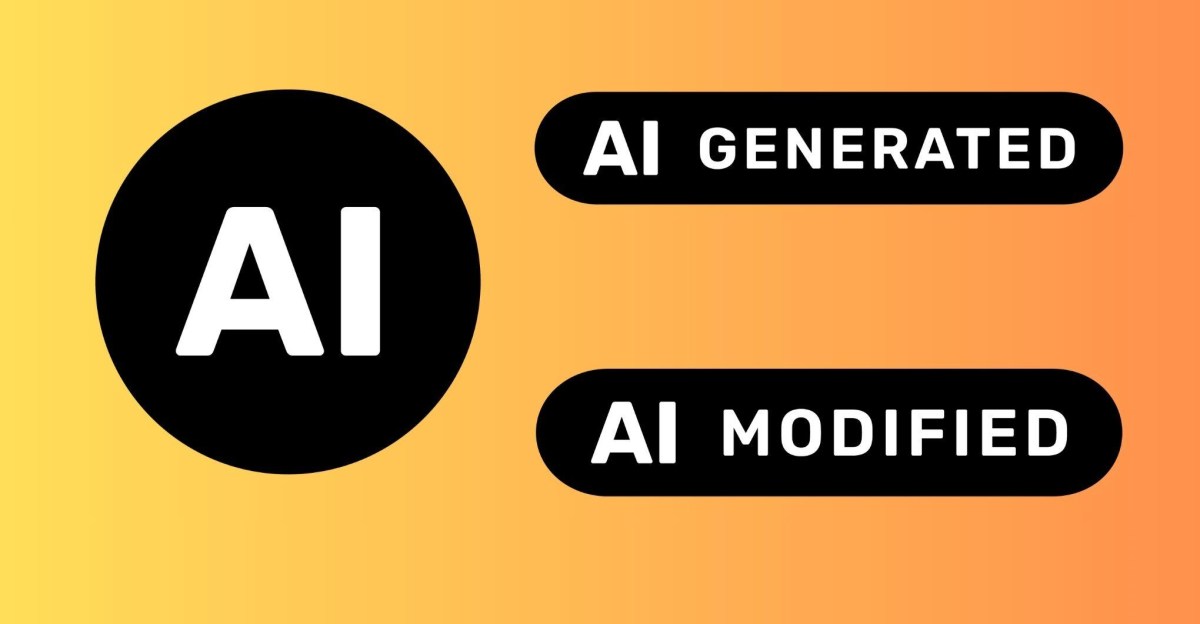
The EU has also issued a set of icons that deployers may use on AI-generated content. Use of those icons is optional; they are a practical labeling tool rather than a substitute for the law.
About 190 companies and organisations had signed the voluntary code by the end of July, according to the Commission. The rules now shift attention to how AI developers, platforms, publishers and other professional users apply the disclosures in practice.
This story draws on original reporting from The Verge.