
OOHUB presents a DIY Slinky Dog antenna for indoor TV reception
OOHUB has released a guide and video for a Slinky Dog TV antenna project aimed at making antenna concepts more approachable.
By Hana Yoshida · Markets Reporter
2 min read
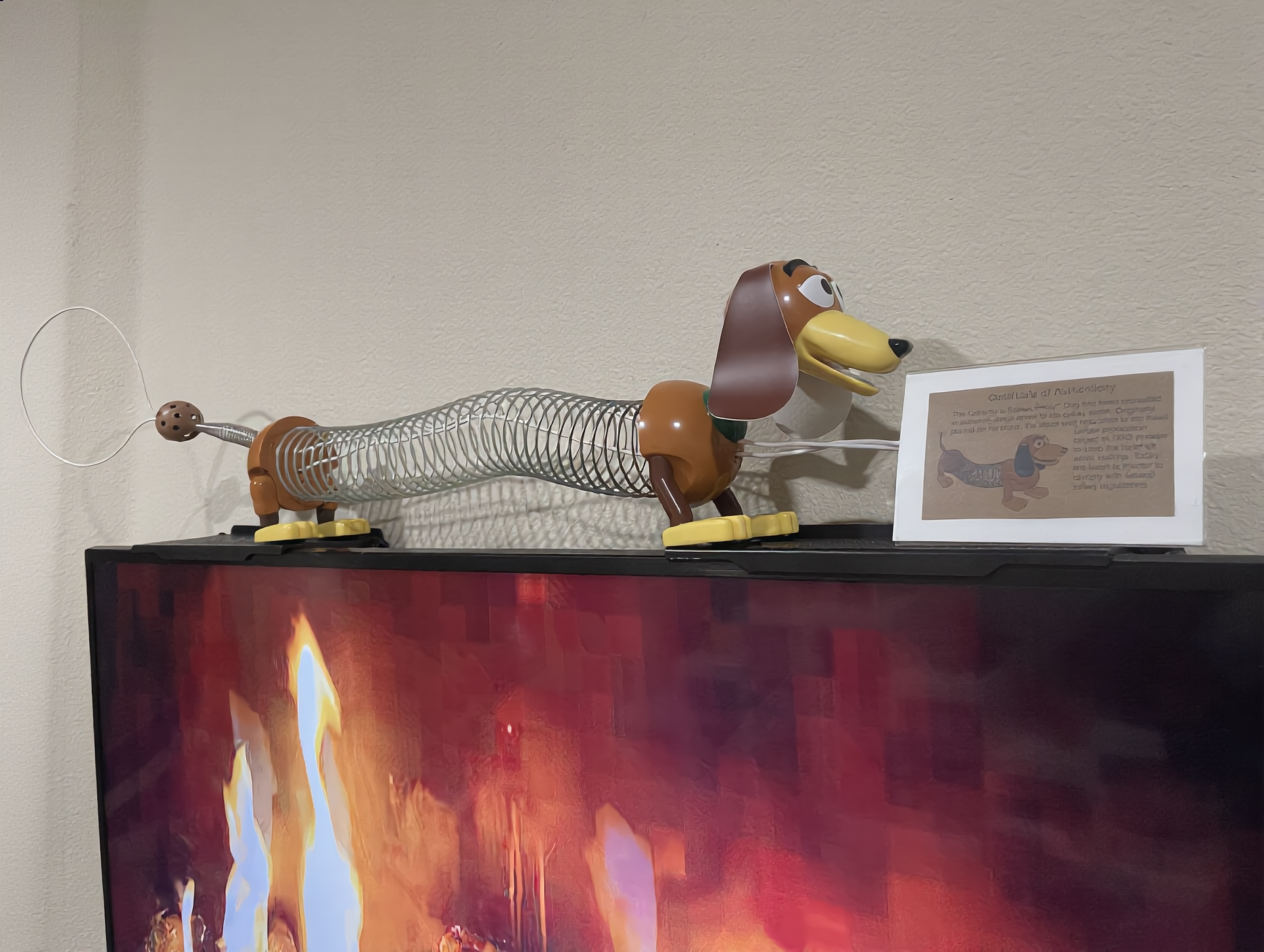
OOHUB has publicized a DIY Slinky Dog antenna project that turns the familiar toy into part of an indoor television-antenna assembly. The project is meant to give families a playful way to explore antenna concepts while trying to receive over-the-air television signals indoors.
The company has released a guide and a 26-minute instructional video for the build. The video, listed on YouTube as uploaded Aug. 2, describes the device as an indoor option rather than a replacement for an outdoor antenna in areas far from broadcast towers.
How does the DIY Slinky Dog antenna work?
OOHUB describes the design as an articulating reflector antenna. A separate dual-band antenna runs through the toy, while the metal in the Slinky Dog’s body and tail is intended to work passively as a reflector; those metal parts are not connected to the television’s antenna port.
A reflector antenna uses surrounding elements to affect how signals reach the receiving component. In OOHUB’s explanation, the toy can be repositioned so users can try different orientations for reception.
The company says the Slinky Dog indoor TV antenna guide is designed as a hands-on demonstration of how antenna components and positioning can affect reception. OOHUB also presents the project as an education activity for children, though its materials do not state a channel count or comparative reception figures for the finished build.
Who is the project for?
OOHUB positions the project for households seeking an indoor television antenna and a family activity. Its video cautions that the setup is not intended for people far from television broadcast towers, including rural users, and presents it as more suitable for people living in or near cities.
Chad Mitchell, an OOHUB spokesperson, said the adjustable toy form lets users experiment with placement and then display it in the position that works best for them. The company says it will continue to explore educational innovation that combines technology and play.
The project sits at the intersection of DIY electronics and informal science education: a familiar object supplies the visual hook, while the separate receiving element and the toy’s positioning form the basis of OOHUB’s antenna demonstration.