
2027 Nissan Rogue Hybrid pairs physical climate controls with practical storage
Nissan’s new Rogue Hybrid retains physical HVAC controls while adding family-focused storage, matte surfaces and nearly 90-degree rear doors.
By Hana Yoshida · Markets Reporter
3 min read
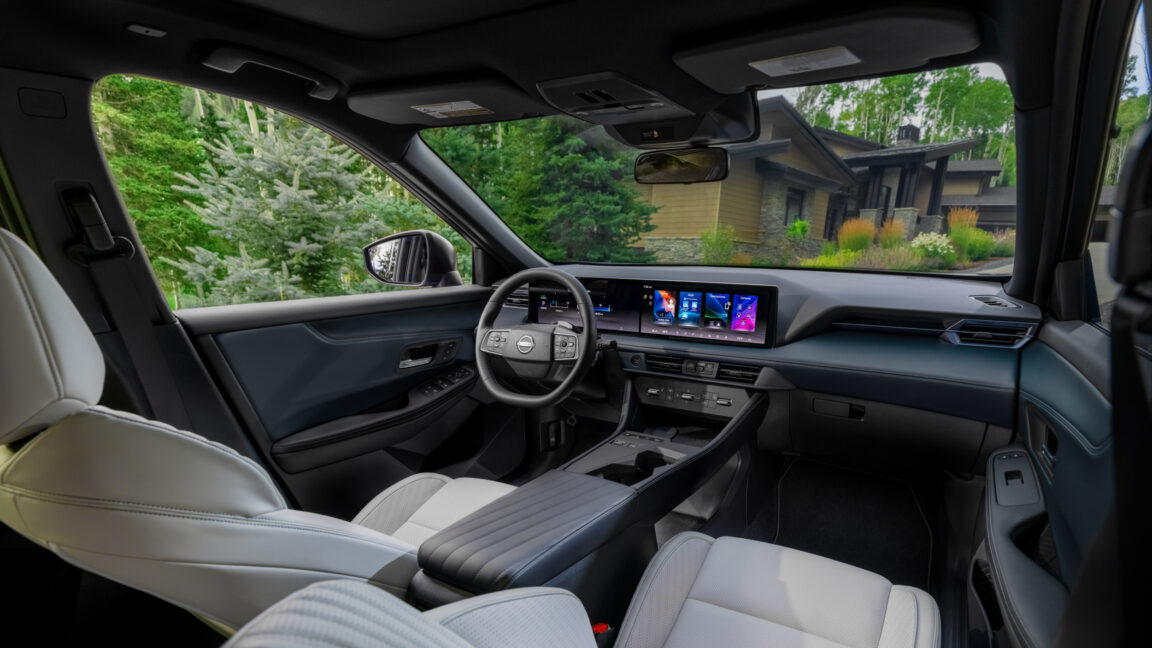
The 2027 Nissan Rogue Hybrid interior combines large displays with physical controls for cabin temperature, fan speed and airflow direction, Nissan said in September. The design points to a more practical cabin for family buyers, with expanded storage beneath the front cupholders, matte high-touch surfaces and rear doors that open nearly 90 degrees.
Nissan said the U.S. model has a standard 12.3-inch touchscreen, while a 14.3-inch display is optional on the SR and standard on the Platinum. The company said the Rogue Hybrid is due to reach U.S. dealers in fall 2026, with the full SV, SR and Platinum lineup following in early 2027.
Which controls are physical in the 2027 Nissan Rogue Hybrid?
Nissan says its designers retained physical controls for commonly used features. The company specifically identifies temperature, fan-speed and airflow-direction controls as tactile rather than screen-only functions. That does not mean every routine feature is outside the infotainment system: the Rogue Hybrid also retains its central touchscreen interface.
Hiren Patel, Nissan’s senior design manager, told Ars Technica that earlier switchless interiors were meant to move functions into software and reduce the need for unique physical parts. He said drivers had complained that adjusting temperature, seats and other features through menus could draw their attention away from the road.
Patel told Ars Technica that customers seek controls that are easy to use, wireless charging, surfaces that are easier to keep clean, storage and easy access. Those are Nissan’s stated design priorities, rather than evidence of a measured industry-wide consumer consensus.
Storage and access shape the Rogue Hybrid’s cabin
Nissan says it enlarged the open storage area below the front cupholders, building on a feature it says was popular in the 2026 Rogue. The company also says it deliberately limited piano-black surfaces in favor of matte materials in frequently touched parts of the cabin.
The rear doors open nearly 90 degrees, according to Nissan and Ars Technica, to make loading children and car seats easier. Nissan also says the Rogue Hybrid has five LATCH points for child seats, describing it as one of the few vehicles in its class with that number.
The new approach contrasts with Nissan’s 2023 Ariya. Nissan’s press material for that electric crossover described an instrument panel without conventional buttons and switches, using capacitive haptic controls for primary climate functions. The Rogue Hybrid’s mix of screens and dedicated HVAC controls shows a different choice for this model; Nissan has not described it as a company-wide design policy.
Other manufacturers and regulators are also paying closer attention to physical controls, according to CAR Magazine. The publication reported that Euro NCAP revised its protocols to assess the placement, clarity and usability of essential controls, including the availability of physical buttons for commonly used functions. That broader context does not establish an industry-wide retreat from touchscreens, but it helps explain why mixed control layouts are receiving renewed attention.
This story draws on original reporting from Ars Technica.