
DeepMind WeatherNext hurricane forecasts gain a day, researchers say
DeepMind says WeatherNext improves cyclone warnings by about a day, while forecasters say human judgment remains essential.
By Maya Lindqvist · Senior Technology Correspondent
3 min read
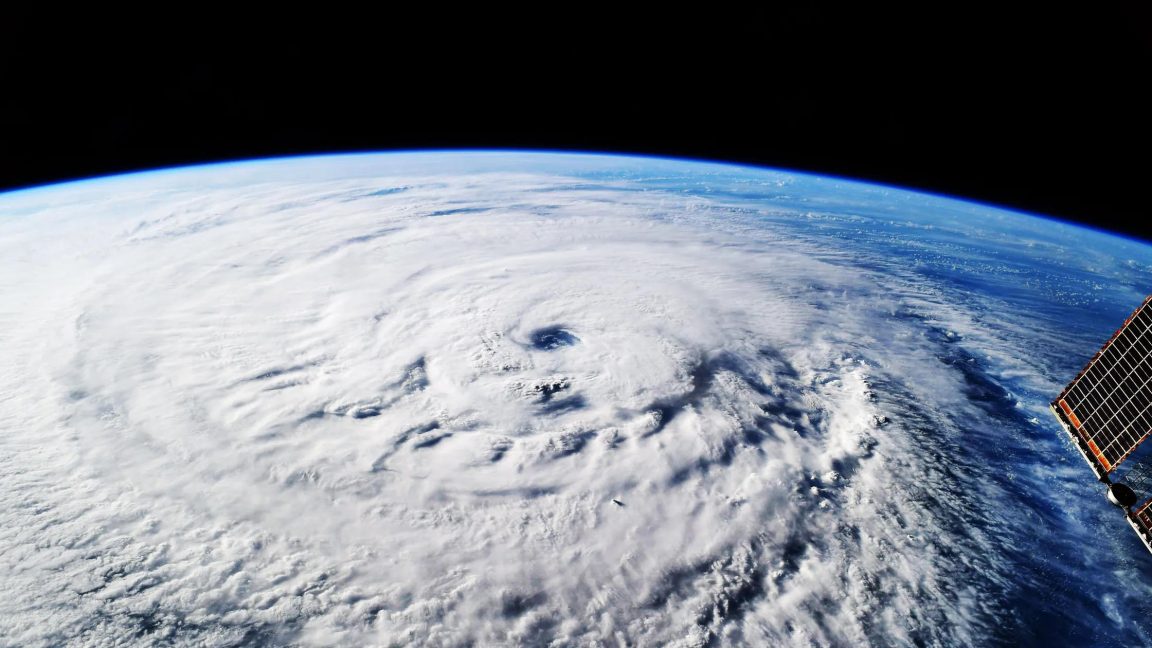
DeepMind WeatherNext hurricane forecasts can provide roughly an extra day of useful warning time on average, according to results reported in a Nature paper. Google DeepMind has also open-sourced the models, while meteorologists involved in the work say the system’s real-time performance was better than they expected.
DeepMind said on August 6 that WeatherNext Cyclones improved forecasts of a storm’s path, strength and wind structure. The company said its three-day forecasts matched the accuracy that earlier models achieved two days ahead, based on evaluations of cyclones from 2023 and 2024.
How does WeatherNext forecast hurricane track and intensity?
A cyclone’s track is shaped by broad atmospheric patterns, including prevailing winds and fronts. Its intensity depends more on localized ocean and atmospheric conditions near the storm’s core, according to Kate Musgrave of the Cooperative Institute for Research in the Atmosphere, a co-author of the paper.
That split has long made forecasting difficult. Coarser global models have been useful for track forecasts, while intensity has required finer-scale local modeling, DeepMind said. The company said WeatherNext combines global weather prediction with cyclone forecasting in one AI system.
Musgrave told WIRED that earlier AI systems had performed well on storm tracks but had struggled with intensity. She said researchers initially doubted the strength of WeatherNext’s retrospective test results, then found that its performance continued when it entered live forecasting operations.
The result was particularly unexpected because WeatherNext uses comparatively low-resolution atmospheric inputs for a task traditionally tied to fine-scale data, DeepMind researcher Ferran Alet told WIRED. Alet said the researchers do not yet fully understand what signals in those inputs allow the model to estimate intensity so effectively.
What did WeatherNext predict for Hurricane Melissa?
During the 2025 hurricane season, WeatherNext forecast that Hurricane Melissa would rapidly strengthen and make landfall in Jamaica, DeepMind said. WIRED reported that five days before landfall, the model gave an 80% probability that the system would reach Jamaica as a Category 5 hurricane.
DeepMind said the forecast helped the U.S. National Hurricane Center issue an earlier warning. Mike Brennan, the center’s director, told WIRED that added time can help officials plan evacuations, position supplies and move response resources.
WeatherNext does not issue a single fixed outcome. DeepMind said it now runs 1,000 possible scenarios for each cyclone, producing localized probability maps for winds from tropical-storm force through hurricane force. Those scenarios are intended to help forecasters weigh uncertainty alongside other forecasting tools.
Brennan cautioned that a strong performance in one storm or season does not ensure that the same model will lead on the next one. Human forecasters remain responsible for translating projected track and intensity into likely effects on people and communities, he said.
DeepMind said it is making WeatherNext 2 and WeatherNext Cyclones available to researchers. The release could allow outside researchers to test and improve the models, but the company’s performance claims remain its reported evaluation results.
This story draws on original reporting from Ars Technica.