
Concorde eclipse flight followed totality for 74 minutes in 1973
Concorde 001 used Mach 2 speed to follow the Moon’s shadow over Africa, giving scientists far longer to study the Sun.
By Maya Lindqvist · Senior Technology Correspondent
3 min read
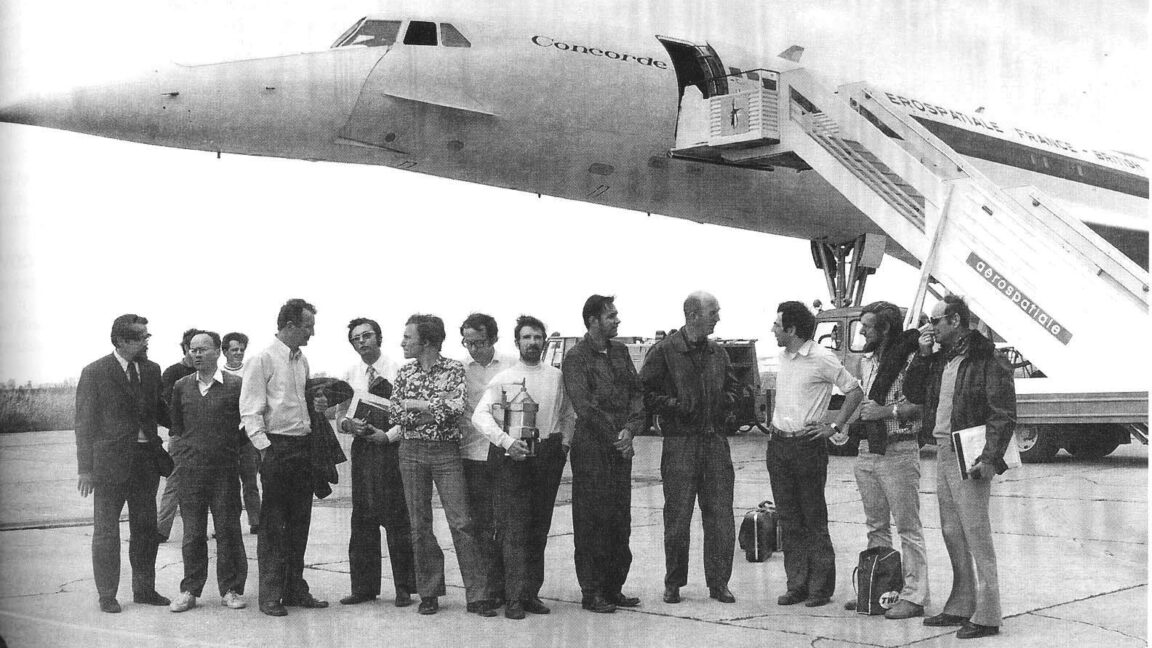
The Concorde eclipse flight of June 30, 1973, turned a prototype airliner into a high-altitude solar observatory. Concorde 001 flew at more than twice the speed of sound to remain in the Moon’s shadow for 74 minutes, far beyond the few minutes available to an observer standing in one place, Ars Technica reported.
The mission mattered because totality made the solar corona visible and allowed observations of the corona and chromosphere. NASA identifies the event as a total solar eclipse and provides mapped data for its path across Earth, including central-line duration calculations.
How did the Concorde eclipse flight last 74 minutes?
The aircraft met the moving shadow over Mauritania and flew in the same general direction as it crossed Africa. By moving at roughly Mach 2, Concorde 001 could stay in the region of totality much longer than a fixed observer, although it did not need to exactly equal the shadow’s speed.
Ars Technica reported that the Moon’s shadow for this near-equatorial eclipse was still moving at more than 2.2 times the speed of sound. The aircraft was the only large plane that came close enough in speed to make the attempt practical.
For comparison, Ars Technica said the longest ground-based viewing time in favorable equatorial conditions is about 7.5 minutes. NASA’s path table for the 1973 eclipse records central-line durations in minutes and seconds along the route, showing why the aircrew’s moving observation had a different advantage from a ground site.
What did the scientists study aboard Concorde 001?
Paris Observatory scientist Pierre Léna proposed the mission after Concorde 001 had demonstrated supersonic flight, according to Ars Technica. He invited other scientific groups to take part; researchers came from French, British and U.S. institutions including the French National Centre for Scientific Research, Queen Mary College, Kitt Peak Observatory, Los Alamos National Laboratory and the University of Aberdeen.
The team’s central aim was to observe the corona at different wavelengths. Léna told Ars Technica that the work included infrared observations of dust in the corona, studies of oscillating hot gas in the corona, and observations of the chromosphere.
Concorde 001 was modified with four ceiling portholes, with one assigned to each experiment. Léna said operating at nearly 17 kilometers above Earth reduced humidity, improving infrared transmission of sunlight.
A precisely timed intercept
According to Ars Technica, the team completed two rehearsal flights before departing from Las Palmas in the Canary Islands. The plan required the crew to reach its rendezvous with the shadow within one nautical mile and 15 seconds; Léna said they made it within one second.
The prototype, F-WTSS 001, is now displayed at the National Air and Space Museum of France at Paris–Le Bourget, Ars Technica reported. A map painted behind its nose traces the route of the 1973 eclipse flight across Africa. Readers can review NASA’s 1973 eclipse path data for the astronomical event the mission pursued.
This story draws on original reporting from Ars Technica.