
Comcast split puts content-and-broadband strategy on retreat
Comcast is separating its broadband and NBCUniversal businesses after years of doubts about whether media and distribution belong together.
By Hana Yoshida · Markets Reporter
3 min read
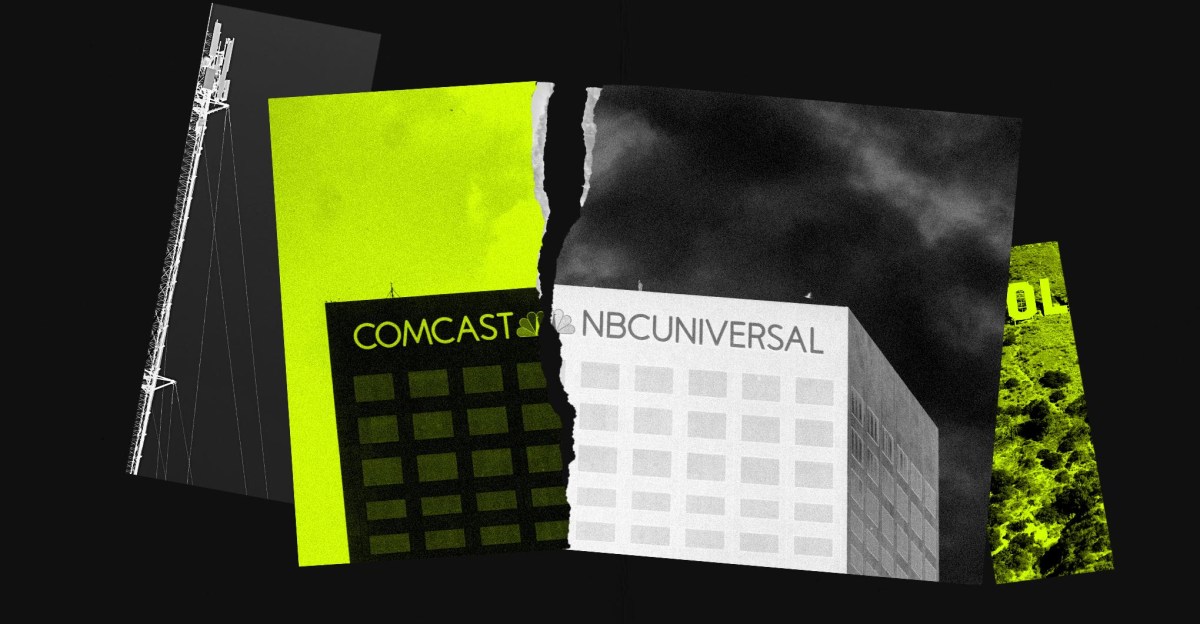
Comcast is separating its broadband operation from NBCUniversal, a move that The Verge said marks a major break from the company’s long-running bet on owning both internet access and entertainment. The split matters because Comcast was one of the most durable examples of a strategy that paired distribution networks with media assets.
The Verge reported that Comcast will divide into a Comcast broadband company and an NBCUniversal entertainment company. The move follows an earlier spinoff of cable assets including CNBC and MS.NOW into a new company called Versant, according to The Verge.
Peter Kafka, chief correspondent at Business Insider and host of the Channels podcast, discussed the split on The Verge’s Decoder podcast with Nilay Patel. Kafka said Comcast’s earlier Versant move was aimed at separating declining cable-network assets in hopes that investors would value the remaining company more highly.
Kafka said the latest split leaves Comcast closer to the company it was before it bought NBCUniversal. He described one side as the broadband business that sells home internet connections and related services, while the other side includes NBC, Bravo, Peacock, Universal’s theme-park business, and Universal’s film and television studio.
Comcast’s ownership of NBCUniversal lasted about 15 years, according to The Verge. Kafka said NBCUniversal has valuable pieces, including the theme parks and studio assets, but he argued Comcast never showed that putting those businesses under the same roof as broadband created a clear benefit.
The deal’s original premise drew scrutiny because Comcast controlled both the pipes carrying programming and major programming assets, The Verge said. Kafka said the Department of Justice placed restrictions on the merger to prevent potential abuses, but he said the company still did not demonstrate a lasting advantage from combining distribution and content.
The Verge framed Comcast’s retreat as part of a broader pattern. AT&T bought Time Warner and later unwound that deal, Verizon bought AOL and Yahoo, and AOL bought Time Warner in the early 2000s; The Verge said those attempts at combining content with distribution ended poorly.
Kafka told Decoder that Comcast’s decision appears tied to years of pressure from Wall Street. He said investors focused on Comcast’s broadband business and placed little value on the media company inside the same corporate structure.
The discussion also pointed to Netflix as a reason the old model lost force. Kafka said Netflix showed that a large internet video service could gain enough audience power to make distribution ownership less useful. Patel and Kafka also discussed net neutrality rules, which The Verge described as the principle that internet providers must treat traffic equally rather than favoring one service over another.
The next step for Comcast and NBCUniversal remains unclear, according to The Verge. Kafka said executives have denied that the split is meant to set up asset sales, while also saying that separated companies can become easier takeover targets over time.
This story draws on original reporting from The Verge.