
Space Force adds Impulse and Relativity to launch contract pool
Impulse Space, which builds orbital transfer vehicles rather than rockets, can now compete for some US military launch work after proving its Helios stage.
By Maya Lindqvist · Senior Technology Correspondent
3 min read
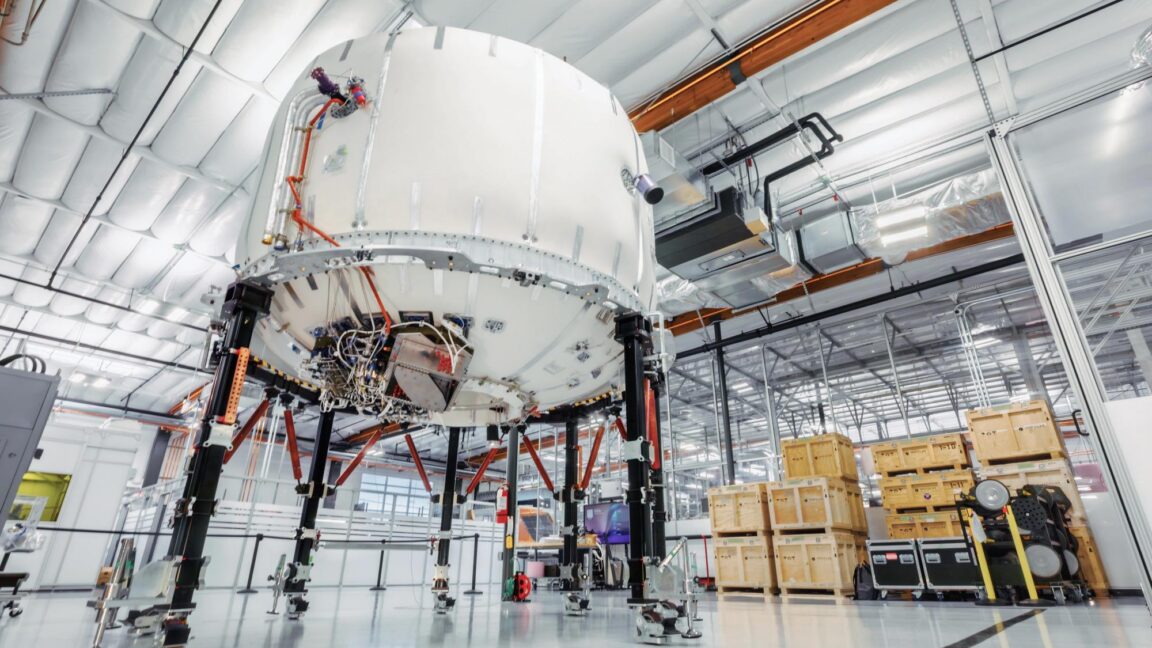
The US Space Force has added Impulse Space and Relativity Space to the group of companies eligible to pursue national security launch contracts, Ars Technica reported. The move broadens competition for military missions and gives Impulse, a company focused on spacecraft that operate after launch, a path into a market usually reserved for rocket builders.
Relativity’s addition fits the usual profile for the program. Ars Technica reported that the company is developing its partly reusable Terran R heavy-lift rocket and has continued that work under former Google chief executive Eric Schmidt.
Impulse is a less conventional entrant because it does not launch payloads from Earth. The company is developing Helios, a high-energy transfer stage designed to move satellites from low-Earth orbit to more demanding destinations, including geostationary orbit.
Eric Romo, Impulse Space’s president and chief operating officer, told Ars Technica that the current phase of the military program was not originally designed with that kind of provider in mind. “However, the Space Force has been really clear that they’ve got a lot of demands for high-energy launch, especially at GEO, and they don’t have a lot of supply,” Romo said.
How the Space Force program is structured
The contracts fall under National Security Space Launch Phase 3, the Space Force’s launch procurement program for missions awarded from 2025 through 2029, according to Ars Technica. Missions generally fly one to three years after the government awards a contract.
The program has two tracks. Lane 2 covers the most critical military payloads and is aimed at established providers SpaceX and United Launch Alliance, Ars Technica reported. Lane 1 is intended for newer competitors and missions with higher tolerance for risk.
About 30 Lane 1 missions are expected to be awarded, with a combined value of roughly $5.6 billion, according to Ars Technica. Romo said Impulse has discussed joining that track with the government for several years and said military officials have shown flexibility as they look for more ways to reach high-energy orbits.
Impulse’s pitch centers on Helios. Ars Technica reported that the stage is designed to provide up to 9 kilometers per second of delta-V, allowing a payload launched to low-Earth orbit to be sent quickly to geostationary orbit, about 36,000 kilometers above Earth.
That capability could allow a medium-lift rocket, such as SpaceX’s Falcon 9, to perform missions that otherwise would require a more powerful launcher, Ars Technica reported.
Helios must fly before Impulse can bid
Under Lane 1, Impulse would provide an end-to-end service to the Space Force, Ars Technica reported. The company would buy launch capacity, integrate Helios and the customer satellite inside the rocket’s payload fairing, and deliver the mission.
Helios is designed to work with several launch vehicles, including Falcon 9, United Launch Alliance rockets, Rocket Lab vehicles and Relativity’s rockets, according to Ars Technica.
Impulse still has to demonstrate Helios in flight before it can compete for Lane 1 task orders. After that mission, the Space Force would conduct a post-flight review, and successful contract bids could lead to launches 18 to 24 months later, Ars Technica reported.
Romo said Helios development is advancing. The company has sent a run tank to its test stand at Mojave Air & Space Port in California, where it will be repeatedly filled with propellant and tested for pressure performance, according to Ars Technica.
Romo also said the methane-and-liquid-oxygen Deneb engine for Helios is performing well in testing. Ars Technica reported that Deneb produces 15,000 pounds of thrust and that Impulse is aiming for Helios’ first flight in 2027 on a Falcon 9.
Impulse and Relativity join Rocket Lab and Stoke Space, which were added to Lane 1 in March 2025, according to Ars Technica. SpaceX, United Launch Alliance and Blue Origin were selected for the program in 2024.
This story draws on original reporting from Ars Technica.