
Bantu expansion evidence maps a long migration and its unresolved origins
Genetic, linguistic and archaeological research shows how Bantu-speaking populations spread across Africa, while key questions about their origins remain.
By James Whitfield · Staff Writer
3 min read
Bantu expansion evidence now strongly supports a long demographic movement from western Africa, rather than the spread of languages and technologies alone. Scientists are still working to establish its precise origins and routes because the archaeological record is incomplete, according to a recent review by Knowable Magazine and a large genomic study in Nature.
The expansion describes the prolonged spread of populations speaking related Bantu languages, beginning roughly 6,000 to 4,000 years ago in western Africa. It was not one single journey by one uniform group; research points to movements and interactions among many communities over a long period, Nature reported.
Its legacy remains visible across subequatorial Africa. About 350 million people speak more than 500 Bantu languages across roughly 9 million square kilometres, according to the Nature study. Those languages include Swahili in East Africa and Zulu in southern Africa, Knowable Magazine reported.
What evidence supports the Bantu expansion?
Researchers draw on three main lines of evidence: related languages, dated archaeological material and population genetics. Linguistic similarities first suggested that the languages shared a common history, while archaeological sites in eastern and southern Africa have yielded pottery, evidence of settled village life, metalworking, domesticated animals and western African crops dating within the past 2,000 years, according to Knowable Magazine.
The archaeological pattern is broad rather than uniform. Northern sites generally date earlier than those farther south, Knowable Magazine reported, a sequence consistent with a southward spread but insufficient on its own to reconstruct every movement or interaction.
Genomics has supplied stronger evidence that people moved as well as practices and languages. The Nature researchers genotyped 1,763 participants, including 1,526 Bantu speakers from 147 populations in 14 African countries, and generated whole-genome sequences from 12 Late Iron Age individuals.
They found that genetic diversity among Bantu-speaking populations declines with greater distance from western Africa. The study said that pattern, considered alongside linguistic and geographic data, supports a serial-founder migration model: as populations move outward, new settlements are formed by subsets of earlier populations, leaving less genetic diversity farther from the starting region.
What remains uncertain about the Bantu expansion?
The genetic findings do not establish one exact homeland or a single route. Linguistic and genetic research points especially to Cameroon’s Grassfields region, but conclusive archaeological evidence tying that area to the earliest Bantu-speaking ancestors remains limited, Knowable Magazine reported.
At Shum Laka, a rock shelter in the Grassfields, pottery dates from 7,000 to 6,000 years ago and becomes common by 5,000 to 4,000 years ago. Knowable Magazine described those finds as a possible, but inconclusive, trace of Bantu ancestors.
The expansion also was not a story of total population replacement. Nature found significant gene flow from local groups in regions where Bantu-speaking populations expanded, showing that local communities contributed to the ancestry of later populations.
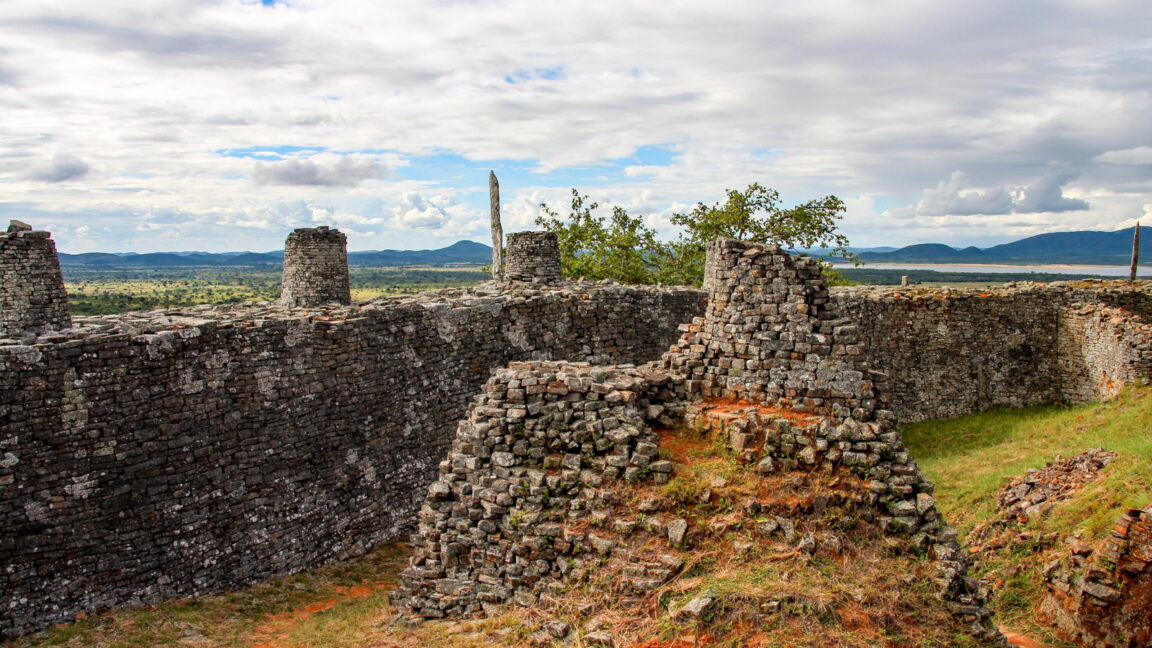
Later societies illustrate the region’s technological history without settling the expansion’s beginnings. Great Zimbabwe flourished between 1000 and 1700 AD, and remains near the site include large natural-draft iron-smelting furnaces, according to Knowable Magazine. Those achievements came millennia after the expansion began and should be kept separate from evidence about its initial origin.
This story draws on original reporting from Ars Technica.