
AI-designed bacteriophages show genome models can produce viable viruses
Researchers synthesized 285 AI-generated phage genomes and found 16 viable in E. coli, a limited result that sharpens biosecurity questions.
By Maya Lindqvist · Senior Technology Correspondent
3 min read
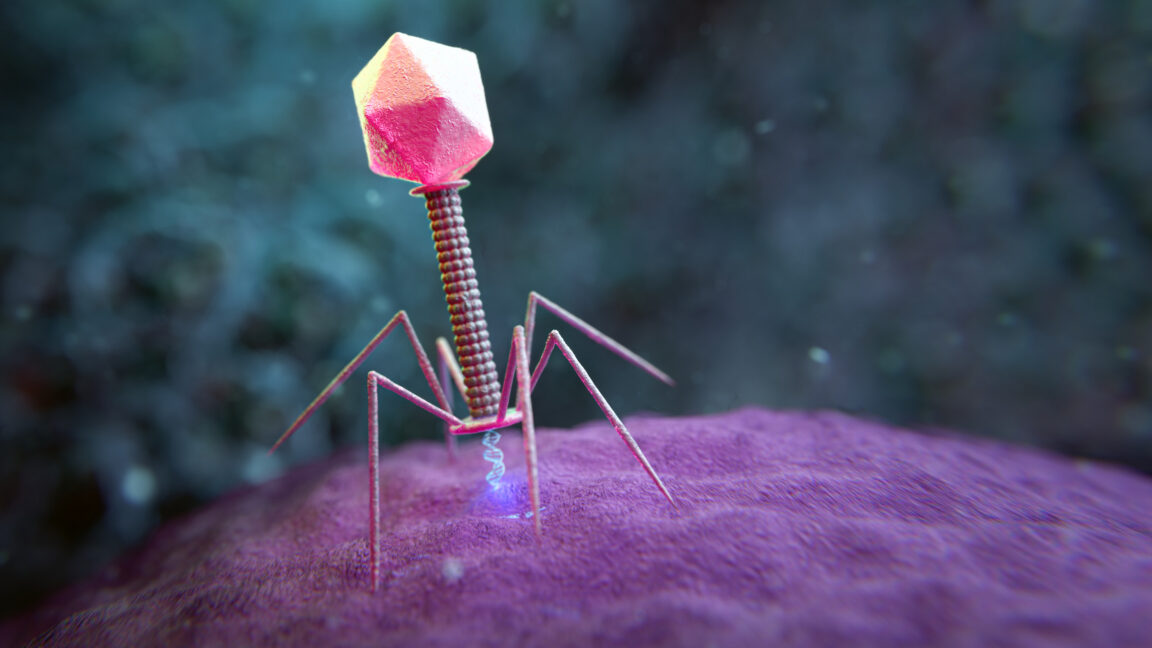
AI-designed bacteriophages produced 16 viable viruses in laboratory tests after researchers synthesized 285 computer-generated candidate genomes related to the bacterium-infecting virus ΦX174. The result shows that genome-language models can generate some working viral genomes, while remaining far from a demonstration involving viruses that infect people, animals or plants, according to Ars Technica and The Guardian.
The experiments focused on bacteriophages, viruses that infect bacteria. In this case, the target was E. coli, not a human or animal host. That boundary is central to interpreting the work: the reported viruses were constrained relatives of a small, extensively studied bacterial virus rather than newly designed human pathogens.
What did AI-designed bacteriophages do?
The researchers used Evo 1 and Evo 2, described as large genome models. Like a language model predicts a following word, a genome model generates DNA sequence; DNA uses four chemical letters, A, T, C and G, Ars Technica reported.
Researchers generated candidate genomes resembling ΦX174, a phage with about 5,400 DNA bases and 11 known genes, then screened the outputs before laboratory testing. Ars Technica reported that 285 of 302 retained candidates were synthesized and placed into bacteria. Sixteen inhibited E. coli growth, consistent with viable phages; nine came directly from the models, while seven acquired further mutations after being introduced into bacteria.
The success rate was low, and the working candidates generally stayed close to the reference virus. Ars Technica reported viability of 5.6% across the 285 tested candidates, rising to 46% among those at least 98% sequence-similar to ΦX174. None of the viable viruses changed the region where the reference virus begins duplicating its genome.
Those findings limit broader claims about the technology. They establish that a model can help produce viable variants within a narrow, well-characterized phage system; they do not establish that AI has designed a virus capable of infecting humans, other animals or plants.
Could the work help treat bacterial infections?
Phages are a prospective route for treating difficult bacterial infections because they can attack bacteria. The Guardian reported that a mixture of the AI-designed phages overcame resistance in two E. coli strains in dish experiments, but that is not evidence of a clinical treatment in patients.
The researchers excluded sequences from viruses that infect complex organisms during model training, according to Ars Technica and The Guardian. That precaution reduced the scope of the experiment, but the ability to make functioning viral genomes still raises questions about how more capable systems should be controlled.
The Guardian reported that the researchers urged genome-design teams to involve safety and security specialists throughout their projects. Filippa Lentzos of King’s College London called for layered controls covering model access, research review, DNA-synthesis screening, and laboratory biosafety and biosecurity. An accompanying commentary by Johns Hopkins researchers Tom Inglesby and Moritz Hanke said governance had not kept pace with the emerging capability, The Guardian reported.
Tom Ellis of Imperial College London, quoted by The Guardian, cautioned that ΦX174 is a particularly small and comparatively easy genome, and said altering existing pathogens may pose a more plausible threat than fully AI-designed viruses. The experiment therefore offers both a potential tool for phage research and a narrow proof of concept that safety rules will need to address as genome models advance.
This story draws on original reporting from Ars Technica.