
AI can decipher Linear A claim shows limits of lost-language tools
A June 2026 Linear A claim shows AI can test ancient-language patterns fast, but Jane Adkins says missing anchors still block firm translations.
By James Whitfield · Staff Writer
3 min read
A June 2026 claim that AI can decipher Linear A has renewed attention on one of linguistics’ hardest problems: how to read a language with no confirmed relatives and no bilingual key. Jane Adkins, a PhD candidate at Dublin City University writing in The Conversation, said the case shows both the speed AI can bring to ancient-language research and the limits it cannot overcome.
Linear A was used by the Bronze Age Minoan civilization on Crete, according to Adkins. She described it as a language isolate because researchers have not confirmed a link to any known language, living or extinct.
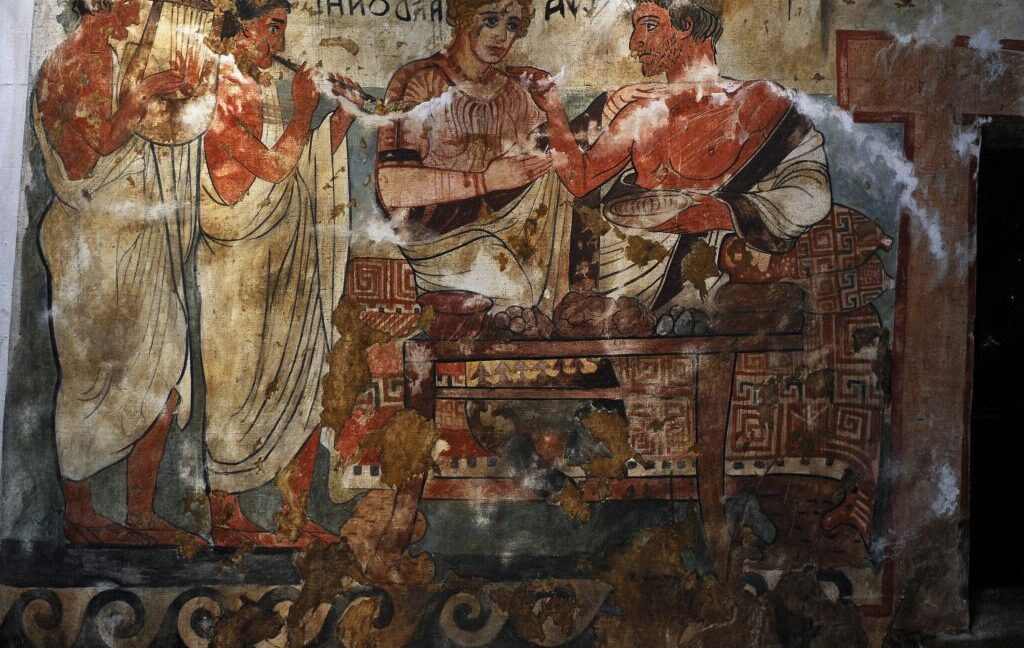
Adkins said Etruscan, used in Italy before Rome’s rise, presents a related challenge. Scholars have gathered some vocabulary from short funerary inscriptions, but she said its grammar and fuller meaning remain unresolved.
Can AI decipher Linear A?
Adkins said AI can help test ideas about Linear A, but it does not remove the need for evidence that ties unknown words to known meanings. Deciphered ancient languages have usually relied on an anchor, such as a bilingual inscription or a clear relationship to a known language.
In the June 2026 case, Adkins said a self-taught AI engineer and amateur linguist began with a human guess: that one unknown word in a prayer inscription came from a Semitic root meaning “to dwell” or “to inhabit.” He then used AI-generated programming scripts to compare that proposed sound pattern with a collected Linear A corpus.
According to Adkins, the researcher reported assigning values to 40 signs and building a 408-word lexicon. He argued that Linear A was an extinct Semitic language, a family that includes Hebrew and Aramaic, but Adkins said the claim remains subject to expert review.
Where AI helps with lost languages
Adkins said AI is useful for large pattern searches that would take humans far longer by hand. It can compare signs across an archive, find repeated sequences, and suggest missing characters in damaged inscriptions.
She also pointed to “cross-lingual transfer,” in which a model trained on a known language can infer patterns in a related unknown one. MIT News reported in 2020 that researchers had used machine-learning methods on Ugaritic, an extinct Semitic language from the late Bronze Age city of Ugarit in what is now Syria.
That kind of work has better prospects when the language family is known, Adkins said. In those cases, AI has something to compare against, much as a person who knows Spanish may make educated guesses about Portuguese.
Why verification remains hard
Adkins said statistical pattern matching cannot create meaning without an outside reference point. A model can learn which signs often appear together while still lacking evidence for what those signs meant to the people who wrote them.
The small amount of surviving Linear A makes the problem sharper. Adkins said the known corpus contains about 7,500 characters, leaving enough room for proposed readings to find scattered supporting matches.
For that reason, Adkins said AI-assisted claims about Linear A and Etruscan depend on independent scrutiny and peer review rather than confidence scores alone. AI can shorten the search for patterns, but she said genuine decipherment still requires a comparative anchor and human judgment.
This story draws on original reporting from Ars Technica.