
Zinc oxide material turns light touch into near-infrared emission
Tohoku University-led researchers report a rare-earth-free zinc oxide that emits light under low pressure, pointing to self-powered sensor uses.
By Tom Brennan · Health & Medicine Correspondent
3 min read
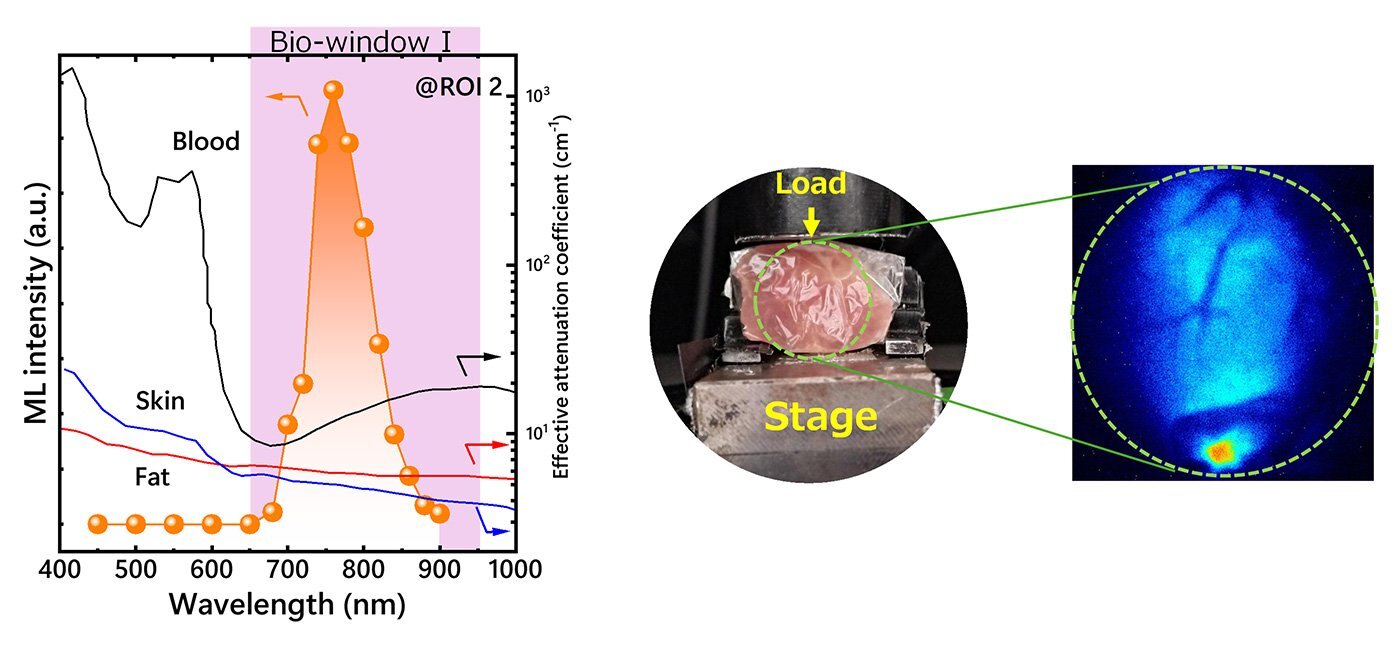
A team led by Tohoku University has developed a zinc oxide material that gives off light when exposed to small mechanical forces, without using rare-earth elements. The finding matters because high-performing mechanoluminescent materials have often depended on costly rare-earth components or complicated formulas, according to Tohoku University.
The work, carried out with researchers from the University of Tsukuba and Saga University, was published in Advanced Science. Tohoku University said the material shows strong and highly sensitive mechanoluminescence, a process in which stress, strain or vibration is converted directly into light.
Zinc oxide is an abundant material already used in products including sunscreens, cosmetics and ointments, according to the university. The researchers said they improved its stress-to-light response by adding a small amount of sodium and controlling defects in the material’s structure.
According to the team, the result is the first demonstration of strong, highly sensitive mechanoluminescence in zinc oxide without rare-earth elements. The reported sensitivity allows the material to emit bright light under pressure of only a few kilopascals, which the researchers compared with the pressure from a light fingertip touch.
How the material works
To study the mechanism, the team used advanced electron microscopy and computational modeling, Tohoku University said. Microscopy showed particles with a crater-like surface pattern that may help convert an outside force into strain inside the material.
The researchers also used first-principles calculations on the MASAMUNE-II supercomputer. Those calculations indicated that trace sodium creates stable structural defects that can temporarily hold electrical charge, according to the university.
The modeling further pointed to zinc vacancies as the cause of the material’s near-infrared emission. Tohoku University said these defects work together to produce the light response when the material is pressed.
Possible sensor uses
Mechanoluminescent materials are of interest because they can act as self-powered sensors, converting mechanical input into an optical signal without batteries or wiring, according to Tohoku University. The university cited possible uses ranging from biomedical sensors to infrastructure monitoring.
The team said the zinc oxide material emits in the near-infrared region, which can pass through biological tissue relatively well. That property could make it useful in future medical sensors that operate without internal power sources, according to the university.
Tohoku University said such medical devices could potentially be activated from outside the body by weak vibrations, including ultrasound. The university did not report a commercial device, and described the application as a future possibility.
The material may also be useful for monitoring structures, according to the researchers. If applied to bridges, buildings or wind turbine blades, it could make small strains or early deterioration visible as light, supporting remote systems that do not require wiring or dedicated power supplies.
The paper is titled “Stress-to-Light Conversion in an Earth-Abundant Oxide Semiconductor.” The listed authors include Tomoki Uchiyama and colleagues, and the publication details identify the journal as Advanced Science.
This story draws on original reporting from Phys.org.