
New analysis challenges Yellowstone wolf cascade claims
Researchers say a prominent study overstated how much wolf recovery boosted willow growth across Yellowstone National Park.
By Lucas Ferreira · Science & Environment Writer
3 min read
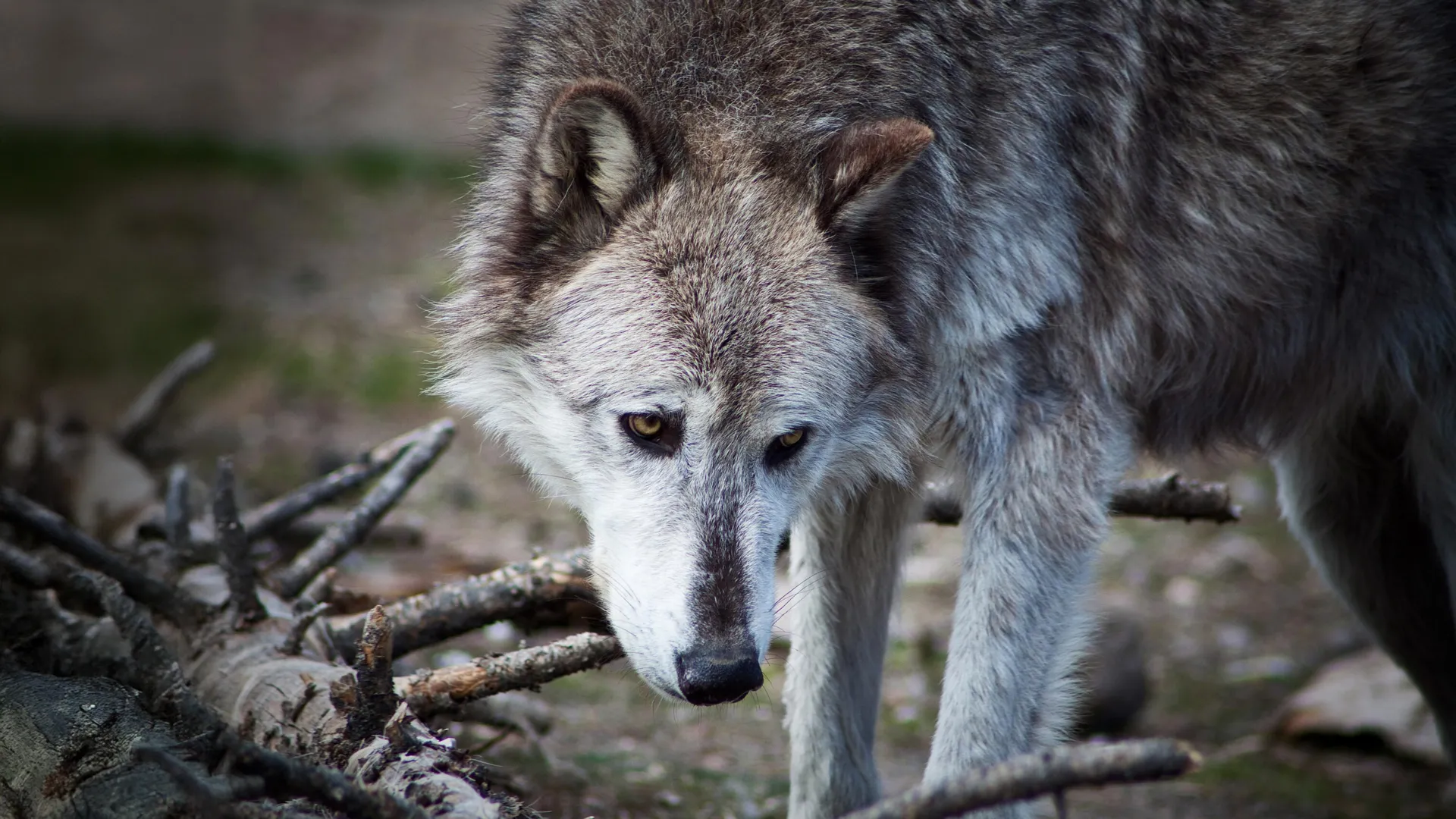
A peer-reviewed analysis is challenging a widely repeated claim that returning wolves transformed Yellowstone National Park’s vegetation. Researchers from Utah State University and Colorado State University say a 2025 study overstated the ecological effects of wolf recovery by relying on flawed statistical methods.
The analysis, published in Global Ecology and Conservation, focuses on claims by Ripple et al. that carnivore recovery produced one of the world’s strongest trophic cascades. Utah State University wildlife ecologist Daniel MacNulty, the lead author of the new analysis, said the earlier conclusion depends on circular reasoning and violates basic modeling assumptions, according to Utah State University.
Willow growth claim under scrutiny
The dispute centers on a reported 1,500% increase in willow crown volume after wolves returned to Yellowstone. MacNulty and his co-authors say that estimate came from a model that used plant height both to calculate willow volume and to predict willow volume.
According to the new analysis, using the same variable on both sides of the model creates a circular relationship that can make the result appear strong even if the biological change is weak or absent. MacNulty said that issue undercuts the reported scale of willow recovery.
The researchers also argue that the model was applied to heavily browsed willow plants with unusual shapes, even though the model was not built for those growth forms. They say that mismatch likely inflated estimates of plant growth.
Sampling and assumptions questioned
The Utah State and Colorado State team identified other problems in the earlier work. According to the analysis, many willow plots compared from 2001 to 2020 were not the same sites, meaning some apparent change over time could reflect sampling differences rather than actual recovery.
The authors also say comparisons between Yellowstone and trophic cascades in other places relied on assumptions that do not fit a system still in recovery. They describe Yellowstone as a non-equilibrium ecosystem, making broad comparisons more difficult.
The analysis also points to selective use of photographs and the omission of possible influences such as human hunting. The researchers say those choices made it harder to identify what was driving changes in willow growth.
A narrower picture of wolf effects
Colorado State University emeritus senior research scientist David Cooper, a co-author, said the corrected view does not support a large, park-wide increase in willow growth caused by predator recovery, according to Utah State University. Cooper said the evidence instead points to smaller effects that vary by location and are shaped by hydrology, browsing and local site conditions.
The authors said their analysis does not dismiss the ecological role of large predators. MacNulty said predator effects in Yellowstone are real, but depend on context, and that strong conclusions require stronger evidence.
The new paper also addresses why different research teams have reached different conclusions from related Yellowstone data. According to Utah State University, Ripple et al. interpreted the data as evidence for a powerful park-wide trophic cascade, while Hobbs et al., who collected data over two decades of field experiments, reported only weak trophic cascade effects in 2024.
The analysis was written by Daniel R. MacNulty, David Cooper, Michael Procko and T.J. Clark-Wolf. Its conclusion is that the famous Yellowstone wolf recovery story may be less sweeping than often presented, with vegetation responses that differ from place to place.
This story draws on original reporting from ScienceDaily.