
Why scientists say alien visitors remain unlikely
Carol Oliver of The Conversation says distance, energy demands and Earth’s biology make extraterrestrial visits improbable, even if alien life exists.
By Priya Raghavan · Science Reporter
3 min read
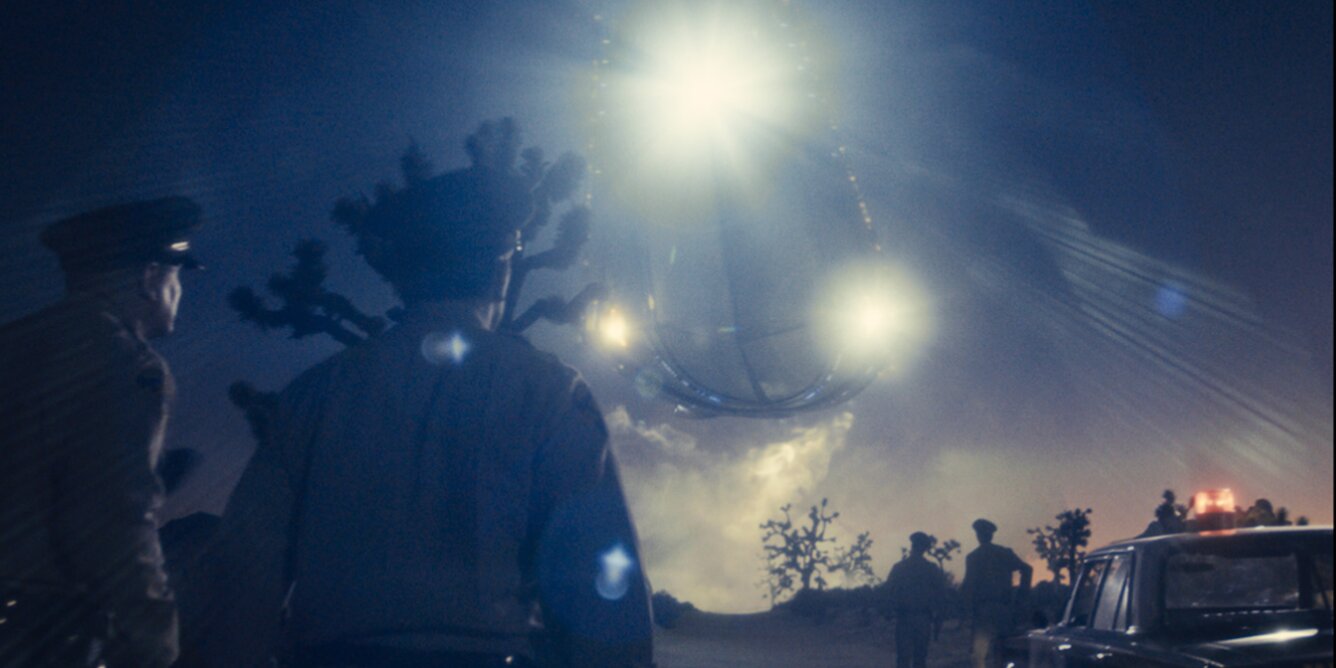
Public interest in alien visitors has climbed after the U.S. government released hundreds of previously classified unidentified anomalous phenomena cases and Steven Spielberg’s film “Disclosure Day” put extraterrestrial life back on screen. Carol Oliver, writing for The Conversation, says the science still points away from aliens dropping in on Earth.
Oliver argues that extraterrestrial life may exist somewhere in the universe, but three barriers make visits to Earth improbable: the scale of space, the energy needed for interstellar travel and the biological risks posed by Earth itself. Polls cited by The Conversation indicate that about a third of people in Australia, the U.S. and elsewhere believe aliens are already here.
The distance problem
The nearest star to the sun, Proxima Centauri, is about 40 trillion kilometers away, according to figures cited by Oliver from the European Space Agency. Astronomers measure that distance as 4.3 light years, meaning light itself takes more than four years to make the trip.
Current spacecraft are nowhere near that speed. Oliver notes that NASA’s Parker Solar Probe reaches about 191 kilometers per second, or 0.064% of light speed. At that pace, a trip to Proxima Centauri would take roughly 6,650 years.
Travel much faster and another problem appears: time. Oliver cites Einstein’s theory of relativity, under which time passes more slowly for travelers moving at high speeds than it does for people who stay behind. NASA astronaut Scott Kelly returned from a year aboard the International Space Station milliseconds younger than his identical twin, according to research cited by The Conversation, and Oliver says the difference would be far larger for a journey between stars.
Energy and radiation barriers
Oliver says the physics of acceleration creates a second obstacle. As a spacecraft approaches light speed, its effective mass rises, demanding more energy to keep accelerating; at light speed, the required energy would become infinite.
Space also is not an empty void. Oliver says stray particles in interstellar space could turn dangerous for a high-speed craft, producing intense radiation and heat capable of damaging instruments, harming passengers or destroying a hull. She also cites physicist Miguel Alcubierre’s faster-than-light concept, but notes that such ideas still face serious problems, including energy demands beyond present capability.
Oliver questions the practical motive for such a trip. A civilization advanced enough to reach Earth, she argues, would likely be able to produce what it needed at home rather than spend extraordinary resources crossing interstellar distances.
Earth may be hostile to outsiders
The third issue is biological. Oliver says Earth’s biosphere is known to be unique, and that life here developed with the planet over billions of years. Cyanobacteria helped fill Earth’s mostly nitrogen atmosphere with oxygen about 2.4 billion years ago, making complex life possible, according to research cited by The Conversation.
Oxygen suits humans, but Oliver notes that it is chemically reactive and could be corrosive or otherwise dangerous to organisms that evolved elsewhere. Protective suits could address that problem, she says, though popular reports of alien visitors often do not describe such equipment.
The search for life beyond Earth continues. NASA says about 6,200 exoplanets have been identified in more than 4,700 planetary systems, while the galaxy contains more than 100 billion stars. Oliver says Mars, Jupiter’s moon Europa, and Saturn’s moons Enceladus and Titan remain places where scientists consider past or present microbial life possible.
Searches for alien intelligence have been possible since 1960, according to the SETI Institute history cited by Oliver. She says projects including the SETI Institute in California and Breakthrough Listen at Oxford University have not found evidence of extraterrestrial intelligence, but a 1959 paper in Nature made the case for continuing: without a search, the chance of success is zero.
This story draws on original reporting from Phys.org.