
Warming oceans shaped survival in the Great Dying, study finds
Stanford-led research links the Permian-Triassic marine die-off to animals’ ability to withstand hotter, oxygen-poor seas.
By Lucas Ferreira · Science & Environment Writer
3 min read
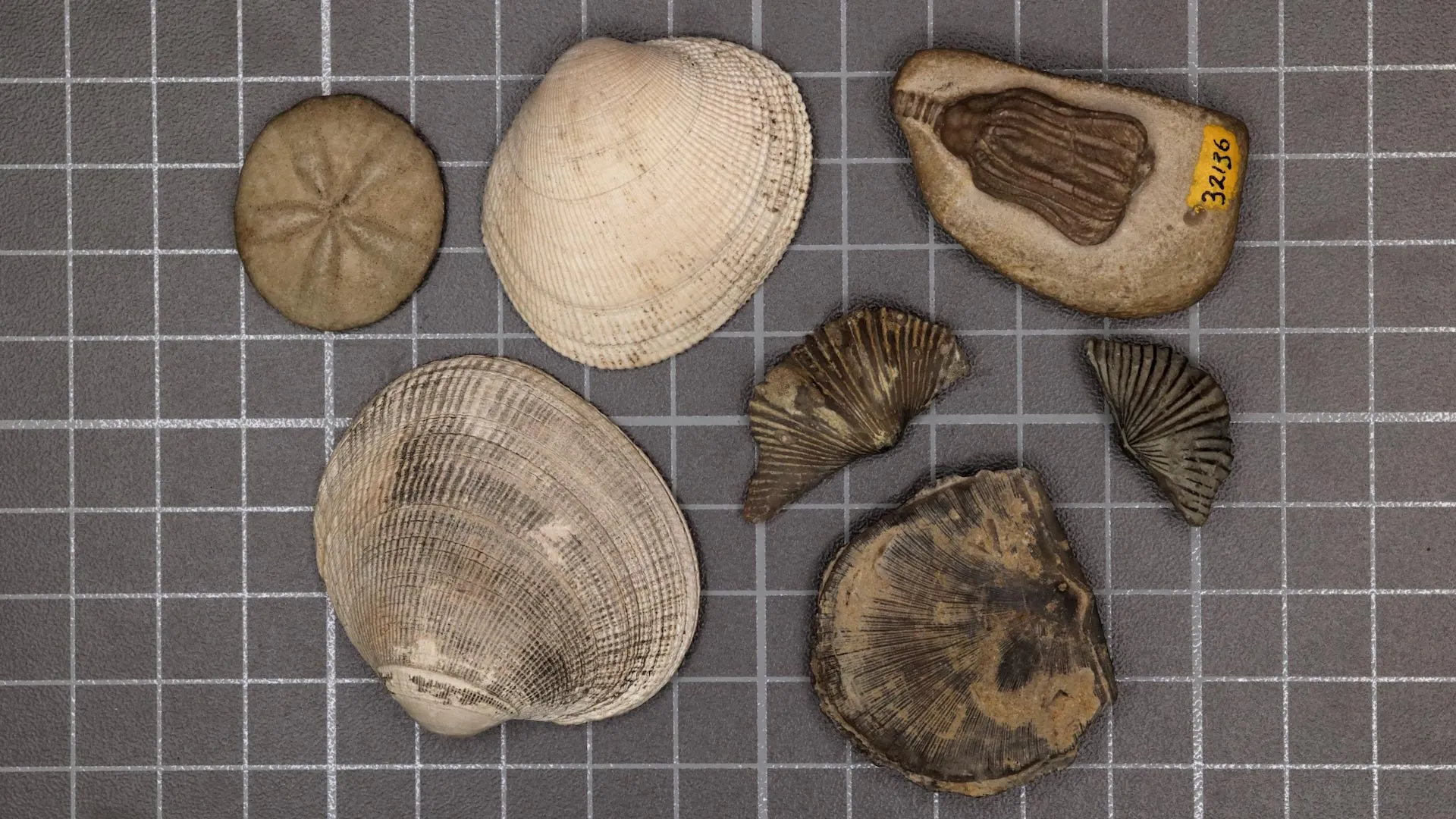
A Stanford-led study says the winners and losers of Earth’s largest mass extinction were separated in large part by physiology. The finding helps explain why clams, snails and other modern marine animals became common after the Permian-Triassic extinction, while once-dominant brachiopods faded.
Stanford University said the research, published July 6 in the Proceedings of the National Academy of Sciences, offers new evidence that warming seas and falling oxygen levels drove much of the marine collapse about 252 million years ago. The event, often called the Great Dying, eliminated about 96% of marine species and 70% of land animals, according to the university.
Why some animals survived
Before the extinction, Stanford said ancient seafloors had been dominated for roughly 280 million years by brachiopods, crinoids and other animals that lived on or near the bottom. After the extinction, those groups were greatly reduced, while about half of mollusks survived and later helped define modern ocean ecosystems.
The study’s authors report that species with metabolisms less able to handle warmer, oxygen-poor water suffered higher extinction rates. Massive volcanic eruptions released large amounts of carbon dioxide and methane, Stanford said, warming the planet and changing ocean chemistry.
Lead author Jose Andres Marquez, a former doctoral student in Erik Anders Sperling’s lab at Stanford, said the work was aimed at explaining why beachgoers today mostly find shells from clams and snails rather than brachiopods. Sperling, an associate professor in the Stanford Doerr School of Sustainability, said the results strengthen the case that heat and oxygen loss were central causes of the extinction.
Testing ancient survival limits
The team built on a 2018 Princeton and Stanford study that had pointed to warming and oxygen decline as likely causes of the Great Dying. Stanford said the earlier work drew heavily from physiology data on modern animals, leaving gaps for the Paleozoic groups that were hit hardest.
To address that, researchers collected and tested a range of marine animals representing ancient and modern ocean communities. Stanford said fieldwork included gathering living brachiopods in Washington state’s San Juan Islands, where they remain relatively common.
In field stations and Stanford laboratories, the scientists measured how much oxygen the organisms used at different water temperatures. The experiments showed that Paleozoic animals could endure lower oxygen levels than many modern species under some conditions, Stanford said, but their oxygen needs rose faster when water warmed.
The researchers linked that pattern to body form and activity. More mobile animals such as fish, sea urchins, snails and bivalves need more oxygen in ordinary conditions, according to the study, yet they also have muscles and gills better suited to meeting higher oxygen demand as temperatures rise.
Climate warning from the fossil record
Stanford said other research has identified ocean acidification as an added stress during the extinction because more acidic seawater can hinder shell formation. Sperling said the new study suggests acidification probably contributed, while warming and oxygen loss were the stronger forces.
The researchers said the ancient event has relevance for present-day oceans because human-driven fossil fuel emissions are warming the planet and reducing oxygen in parts of the sea. Sperling said worst-case projections could put Earth on a path toward Permian-Triassic levels of warming, though over a far shorter period.
According to Stanford, temperatures rose 8 to 12 degrees Celsius over thousands of years during the Great Dying. Current projections cited by Sperling put warming by 2100 at 1.5 to 4 degrees Celsius above pre-industrial levels over roughly 100 to 200 years.
The Stanford team plans to test more groups of marine animals to study how warming, oxygen loss and acidification interact. Stanford said the work was funded by the U.S. National Science Foundation, NASA, the Palaeontological Association and the Stanford Woods Institute for the Environment.
This story draws on original reporting from ScienceDaily.