
Moon lander exhaust may threaten frozen records of early life chemistry
A study modeled methane from lunar landings and found it could reach polar cold traps within days, risking contamination of ancient ice.
By Lucas Ferreira · Science & Environment Writer
3 min read
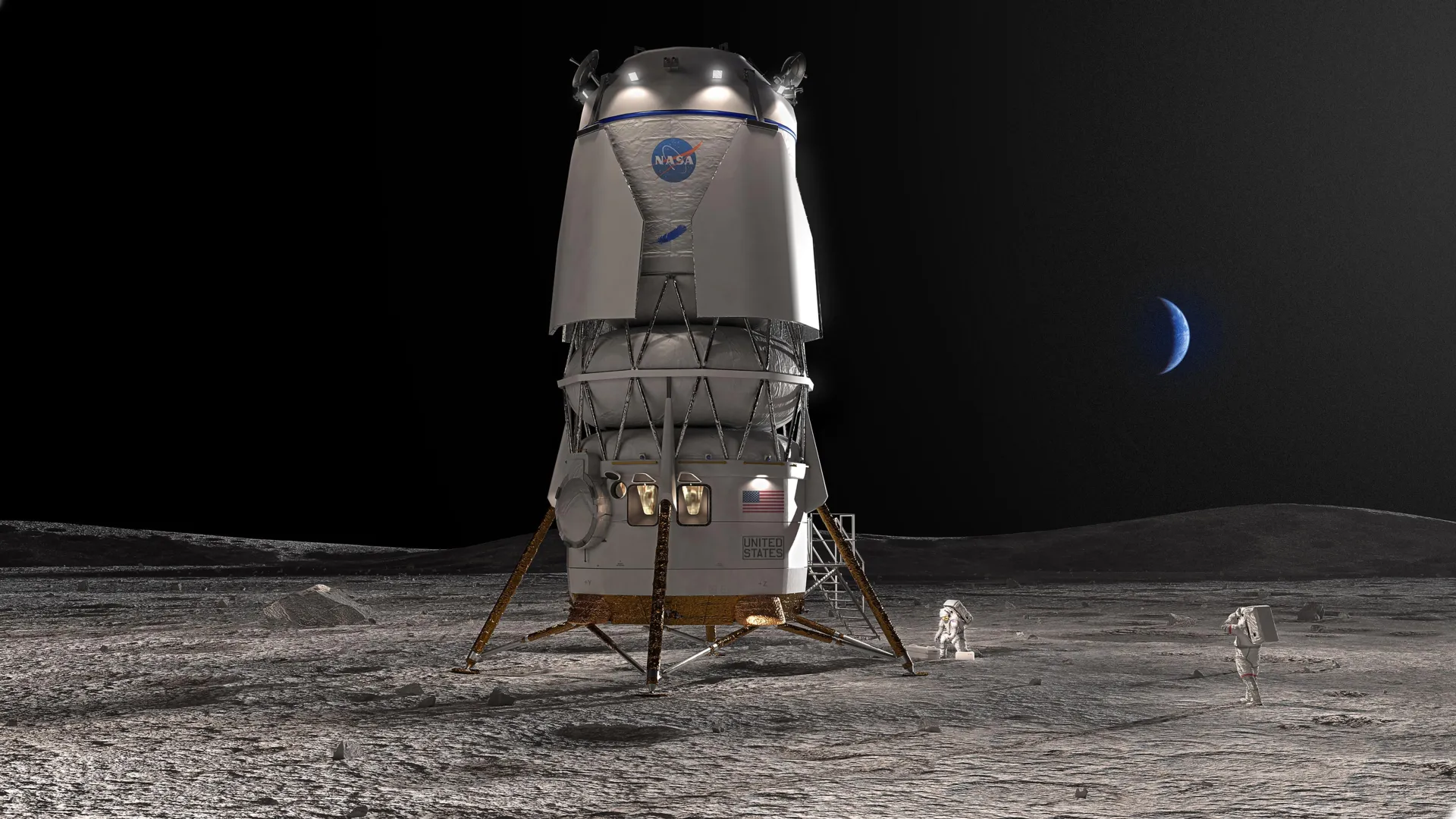
A new planetary science study warns that exhaust from future moon landings could spread organic contamination into some of the moon’s most valuable scientific sites. The risk matters because permanently shadowed polar craters may hold ancient ice with chemical clues linked to how the ingredients for life emerged on Earth, according to the American Geophysical Union.
The study, published in Journal of Geophysical Research: Planets, modeled methane released by spacecraft exhaust after a landing near the lunar South Pole. Researchers Francisca S. Paiva and Silvio Sinibaldi found that methane molecules could travel across the moon faster than expected, reaching the North Pole in less than two lunar days.
AGU said the findings come as governments, companies and nongovernmental groups prepare more lunar missions. Sinibaldi, planetary protection officer at the European Space Agency and senior author of the study, said lunar exploration could interfere with the science it is meant to support if contamination is not measured and limited.
Why the polar ice matters
The moon’s polar regions contain craters that do not receive sunlight, creating frigid traps where ice and other molecules can persist. According to AGU, those deposits may include material delivered by comets and asteroids billions of years ago.
Scientists are interested in whether that ice preserved prebiotic organic molecules, the chemical ingredients that may have helped form the first biological building blocks, including DNA. Sinibaldi said researchers know organic molecules exist elsewhere in the solar system, including asteroids, but still need to understand how such chemicals began to take on biological roles.
Earth’s active surface has likely erased much of that early record, AGU said. By contrast, parts of the moon have changed little over billions of years, making its coldest regions a possible archive of early solar system chemistry.
Those same cold traps could also collect new organic material from spacecraft. If lander exhaust settles into polar ice, researchers said, it could make it harder to distinguish ancient material from pollution brought by exploration.
Model followed methane from a landing
Paiva, a physicist at Instituto Superior Técnico, and Sinibaldi used the European Space Agency’s Argonaut mission as a case study. Their model tracked methane, described by AGU as the main organic compound produced during combustion of Argonaut’s propellants.
Earlier work had examined how water molecules move on the moon, AGU said. This study focused on an organic molecule and included the effects of solar wind and ultraviolet radiation.
Paiva said the simulations required tracking thousands of molecules as they moved, collided and interacted with the lunar surface. According to AGU, the computations took days or weeks to run.
The model found that, within seven lunar days, or almost seven months on Earth, more than half of the methane released by the landing had become trapped in permanently cold polar areas. The study reported that 42% accumulated near the South Pole and 12% near the North Pole.
The rapid movement is possible because the moon has almost no atmosphere, the researchers said. Without air to slow them, methane molecules follow ballistic paths, bouncing from one surface point to another as sunlight and temperature changes affect their motion.
Paiva said the results suggest there may be no landing site that fully avoids spreading contamination. She also said future work should examine other materials from spacecraft, including compounds released from paint and rubber.
Calls for monitoring on future missions
The researchers said contamination is not guaranteed to ruin lunar science. Paiva said colder landing areas may keep exhaust molecules more localized, while Sinibaldi plans to study whether contaminants remain on the surface of ice and leave deeper material usable for research.
Both researchers said the model needs confirmation through more simulations and measurements during lunar missions. Sinibaldi said mission teams should include instruments that can test the models, while Paiva compared the moon’s scientific value to protected places on Earth such as Antarctica and national parks.
This story draws on original reporting from ScienceDaily.