
Citizen photos expand study of fatherhood in harvestmen
iNaturalist records helped researchers trace how egg-guarding by male and female harvestmen evolved across spider-like arachnids.
By Lucas Ferreira · Science & Environment Writer
3 min read
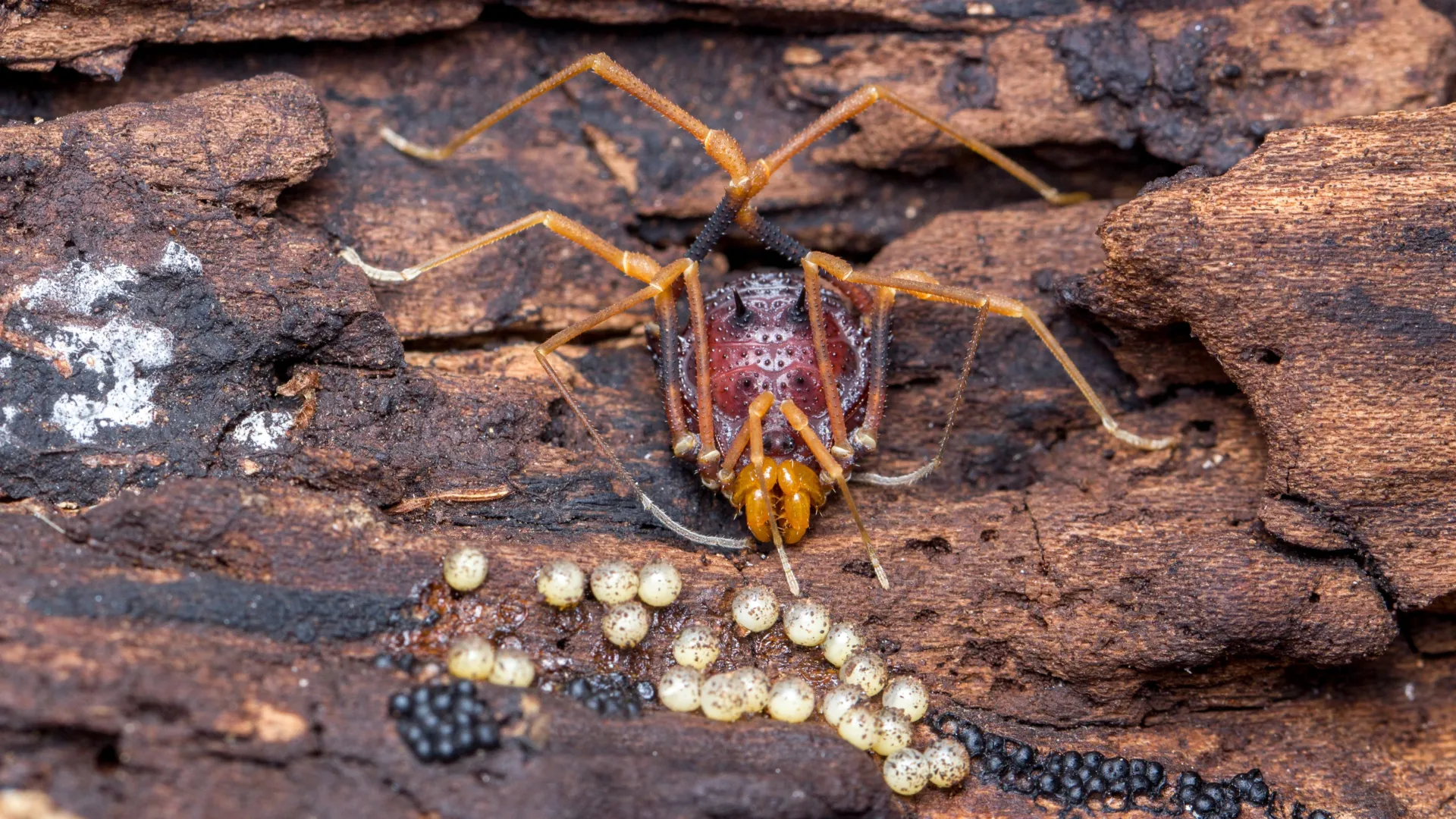
Public wildlife photos have helped researchers broaden the record of parental care in harvestmen, a diverse group of spider-like arachnids. The Linnean Society of London said the work gives scientists a clearer view of how egg-guarding by mothers and fathers evolved in one of the rare animal groups where male-only care is common enough to study in detail.
The study, published in the Zoological Journal of the Linnean Society, combined nearly three decades of field research with observations uploaded to iNaturalist. According to the Linnean Society, the international team was led by Glauco Machado, a scientist at the University of São Paulo.
Using the expanded data, the researchers more than doubled the number of documented cases of parental care in harvestmen, the Linnean Society said. The iNaturalist records alone added 62 new examples, after previous scientific publications from 1936 through 2025 had documented egg-guarding in 80 harvestman species.
Different routes for mothers and fathers
The researchers found that parental care in the superfamily Gonyleptoidea did not evolve in a straight line. According to the Linnean Society, egg-guarding appeared several times, vanished in some lineages and later arose again.
Maternal care followed one pattern: it developed from species with no parental care, matching trends previously reported in insects, the researchers said. Paternal care took two routes, appearing either from species with no parental care or from species in which females already guarded eggs.
The team said the second route may reflect sexual selection through “enhanced fecundity,” in which females prefer males that are already caring for eggs. Machado said male parental care is uncommon in nature, and harvestmen give researchers a way to study the factors that can lead males to care for offspring.
Why harvestmen matter
More than 6,900 harvestman species have been identified, according to the Linnean Society. Although harvestmen represent about 0.6% of arthropod diversity, the group accounts for more than half of the independently evolved cases of paternal care known among arthropods, making it useful for studying the evolution of fatherhood.
The researchers said iNaturalist changed the scale and speed of the work. Machado’s team turned to the platform after hearing about citizen science in bird research, then searched georeferenced records submitted by users around the world.
Machado said the iNaturalist search took two days. He said the platform offered a practical alternative to visiting museum collections worldwide, a process that would have been costly and slow.
Limits and expert checks
The study also points to a broader role for citizen science in biology, especially for researchers with fewer resources, the Linnean Society said. Public databases can help scientists gather records across wide regions without depending only on field expeditions or museum trips.
The researchers cautioned that expert taxonomists remain necessary. They said specialists are needed to identify species, determine whether the caregiving animal is male or female, and separate true parental care from behaviors that may look similar, such as mate guarding.
The authors also noted a sampling problem: animals sitting on eggs are easier for observers to notice and photograph than species that do not guard eggs. Even with that bias, Machado said the newly documented records show that citizen science can help fill gaps in studies of parental behavior across insects, frogs and other animal groups.
This story draws on original reporting from ScienceDaily.