
Urban researchers call for closer ties between city data and policy
A Nature Cities paper urges urban scientists to combine broad models with local evidence as cities weigh climate and sustainability choices.
By Priya Raghavan · Science Reporter
3 min read
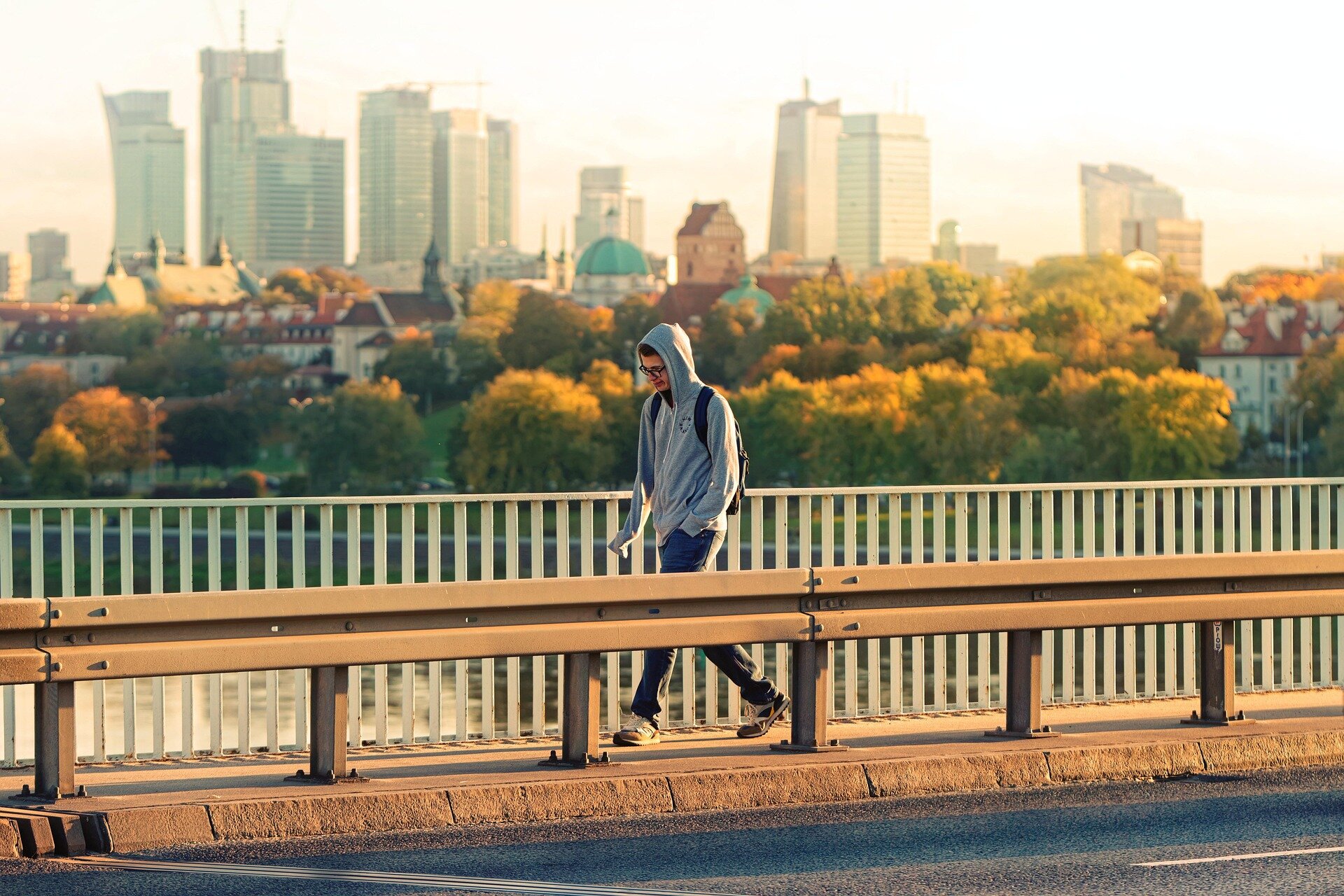
An international group of researchers has proposed a framework for making urban science more useful to policymakers as cities take on a larger role in climate and sustainability decisions. The team argues in Nature Cities that research on cities needs to connect broad patterns with local detail, while keeping researchers, residents and public officials in regular contact.
The paper was reported by the Max Planck Society and led by Patrick Roberts, director of the Department of Coevolution of Land Use and Urbanization at the Max Planck Institute of Geoanthropology. According to the society, the authors see cities as central to the Anthropocene because they are both major drivers of climate change and possible centers for innovation and policy action.
Roberts said, according to the Max Planck Society, that choices made by cities now will affect people for generations. He argued that sound decisions require links between broad comparative research and place-specific evidence, as well as steady exchange between academic and policy debates.
Bridging broad models and local cases
The authors focus on two research traditions. One seeks general rules across cities, using comparisons, models and shared definitions. The other emphasizes the specific histories, communities and environments that shape individual urban areas.
Christopher Carleton, a co-author and senior scientist at the Max Planck Institute of Geoanthropology, said the Max Planck Society that these traditions can work together and both are needed to understand past cities and prepare for future urban change.
The researchers argue that the difficulty is not only scientific. Urban policy depends on many kinds of data, often drawn from different disciplines and gathered at different scales. The paper says that work must be designed so findings can inform fair and effective public decisions, rather than remain split between separate academic fields.
Four principles for urban science
The study sets out four principles for research spaces and workflows that bring together urban science, communities and government decision-makers.
- Researchers who study broad urban patterns and those who study specific places should work with urban communities and policymakers from the start, so research questions reflect existing knowledge and urgent needs.
- Transdisciplinary data hubs should be maintained by researchers with both general and place-specific expertise, with common definitions and practices to support shared work.
- New case studies should be used to test broad claims, improve theory and update models, rather than being treated only as exceptions.
- Researchers from both traditions should jointly discuss findings and present them to community groups and policymakers.
According to the Max Planck Society, these recommendations grew out of a conference at the Max Planck Institute of Geoanthropology called Connecting Urbanism Across Time and Space. The meeting brought together urban scientists, physicists, mathematicians, biologists, archaeologists, historians, anthropologists and artists.
The society said the participants also included policy advisers and researchers involved in the next Intergovernmental Panel on Climate Change report. That mix reflects the paper’s central argument: cities cannot be understood through one discipline or one scale of analysis.
The paper, “Connecting the general and particular in interdisciplinary urban research,” was published in Nature Cities in 2026. The Max Planck Society said the work was peer-reviewed.
This story draws on original reporting from Phys.org.