
Tubulin may steer Alzheimer’s-linked proteins away from toxic clumps
Baylor researchers say tubulin can redirect Tau and alpha-synuclein inside neurons, pointing to a possible strategy for Alzheimer’s and Parkinson’s research.
By Priya Raghavan · Science Reporter
3 min read
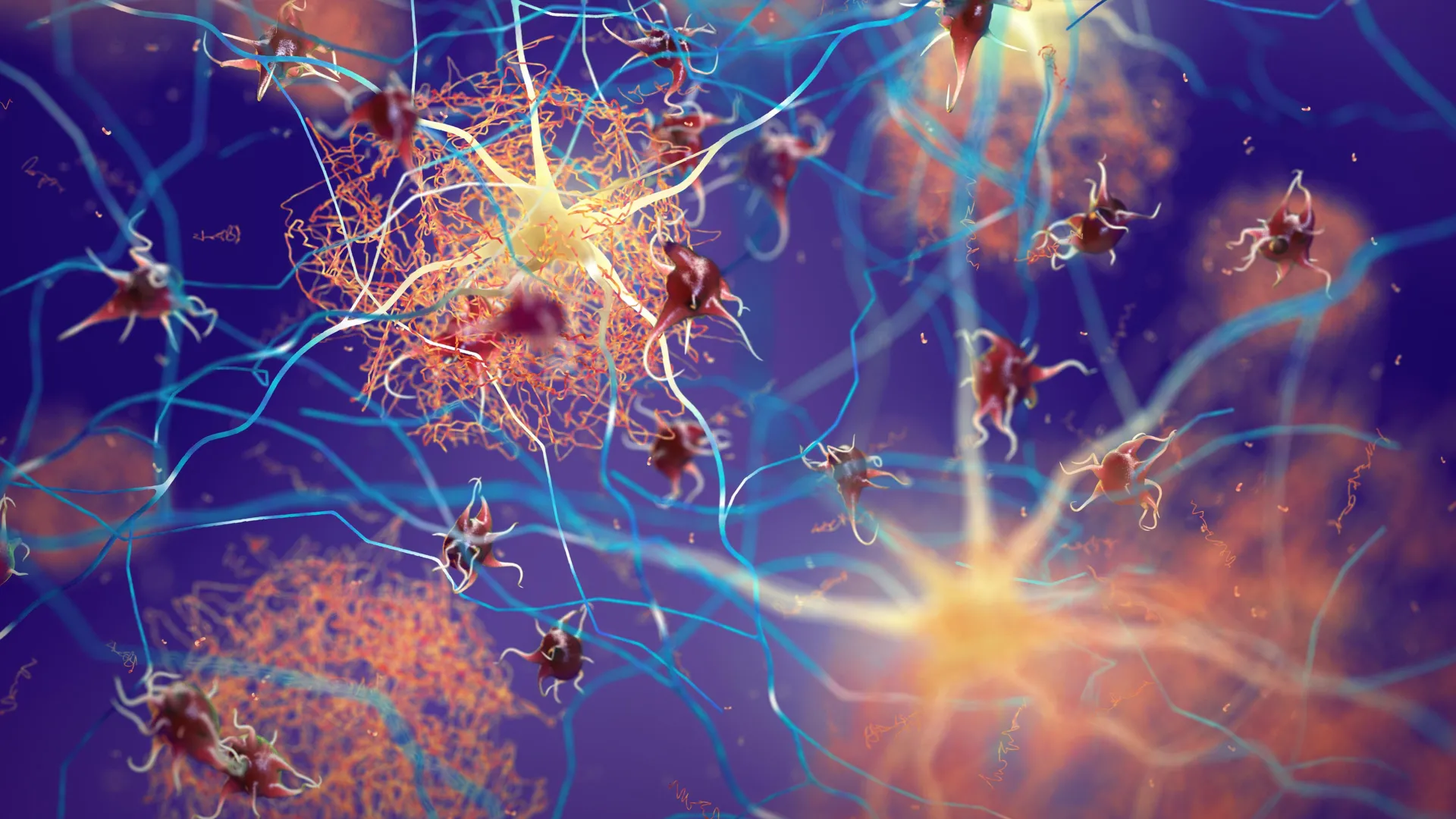
Researchers at Baylor College of Medicine say a common building block of brain cells may help keep two disease-linked proteins from forming harmful clusters. The finding matters because Tau and alpha-synuclein are associated with Alzheimer’s and Parkinson’s disease, and many treatment ideas have focused on stopping their toxic buildup.
In a study published in Nature Communications, the Baylor team reported that tubulin can shift Tau and alpha-synuclein away from damaging aggregates and toward their normal work in neurons. Tubulin is the protein used to build microtubules, the internal structures that help cells keep their shape and move materials.
A different target inside neurons
Baylor said Tau and alpha-synuclein have two sides in brain cells. Dr. Lathan Lucas, a postdoctoral associate of biochemistry and molecular pharmacology and first author of the study, said the proteins can misfold and collect into aggregates that harm neurons in neurodegenerative disease.
Lucas also said both proteins have needed roles in healthy neurons, including helping maintain cell structure and supporting communication through interactions with tubulin and microtubules. That dual role has complicated attempts to target them directly.
According to Baylor, Tau and alpha-synuclein carry out both normal and disease-related activities inside small cellular droplets known as condensates. Researchers have considered blocking those droplets, but Baylor said condensates also contribute to normal brain-cell function, raising the risk that broad suppression could interfere with healthy activity.
Tubulin changes the proteins’ path
Dr. Allan Ferreon, associate professor of biochemistry and molecular pharmacology and co-corresponding author, said the Baylor team tested whether the proteins could be pushed toward useful activity inside condensates rather than blocked from entering them. The group used biochemical and biophysical methods, high-resolution microscopy and neuron-based assays, according to Baylor.
The study found that tubulin altered the behavior of Tau and alpha-synuclein in condensates, Baylor reported. When tubulin was available, the proteins were less likely to form harmful aggregates and more likely to support the assembly of microtubules.
Lucas said low tubulin levels, which Baylor noted have been observed in Alzheimer’s disease, leave fewer microtubules and allow Tau and alpha-synuclein to form toxic aggregates. With tubulin present, he said, the proteins move toward microtubule-building activity instead.
Ferreon said the results recast tubulin as more than a damaged bystander in neurodegeneration. In Baylor’s account of the study, he said increasing the available tubulin pool could reduce toxic aggregation while preserving the healthy functions of Tau and alpha-synuclein.
Early research, possible therapeutic direction
The findings point to a possible treatment strategy centered on redirecting protein behavior rather than eliminating condensates, according to Baylor. The study does not report a patient-tested therapy, and Baylor described the work as a potential new approach for research on Alzheimer’s and Parkinson’s disease.
Other contributors listed by Baylor include co-first author Phoebe S. Tsoi, My Diem Quan, Kyoung-Jae Choi and co-corresponding author Josephine C. Ferreon, all of Baylor College of Medicine. Baylor said the work was supported by NINDS-NIH grant R01 NS105874, Welch Foundation grant Q-2097-20220331 and NIGMS-NIH grant R01 GM122763.
This story draws on original reporting from ScienceDaily.