
Arctic marine heat waves have intensified sharply since the 1980s
A new review finds Arctic ocean heat extremes are lasting longer, striking more often and behaving differently from those in lower-latitude seas.
By Tom Brennan · Health & Medicine Correspondent
3 min read
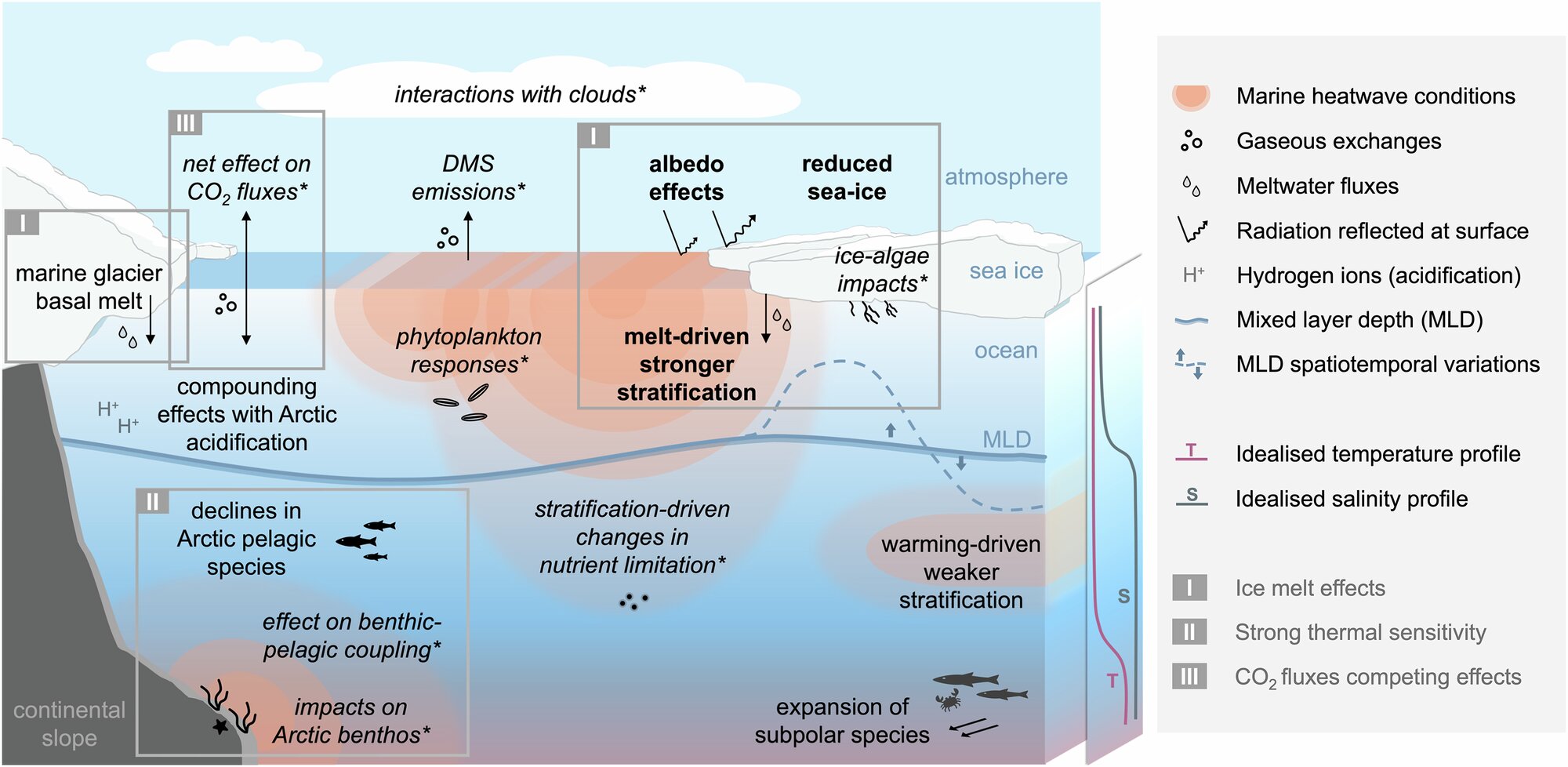
Marine heat waves in the Arctic have grown more frequent, hotter and longer-lasting since the 1980s, according to a new review led by the Alfred Wegener Institute. The finding matters because the Arctic is warming faster than other regions, and short-lived ocean temperature spikes can affect sea ice, marine ecosystems and climate processes.
The study, published in Communications Earth & Environment, brings together current research on Arctic marine heat waves and the forces that set them apart from events in other oceans. Dr. Marylou Athanase of the Alfred Wegener Institute, Helmholtz Center for Polar and Marine Research, said recent work shows a significant rise in the number of Arctic marine heat waves over recent decades.
Marine heat waves are periods of unusually warm ocean temperatures that last at least five days. According to the researchers, they can form when strong sunlight or warm air heats the ocean, or when currents move unusually warm water into an area.
The review says Arctic sea surface temperatures during these events can reach up to 4 degrees Celsius above the seasonal average. Athanase said the Arctic’s marginal seas are recurring hot spots, with surface marine heat waves becoming as much as 0.6 degrees Celsius hotter per decade and occurring at about twice the global average rate.
Across Arctic sectors, the researchers report estimates of one to three marine heat wave events per year. Depending on the region, Arctic marine heat waves now last roughly 10 to 40 days, and their duration is increasing faster than anywhere else in the world, according to the study.
The longest recorded Arctic event occurred in the Barents Sea in 2016, the review found. Surface and seabed temperatures there stayed about 1 degree Celsius above average for more than 480 days.
Conditions below the surface can be just as severe. The researchers report that heat waves between 50 and 500 meters deep are similar to, or stronger than, surface events. At the seabed, however, they found little overall increase in frequency or intensity, and some regions showed declines.
Sea ice loss changes how heat waves form
The study identifies ocean warming and shrinking sea ice as the main linked drivers behind the increase. Athanase said heat transfer from the atmosphere to the Arctic Ocean depends strongly on sea ice, because open water absorbs more solar energy after ice melts in summer.
During Arctic marine heat waves in 2007 and 2020, the ocean absorbed nearly twice the usual amount of summer solar energy because sea ice cover was extremely low, according to the review. The researchers also point to ice-albedo feedback: darker open water takes in more sunlight than reflective ice, which further warms the surface.
Meltwater adds another effect. The study says fresh water from sea ice forms a thin upper layer over saltier seawater, allowing modest heat input to raise surface temperatures sharply. Athanase said model simulations estimate that this process lengthens and strengthens surface marine heat waves by about 20% on average.
The Arctic can also draw heat upward from below. Unlike lower-latitude oceans, where the warmest water is usually near the top, the Arctic stores relatively warm Atlantic water at depth. The review says autumn and winter storms can mix the ocean and bring that heat toward the surface, with estimates linking this process to about one-fifth of Arctic surface marine heat waves.
Clouds add another uncertain factor. Athanase said marine heat waves in nonpolar oceans are often tied to low cloud cover that lets in more sunlight, but the Arctic behaves differently. Warmer temperatures and larger ice-free areas can increase evaporation and cloudiness, which may reduce incoming sunlight while also trapping and returning heat toward the surface.
The researchers said future simulations point to some of the world’s steepest increases in marine heat wave frequency and intensity in the Arctic as global warming continues. Athanase said more research designed for polar conditions is still needed, because Arctic processes remain less studied than marine heat waves elsewhere.
This story draws on original reporting from Phys.org.