
Chinese sodium-ion battery shows Tesla-like manufacturing quality
A Hina sodium-ion cell tested by German researchers matched several lithium-ion benchmarks, though cold charging and energy density remain hurdles.
By Tom Brennan · Health & Medicine Correspondent
3 min read
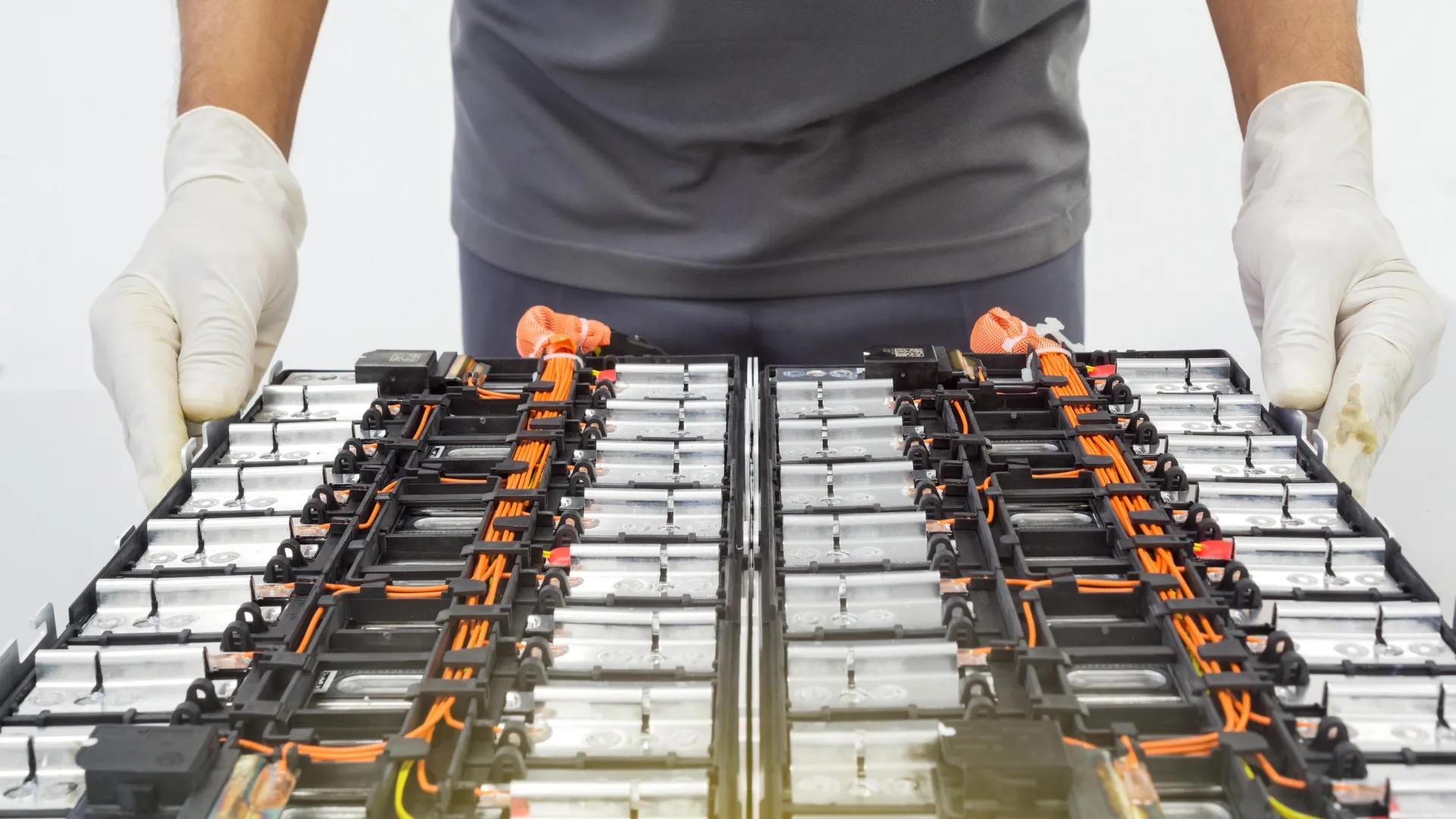
A commercial sodium-ion battery from Chinese manufacturer Hina has reached production consistency and design quality close to Tesla-style lithium-ion cells, according to research published by Cell Press in Cell Reports Physical Science. The finding points to a possible lower-cost route for electric vehicles with shorter ranges and for grid-scale storage, if engineers can solve remaining performance limits.
Moritz Schütte, a battery researcher at RWTH Aachen University in Germany, said the cells combined uniform construction, high power capability and strong cold-weather discharge behavior. He said those traits could suit stationary storage, grid services and commercial or shorter-range vehicles where cost and material availability can matter more than maximum driving range.
How the cells were tested
Schütte and colleagues examined 120 Hina sodium-ion cells using impedance spectroscopy, a non-destructive technique that can reveal how consistent cells are from one unit to another, according to Cell Press. The team then tested performance under varied currents and temperatures from minus 20 degrees Celsius to 45 degrees Celsius.
The researchers also used X-ray imaging to inspect the cells before taking them apart. During the teardown, they measured electrode dimensions and studied the materials and microscopic structures inside the battery, according to the study.
One feature stood out: a tabless design using a double-aluminum current collector. The researchers said that layout can lower electrical resistance and help heat spread more evenly through the cell. Cell Press said the approach resembles architecture used in Tesla batteries.
“We were positively surprised by how uniform the cells are,” Schütte said in material released by Cell Press.
Where sodium still trails lithium
The Hina cell performed better than the team expected for an early commercial sodium-ion product, Schütte said. Still, he said low-temperature charging remains a weakness for uses that require frequent charging in cold conditions, meaning thermal controls or careful operating strategies would be needed.
The researchers also found higher-than-expected copper concentrations in parts of the cathode, according to Cell Press. The copper was unevenly distributed in those areas, a result Schütte said raises questions about how it may affect performance and aging.
Schütte said future sodium-ion designs that avoid both nickel and copper while reaching competitive energy density would be worth watching. He also said today’s commercial sodium-ion cells generally store less energy than the leading lithium-ion cells, and that the technology is less mature.
Why manufacturers are interested
Sodium is more abundant and widely available than lithium, according to Cell Press, which could help reduce raw-material costs and ease some supply risks. That advantage has made sodium-ion batteries a focus for energy storage, even though lithium-ion technology remains the benchmark for many electric vehicles.
Cell Press said sodium-ion batteries also held up well under load in cold conditions during the tests. That could make them useful for stationary systems and mobile applications in colder climates, provided charging limitations are addressed.
The researchers plan to work on safer and more efficient charging below 0 degrees Celsius, according to Cell Press. Schütte said improvements to hard-carbon anodes and electrolyte formulations may be promising areas for further development.
The study, “Cell teardown and characterization of a Hina commercial sodium-ion battery,” was authored by Christian Siebert, Schütte and colleagues and published in Cell Reports Physical Science. Cell Press said the work was supported by Germany’s Federal Ministry of Research, Technology, and Space and the Federal Ministry for Economic Affairs and Energy.
This story draws on original reporting from ScienceDaily.