
Tantalum trisulfide shows outsized electric control of charge waves
A UCLA-UCR team reports a gate response in o-TaS3 that is 10 to 100 times larger than standard capacitance calculations predict.
By Priya Raghavan · Science Reporter
3 min read
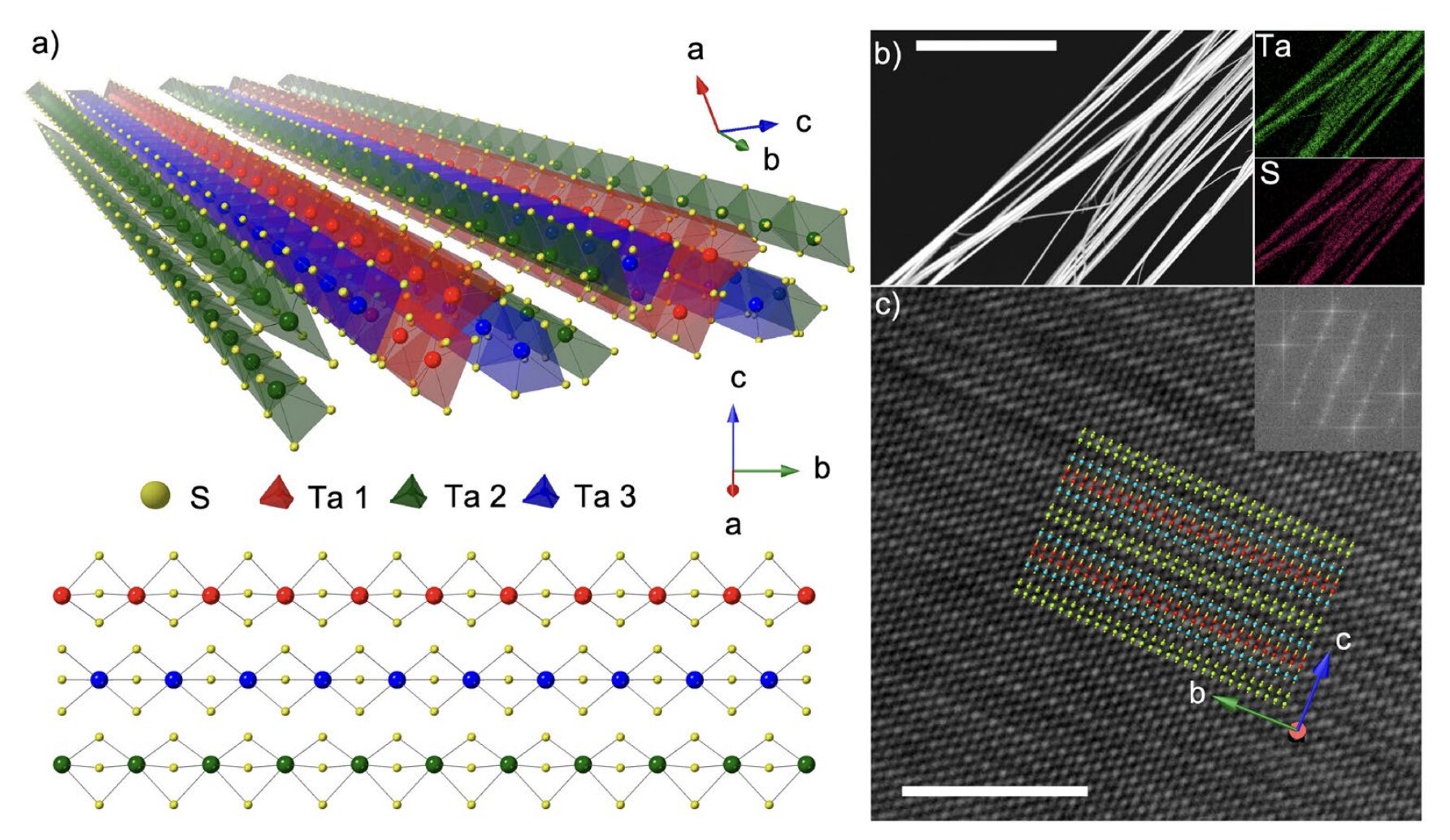
Researchers at the University of California, Los Angeles and the University of California, Riverside have shown that orthorhombic tantalum trisulfide can respond to an electric gate far more strongly than conventional device geometry would predict. The result matters for electronics research because stronger gate control could help lead to lower-power components built around collective electron states, according to a paper published in Nature Electronics.
The study, by Maedeh Taheri, Jordan Teeter and colleagues, focuses on a quasi-one-dimensional quantum material known as o-TaS3. The researchers report that the material can amplify control over charge density waves, a type of ordered electronic state in which electrons and the crystal lattice act together.
Testing a gated quantum device
Modern electronics commonly use a gate electrode to change a material’s electrical behavior by applying an electric field, the authors note. In standard devices, the scale of that effect is tied to capacitance, a measure of how much charge a gate can induce or store for a given voltage.
Taheri and colleagues built a gated device from o-TaS3 and applied changing electric fields through the gate, according to the paper. They then measured how the charge-density-wave condensate responded and compared the results with values expected from the device’s geometric gate capacitance.
The measured change in condensate charge density exceeded those conventional expectations by one to two orders of magnitude, the researchers report. In practical terms, the response was 10 to 100 times larger than calculations based only on device geometry would suggest.
The authors attribute the effect to coupling between the electric field and the electron-lattice condensate. Because the electrons in a charge density wave behave collectively rather than as independent particles, the gate can produce an amplified response, according to the team.
A route beyond ordinary capacitance
The researchers describe charge-density-wave condensates as correlated electronic phases formed through strong interactions between electrons and the lattice. They argue that efficient electrical control of such condensates could allow gating behavior beyond the usual capacitive limits of present-day devices.
To analyze the effect, the team determined the quantum capacitance of the charge density wave and built a band diagram for the gated device, according to the paper. Those steps were used to quantify how the condensate responded under an applied electric field.
The work points to a possible method for controlling correlated electronic phases in quantum materials using electric fields, the authors report. The study does not describe a finished commercial device, but it identifies a mechanism that could be useful for future transistors or other electronic components.
According to the researchers, materials such as o-TaS3 may help guide designs for smaller, more efficient and lower-power electronics. The paper frames the finding as part of a broader effort to use unusual collective electron behavior in materials to extend what electrical gating can do.
The Nature Electronics paper is titled “Giant gate response of the charge in an electron–lattice condensate.” It was published in 2026 and lists the DOI 10.1038/s41928-026-01636-x.
This story draws on original reporting from Phys.org.