
T. rex may have grown for 40 years, bone study suggests
A PeerJ study of 17 tyrannosaur fossils points to slower growth and renews questions over whether some famous specimens were T. rex.
By Tom Brennan · Health & Medicine Correspondent
3 min read
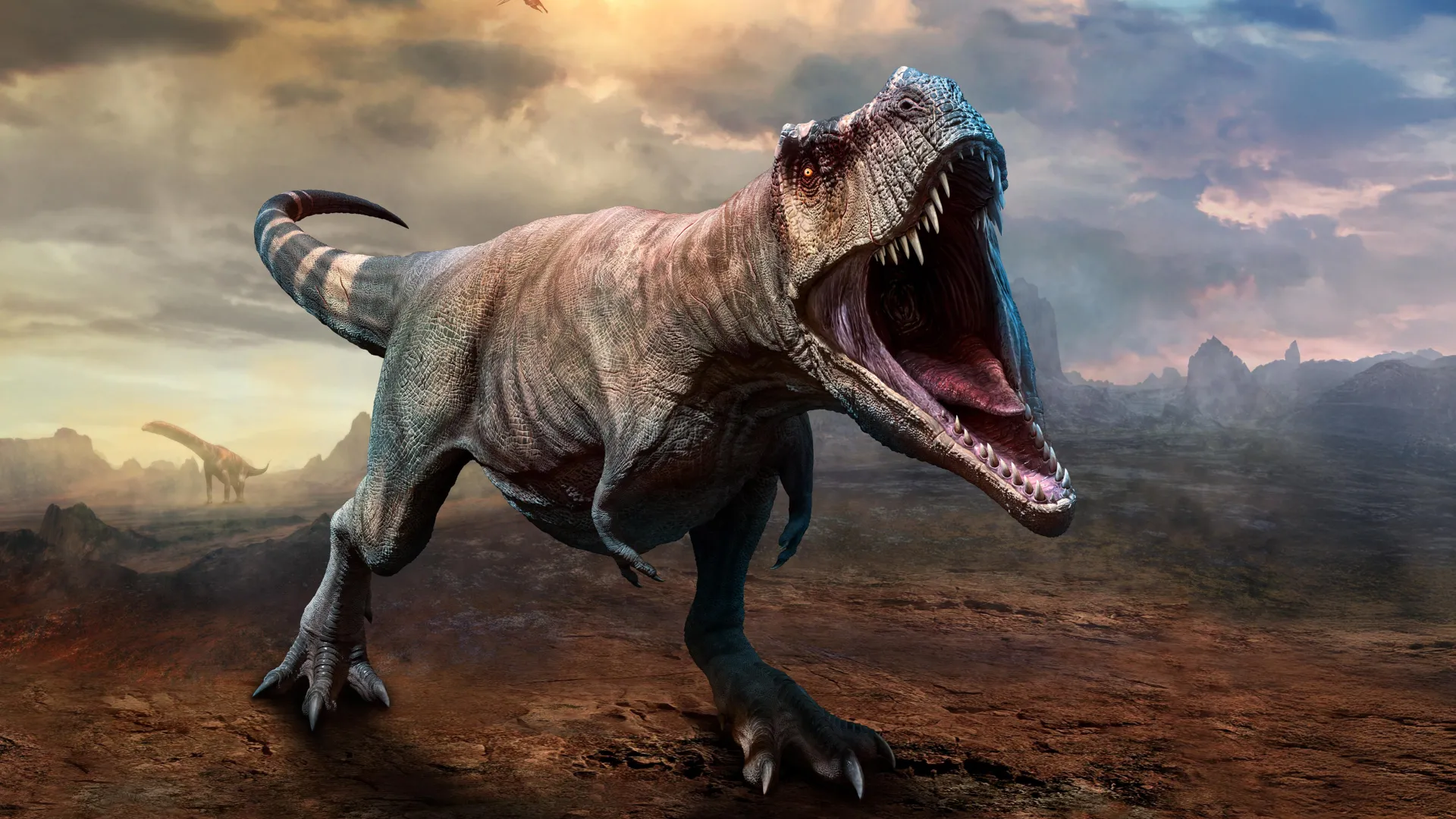
Tyrannosaurus rex may have taken about 40 years to reach full size, far longer than many scientists had estimated, according to a study published in PeerJ. The finding matters because growth rates shape how paleontologists understand the predator’s life cycle, ecology and classification.
The study examined 17 tyrannosaur fossils, ranging from young animals to large adults, and estimated that T. rex reached a maximum size of roughly eight tons, PeerJ reported. Earlier work had placed adult size at around age 25, according to the researchers.
Bone rings gave researchers a longer timeline
The team studied growth marks preserved in fossilized bones, which can record changes in an animal’s growth over time. PeerJ said the researchers used thin bone sections and specialized lighting to detect rings that standard methods can miss.
Holly Woodward, an anatomy professor at Oklahoma State University who led the research, said the project used the largest T. rex data set assembled for this kind of analysis, according to PeerJ. The authors said the bone record allowed them to rebuild growth histories across individual years, though each fossil preserves only part of an animal’s life.
A leg-bone slice from a T. rex usually captures the final 10 to 20 years of growth, the researchers said. To fill the gaps, Nathan Myhrvold, a mathematician and paleobiologist at Intellectual Ventures, led a statistical analysis that combined records from multiple specimens of different ages, according to PeerJ.
The resulting growth curve indicated that tyrannosaurs stayed in a growth phase roughly 15 years longer than previously thought, the study found. Rather than reaching full size quickly, the animals appear to have continued adding mass over several decades.
Study adds to the Nanotyrannus debate
The research also addressed a dispute over whether every fossil long labeled T. rex belongs to that species. PeerJ said the authors treated the 17 fossils as part of a “Tyrannosaurus rex species complex,” a term that leaves room for closely related species or subspecies.
Two well-known specimens, nicknamed Jane and Petey, showed growth patterns that differed from the others, the researchers found. The authors said growth data alone cannot settle whether those fossils represent different species, but they argued the differences warrant more study.
PeerJ noted that a separate recent study by Zanno and Napoli reached a similar conclusion by other methods, identifying Jane and Petey as two distinct species of Nanotyrannus. The new paper does not resolve that classification fight, but it adds bone-growth evidence to it.
Hidden marks may affect future fossil work
The authors also reported that circularly polarized and cross-polarized light revealed a type of growth mark that had been overlooked in some dinosaur bones. Myhrvold said, according to PeerJ, that common protocols for interpreting tightly spaced growth marks may need revision.
Jack Horner of Chapman University, a coauthor, said a four-decade growth period may have allowed younger tyrannosaurs to occupy different ecological roles as they matured, according to PeerJ. The researchers said that could help explain how the predators functioned near the end of the Cretaceous Period, which ended about 66 million years ago.
The study, by Woodward, Myhrvold and Horner, was published in PeerJ under the title “Prolonged growth and extended subadult development in the Tyrannosaurus rex species complex revealed by expanded histological sampling and statistical modeling.”
This story draws on original reporting from ScienceDaily.