
Collider control electronics clear first accelerator-cavity test
Brookhaven says the Electron-Ion Collider’s low-level radiofrequency controls worked in an integrated test on a real accelerator cavity.
By Lucas Ferreira · Science & Environment Writer
3 min read
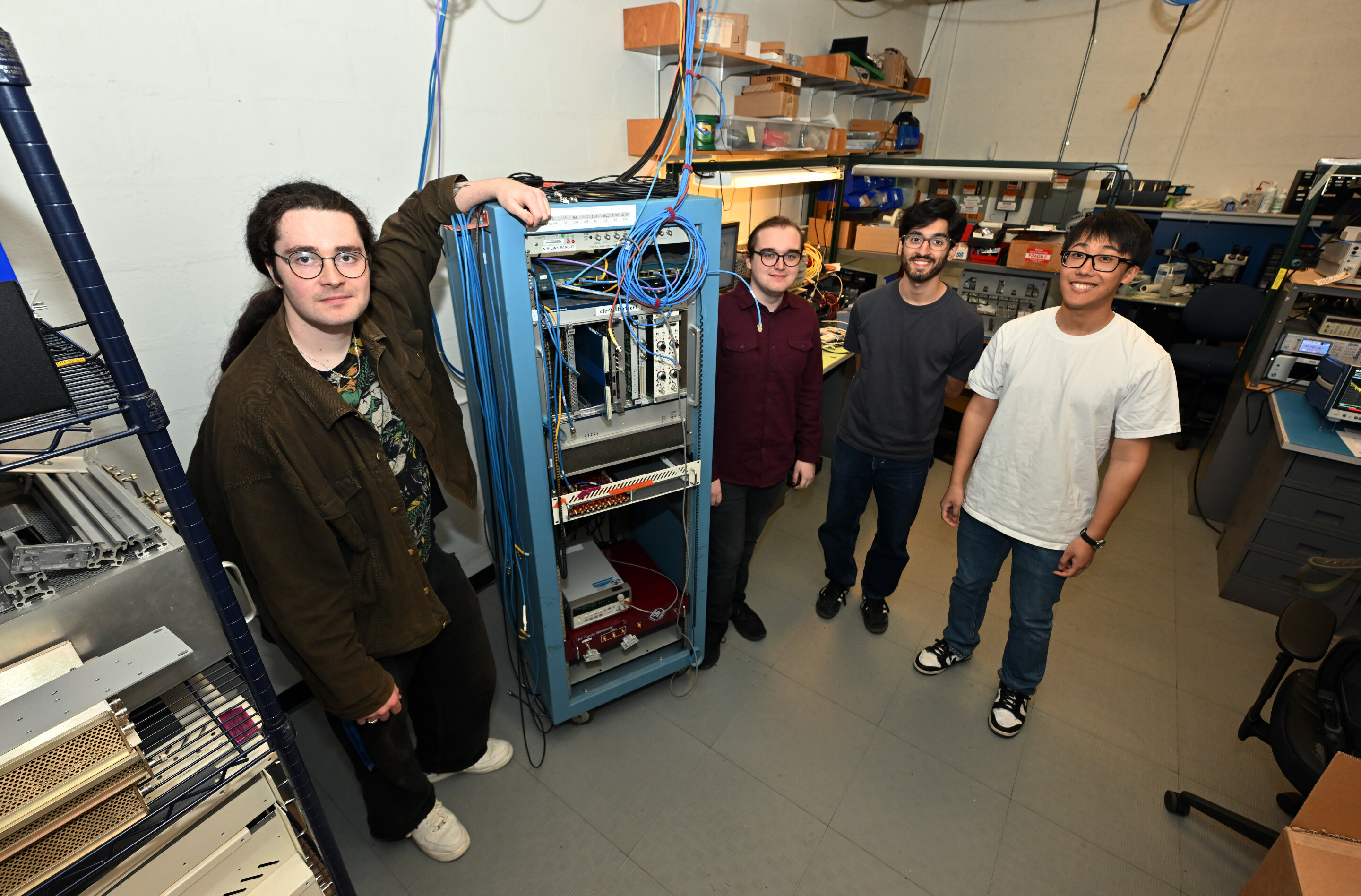
Brookhaven National Laboratory says a core control system for the planned Electron-Ion Collider has passed its first test on real accelerator hardware. The result matters because the system will help regulate the radiofrequency fields that accelerate and steady particle beams in the future collider.
The U.S. Department of Energy lab reported that newly built low-level radiofrequency electronics, based on a shared “common platform,” operated with an actual RF cavity rather than only in simulations or bench tests. Brookhaven said the setup brought together amplifiers, the cavity and controls as a working system for the first time.
The Electron-Ion Collider, or EIC, is being developed to collide electrons with ions so researchers can study how matter’s basic constituents are bound together. In an accelerator, radiofrequency systems use electromagnetic waves to push beams toward near-light speed, while low-level radiofrequency controls manage the timing, voltage and phase needed to keep the beams stable.
A shared platform for accelerator systems
Brookhaven described the test as an early milestone for a design intended to replace a more fragmented model used in earlier machines. The lab said systems at the Relativistic Heavy Ion Collider, which ended operations in February 2026, often relied on custom electronics built for individual subsystems.
The common platform takes a different approach, according to Brookhaven. It uses shared hardware and controls so different accelerator groups can build compatible systems instead of separate electronics for each function.
Geetha Narayan, Brookhaven’s project manager for the EIC low-level radiofrequency controls subsystem, said the platform had been under development for more than three to four years. She said the work aimed to bring groups using different hardware into a common control-system framework.
Brookhaven said the platform is expected to support several EIC functions, including RF controls, beam instrumentation and monitoring. Its modular design uses a central carrier board for network connections, timing signals and data flow, while plug-in daughter cards provide system-specific functions.
Narayan said groups can tailor daughter cards to their needs while relying on common timing, clock, data-link and network features from the carrier. Brookhaven said that design is meant to reduce duplicated work and speed deployment across EIC subsystems.
Several days of stable operation
During the test, Brookhaven said the low-level radiofrequency system ran for several days and held the RF cavity at requested operating points. The lab said the results showed that performance measured in the laboratory carried over to a full RF system that included the controller, power amplifier and cavity.
Kevin Mernick, a Brookhaven engineer and technical lead for the common platform effort, said the controls made rapid corrections to keep cavity voltage at its set point. Brookhaven said the system’s field-programmable gate arrays process live signals and feedback algorithms at high speed, adjusting for short-term fluctuations and longer drift.
The lab said the common platform is more compact and capable of faster data movement than older RHIC electronics, with planned data rates up to 8 gigabits per second. Brookhaven also said the test showed improved noise performance under real operating conditions.
The trial took place under a tight schedule, according to Brookhaven. Mernick said the team had about two weeks before RHIC systems were shut down and prepared for EIC-related use, and that the first day exposed problems that engineers then fixed.
Next tests may be limited
Brookhaven said early-career engineers played a central role in the implementation and test work, alongside staff from multiple lab groups and collaborators including DOE’s Thomas Jefferson National Accelerator Facility. Arshdeep Singh, an associate staff electrical engineer at Brookhaven, said he worked on firmware and on lab tools used to verify the integrated system before the cavity test.
With RHIC now shut down, Brookhaven said full-system test opportunities will be scarce for now. Narayan said the next comparable work may be a year or more away, when Brookhaven and Jefferson Lab test key EIC components before installation in the accelerator tunnel.
This story draws on original reporting from Phys.org.