
Cretaceous mussel fossil points to early maternal care
Researchers say embryos preserved in a 125-million-year-old freshwater bivalve show that some ancient mussels brooded their young in their gills.
By Lucas Ferreira · Science & Environment Writer
3 min read
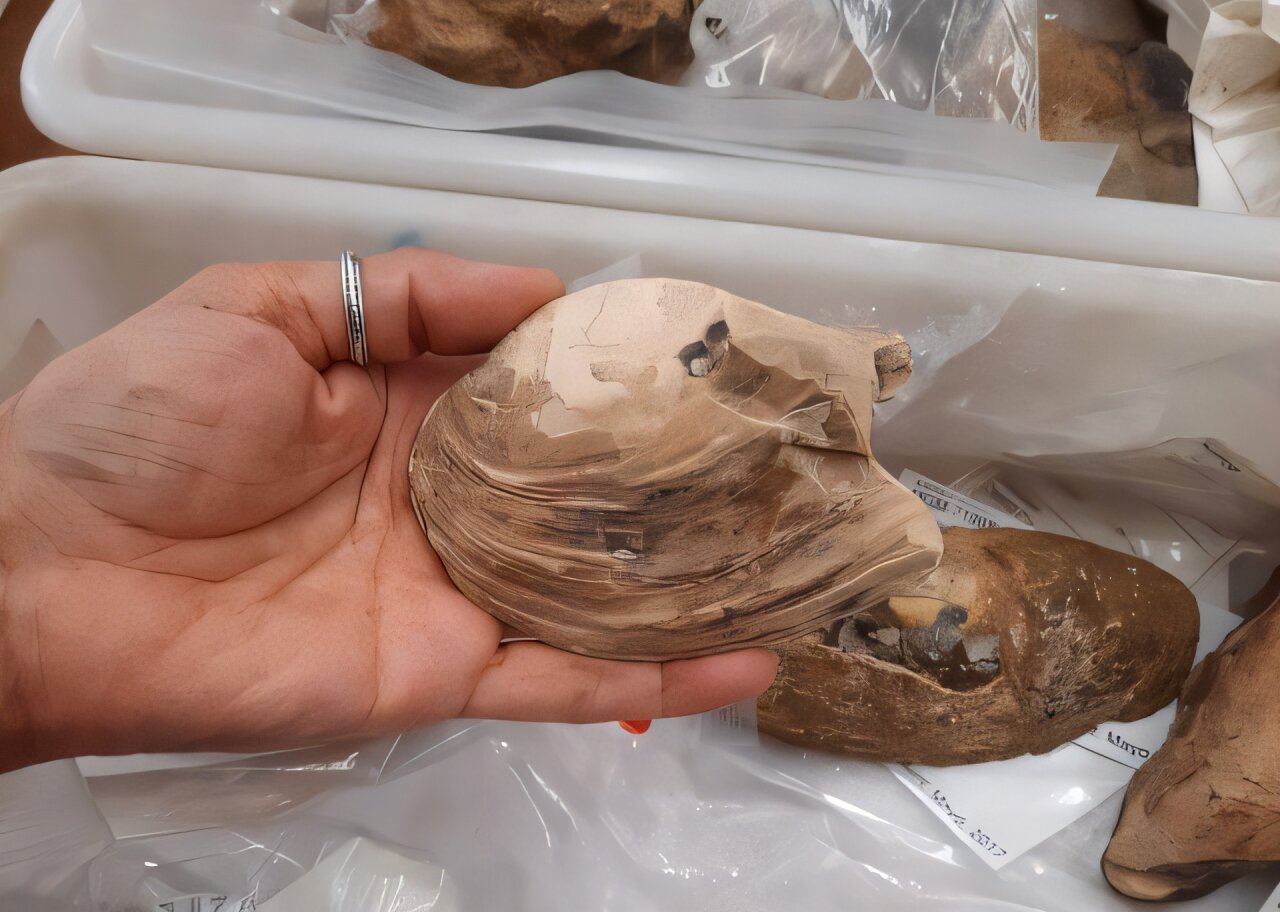
Scientists have identified what they describe as the oldest known fossil evidence of maternal care in shellfish. The finding matters because it pushes a complex reproductive strategy seen in living freshwater mussels back more than 125 million years, according to a study published in Scientific Reports.
The international team was led by Dr. Graciela Delvene of the Geological and Mining Institute of Spain, CSIC, according to the University of Portsmouth. Researchers examined fossils of Margaritifera valdensis, a freshwater bivalve distantly related to modern freshwater pearl mussels.
The specimens came from Cretaceous deposits on the Isle of Wight in the United Kingdom, a fossil-rich area also known for dinosaurs including Iguanodon, the University of Portsmouth said. Inside the ancient shells, the researchers reported preserved soft tissues, including microscopic embryos and larvae held within gill structures.
A fossil record of brooding
Soft internal tissues usually break down soon after death, which makes their preservation in these fossils unusual, according to the researchers. The study says the fossils retain parts of the reproductive system, including brood chambers, gill tissues, mineralized supports and young at several developmental stages.
Dr. Martin C. Munt, a visiting academic at the University of Portsmouth and a fossil mollusk specialist, said the discovery provides the earliest direct fossil evidence that these shellfish protected developing offspring. He said the finding also helps researchers understand how freshwater bivalves were able to live successfully in lakes and rivers during the Cretaceous.
Modern freshwater mussels use a complicated life cycle, according to the study. Their larvae first grow inside the mother’s gills before being released and briefly living as parasites on fish, a step needed to complete development.
Dr. Aleksandra Skawina, a Polish researcher on the team who specializes in fossil bivalves, said the fossils show that this reproductive approach was already present by the Early Cretaceous. The researchers reported evidence ranging from early embryo-like cells to more developed larvae.
Calcium stores and “molluskite”
The team also found tiny mineral deposits in the gills that they interpret as calcium reserves. According to the study, those deposits may have helped larvae form their shells, similar to the way living freshwater mussels support developing young.
The research also revisits a dark fossil material called “molluskite,” first described in the 19th century by British paleontologist Gideon Mantell. Rafael P. Lozano, a geochemist at the Geological and Mining Institute of Spain, said the team found that the material consists of mineral-preserved soft tissues and reproductive structures.
The paper, by Delvene and colleagues, is titled “Exceptionally preserved embryos reveal maternal care in freshwater bivalves since the Cretaceous.” It was published in Scientific Reports with the DOI 10.1038/s41598-026-56499-1.
The University of Portsmouth noted that living freshwater mussels are among the most threatened animal groups. The researchers say the fossils offer rare evidence of the deep history of a group that remains important to freshwater ecosystems today.
This story draws on original reporting from Phys.org.