
Researchers map cotton gene region tied to bacterial blight resistance
NC State scientists found resistance to an aggressive cotton blight strain is largely linked to one dominant gene region.
By Tom Brennan · Health & Medicine Correspondent
3 min read
North Carolina State University researchers have identified a major cotton genome region tied to resistance against race 18 of bacterial leaf blight. The finding matters for breeders because the disease has returned as a production threat in parts of the U.S. Cotton Belt, according to NC State.
The work, published in The Plant Genome, was led by doctoral student Spoorti Gandhadmath in the lab of Vasu Kuraparthy, a professor and cotton breeder in NC State’s Department of Crop and Soil Sciences. The study examined cotton plants for resistance to a strain of the pathogen described by NC State as especially aggressive.
Gandhadmath tested seedlings grown from diverse cotton genotypes by exposing newly emerged leaves to race 18 of the bacterium, according to NC State. A week later, she recorded whether the leaves showed water-soaked infection spots or dry dead patches associated with resistance.
Kuraparthy’s team then used a genome-wide association study, scanning cotton DNA with about 63,000 genetic markers, according to NC State. The researchers reported one major genome region strongly linked to resistance, and follow-up mapping confirmed that the trait is mostly controlled by a single dominant gene.
Gandhadmath said the result was unexpected because the cotton lines had varied U.S. breeding backgrounds. “The cotton lines we studied showed strong resistance to the aggressive race 18 of the disease,” she said in NC State’s report.
A disease with few field options
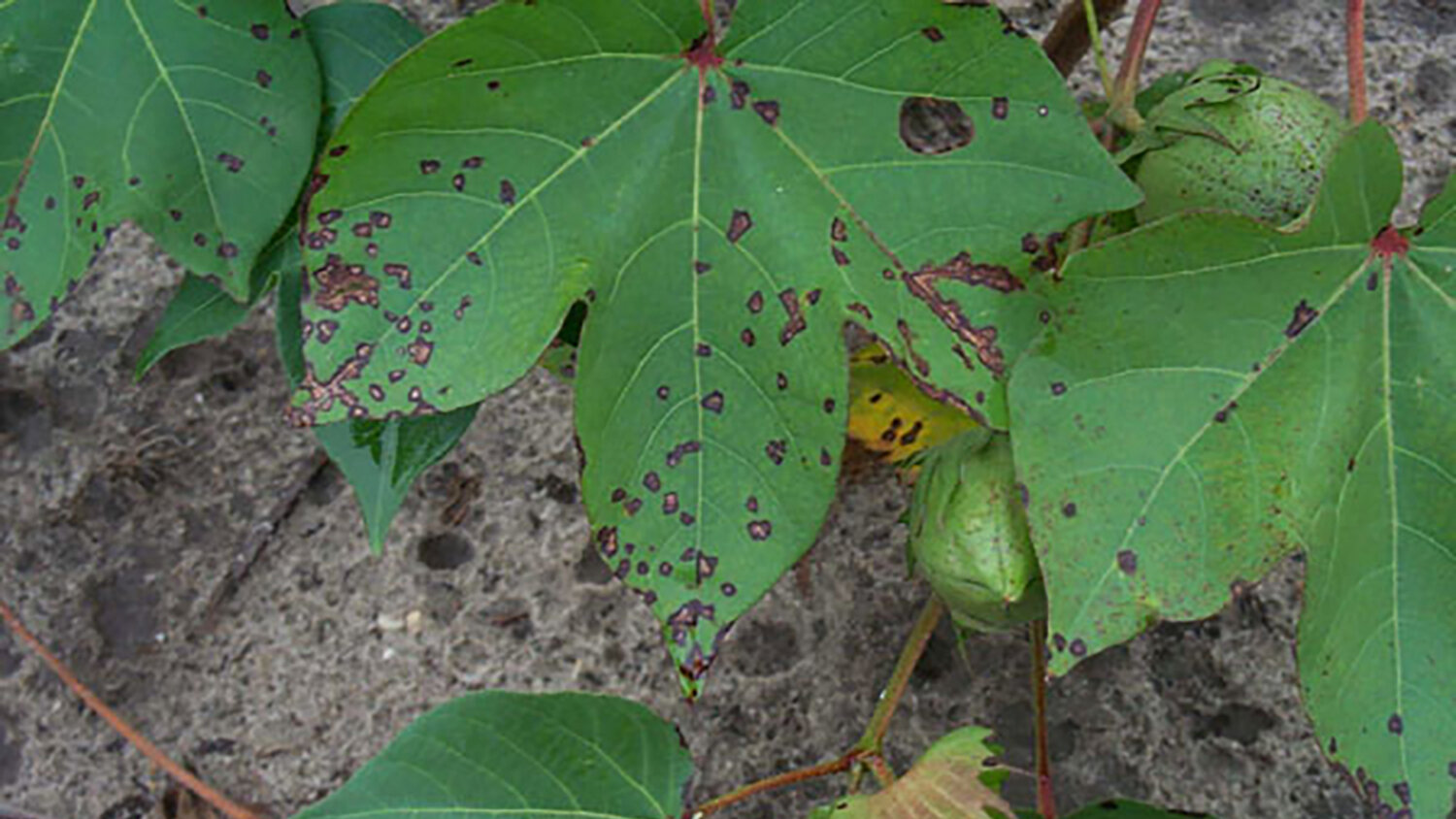
Cotton bacterial blight, also called angular leaf spot, appears first as small dark green, water-soaked spots on the undersides of leaves, according to NC State. As lesions expand, leaf veins shape them into angular patches; larger damaged areas can form reddish-brown edges and spread along major veins.
NC State said the disease can affect cotton from germination through harvest and can damage leaves, seeds, stems and bolls. It can cause premature leaf loss, stained lint and seed rot, particularly in warm, humid and rainy conditions.
Farmers do not have a treatment that stops the disease after it spreads through a field, according to Kuraparthy. Prevention methods include planting resistant varieties, using acid-delinted seed, spacing plants to reduce humidity and destroying crop debris after harvest.
Kuraparthy said acid-delinting, a chemical process that removes fuzz from cottonseed, reduces bacterial populations carried on seed surfaces and has helped limit spread. Since 2011, however, NC State said more outbreaks have been traced to weeds, stubble and other host plants that harbor the bacterium before it moves into cotton fields under favorable weather.
Kuraparthy said U.S. breeders used less genetic resistance in cotton varieties released from the late 1990s through 2009. By 2009, he said, more than 75% of planted cotton acreage was highly susceptible, setting up a resurgence across the Cotton Belt by 2011.
Race 18 caused crop damage in the Midsouth, including Texas, Mississippi and Oklahoma, according to Kuraparthy. He said losses can reach up to 60% when proper controls are absent.
Breeding tools from the study
The NC State team said the research produced practical tools for cotton breeding programs: resistant cotton lines, screening methods for identifying resistant plants and DNA markers that breeders can use to track the trait in new varieties.
Kuraparthy cautioned that resistance controlled by a single major gene can be vulnerable if the bacterium evolves around it. Gandhadmath has continued work under his direction to locate the gene more precisely and study how it functions at the molecular level, according to NC State.
The published study identifies the major resistance gene as Bb13. Kuraparthy said understanding the genetic and molecular basis of resistance is needed to develop cotton protection that lasts longer against the pathogen.
This story draws on original reporting from Phys.org.