
Study rereads Amazon frontier photos with new eyes
Junia Mortimer’s paper argues collaborative readings of Roberto Monte-Mór’s Amazon images can change what urban researchers treat as evidence.
By Lucas Ferreira · Science & Environment Writer
2 min read
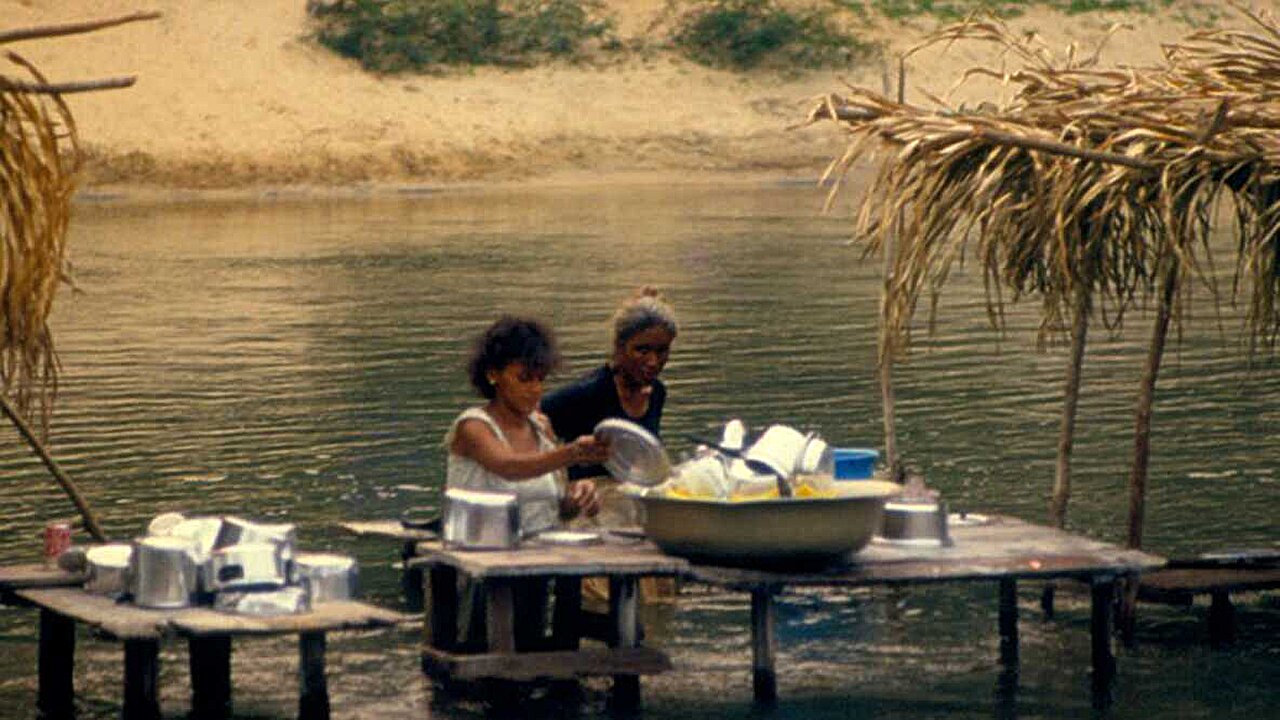
A new urban studies paper says photographs from Amazonian frontier settlements show more than the spread of state infrastructure and industrial capitalism. Junia Cambraia Mortimer argues that rereading the images collaboratively reveals long-standing ways of living with rivers, forests and land that earlier theory did not fully capture.
The University of Sheffield said Mortimer, an Urban Studies Foundation fellow, examined a photographic archive made by Roberto Monte-Mór, a professor at the Federal University of Minas Gerais. Monte-Mór, an architect, economist and urban planner, worked in and photographed Amazonian frontier settlements during the 1970s, 1980s and 1990s.
According to the University of Sheffield, Monte-Mór first assembled the photographs as fieldwork evidence while developing his concept of extended urbanization. The images documented the advance of industrial capitalism and state-backed infrastructure into remote areas, a framework the university said later became influential in urban studies.
Mortimer’s paper, published in Urban Studies, returns to that archive through a different method. Working with Monte-Mór in collaborative viewing sessions, she found that the photographs also record forms of urban-nature knowledge that persisted within and beside capitalist urbanization, the university said.
Those examples include river platforms, palm-thatch construction and daily life along rivers, according to the account of the research. Mortimer reads them as evidence of practices for building, dwelling and organizing life with water, forest and land, rather than only as background to industrial expansion.
A method for reading visual archives together
The paper calls its method “transvisualization.” The University of Sheffield said the approach draws on quilombola epistemologies that treat knowledge as relational rather than singular.
Under that method, an archive is interpreted with its maker rather than examined only from outside. The paper argues that collaborative viewing can bring out details, time layers and spatial patterns that one researcher or one theory might miss.
Mortimer’s article is titled “Seeing with, seeing otherwise: Transvisualizing extended urbanization through urban-nature archives in Brazilian Amazonia.” It was published in 2026 in Urban Studies, with the DOI 10.1177/00420980261444233.
The central claim is about evidence as much as Amazonia. The paper argues that who participates in reading visual materials, and what conceptual frame they use, affects what researchers are able to see and count in urban research.
In this case, the University of Sheffield said changing the interpretive frame did more than produce a fresh reading of old photographs. Mortimer’s paper argues it made visible presences that had been obscured by the archive’s original use as evidence for a theory of extended urbanization.
This story draws on original reporting from Phys.org.