
Study pinpoints why solid-state batteries crack and short out
Max Planck researchers say lithium dendrites can fracture ceramic electrolytes through mechanical stress, pointing to ways to make solid-state batteries more durable.
By Priya Raghavan · Science Reporter
3 min read
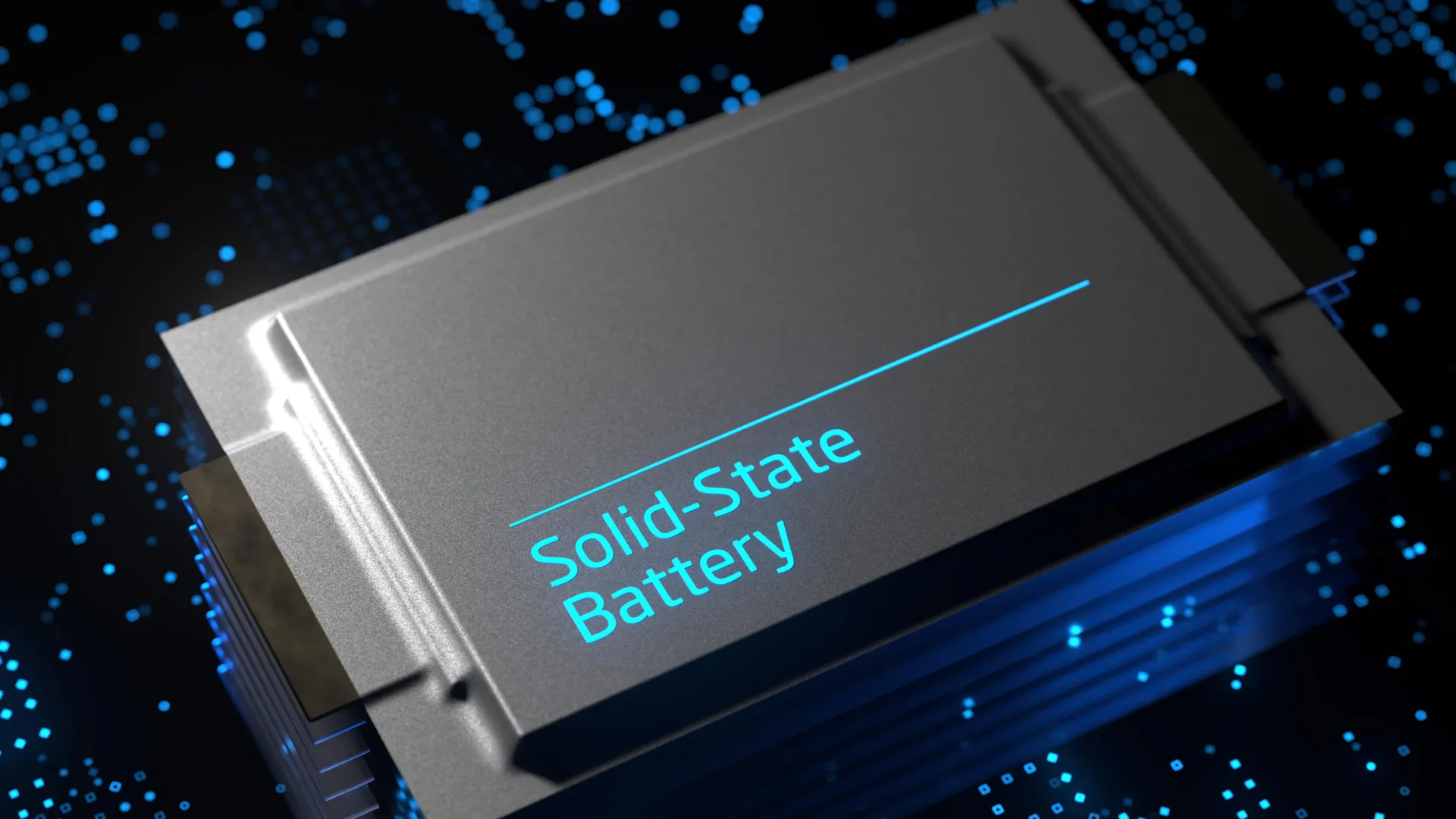
Researchers at the Max Planck Institute for Sustainable Materials say they have identified how lithium dendrites break solid ceramic electrolytes in solid-state batteries, a failure that can cause internal short circuits. The finding matters because solid-state batteries are viewed as a route to safer, longer-lasting energy storage for phones, electric vehicles and other electronics, according to Max-Planck-Gesellschaft.
The work, published in Nature, addresses a central puzzle in battery research: how soft lithium metal can penetrate a much harder ceramic material. Max-Planck-Gesellschaft said the answer points to a mechanical failure process rather than a competing explanation based on lithium forming ahead of the dendrite tip.
Why the failure happens
Conventional lithium-ion batteries use a liquid electrolyte between two solid electrodes, while solid-state designs replace that liquid with a solid electrolyte. Max-Planck-Gesellschaft said that change could bring higher energy density, better safety and longer battery life.
Those possible gains have been limited by dendrites, tiny branching structures that can grow from a lithium anode during charging. According to Max-Planck-Gesellschaft, dendrites can pierce the solid electrolyte and create short circuits inside the battery.
The research team focused on two possible explanations for how the damage starts. One theory held that stress builds inside the dendrite until it cracks the solid electrolyte; the other proposed that electrons leak along grain boundaries in the electrolyte, helping lithium nuclei form and later connect.
To test the mechanisms, the researchers used advanced sample preparation and materials characterization methods, Max-Planck-Gesellschaft said. The work was carried out under vacuum and at cryogenic temperatures to avoid interference from oxygen, water and electron beams from microscopes.
The team examined internal stress and plastic deformation in lithium dendrites caught inside cracks. Max-Planck-Gesellschaft said the researchers found no lithium buildup ahead of the dendrite tip, which ruled out the proposed mechanism involving lithium nuclei forming in front of the crack.
Yuwei Zhang, first author of the Nature paper and head of the Chemo-Mechanics of Battery Materials group at MPI-SusMat, compared the process to a waterjet cutting into rock, according to Max-Planck-Gesellschaft. Zhang said the team calculated that hydrostatic stress in the dendrite eventually causes brittle fracture of the solid electrolyte.
Possible routes to tougher batteries
The researchers also used phase field simulations and electron backscatter diffraction measurements to support their conclusion, Max-Planck-Gesellschaft said. The result gives engineers a clearer target as they try to reduce cracking and short circuits in solid-state batteries.
Possible strategies include toughening the solid electrolyte so it resists fractures for longer, adding microscopic voids that redirect dendrite growth and steer cracks away from sensitive regions, or coating lithium electrodes to reduce dendrite formation, according to Max-Planck-Gesellschaft.
Max-Planck-Gesellschaft said the findings show how microscopic material behavior can shape battery performance. If engineers can apply those lessons, solid-state batteries could move closer to use in devices such as smartphones, electric vehicles and other electronics.
This story draws on original reporting from ScienceDaily.