
Stanford team reports cartilage regrowth in mice after blocking aging-linked protein
A Stanford-led study found a 15-PGDH inhibitor restored cartilage in older mice and prompted repair signals in human knee tissue samples.
By Priya Raghavan · Science Reporter
3 min read
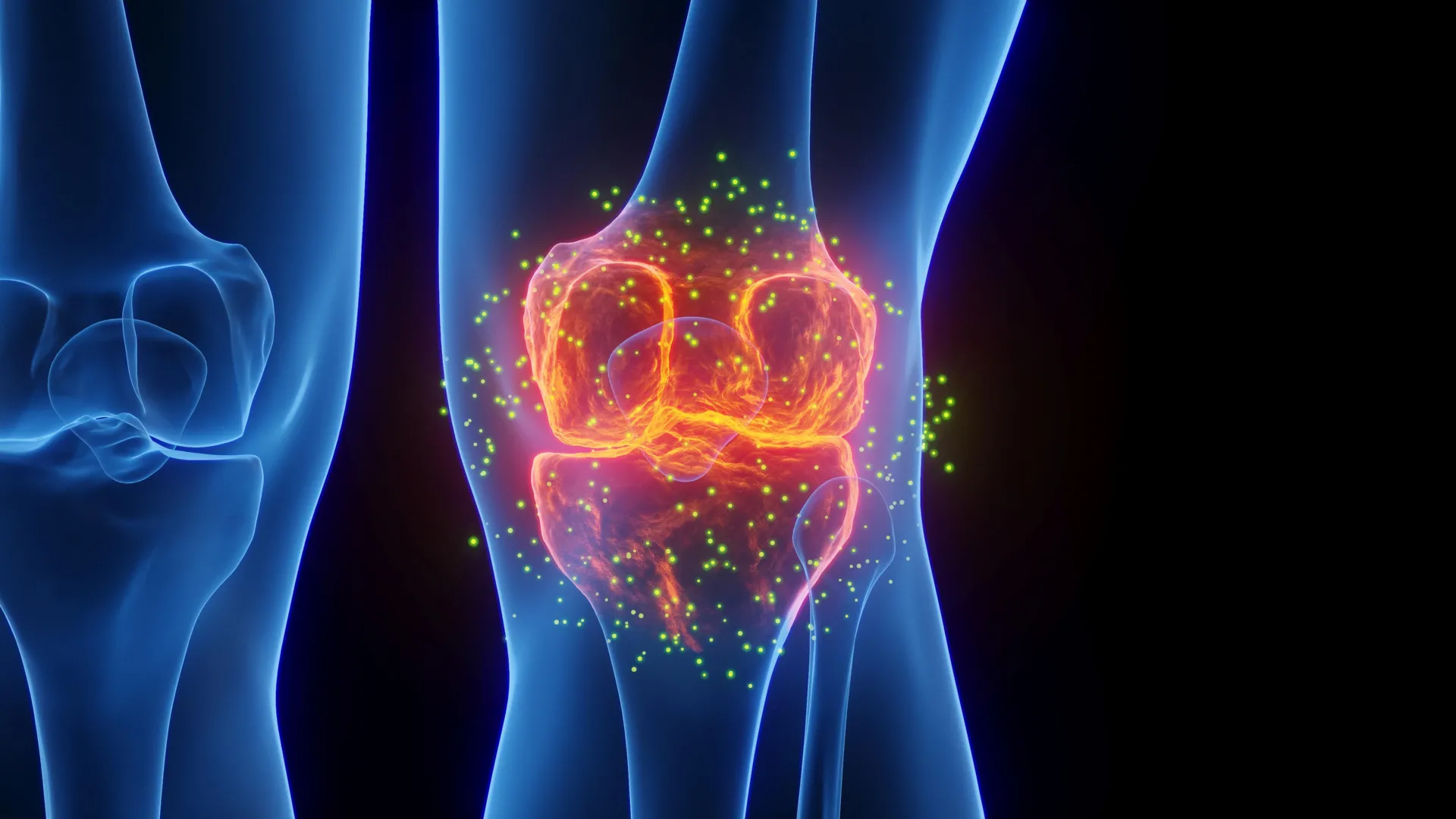
A Stanford Medicine-led team says blocking an aging-related protein restored lost knee cartilage in older mice and reduced arthritis after joint injury. The findings, published in Science, point to a possible drug strategy for repairing damaged joints, though the approach has not yet been tested for cartilage regeneration in people.
The treatment targets 15-PGDH, a protein the researchers describe as a “gerozyme,” meaning it becomes more abundant with age and contributes to tissue decline. Stanford Medicine said human cartilage samples taken during knee replacement surgeries also showed signs of producing new functional cartilage after exposure to the inhibitor.
Osteoarthritis, the most common form of arthritis, affects about one in five U.S. adults, according to Stanford Medicine. The disease wears down joint cartilage, causing pain, stiffness and swelling, and is estimated to account for about $65 billion in direct health care costs each year.
Current care mainly treats symptoms or replaces damaged joints in severe disease, Stanford Medicine said. No approved drug can slow, halt or reverse the disease process.
How the treatment worked in mice
Helen Blau, a professor of microbiology and immunology at Stanford, and Nidhi Bhutani, an associate professor of orthopedic surgery, were senior authors of the study. Mamta Singla, an instructor of orthopedic surgery, and Yu Xin Wang, now at the Sanford Burnham Institute in San Diego, were lead authors.
The researchers compared cartilage from young and old mice and found 15-PGDH levels were about twice as high in the older animals, Stanford Medicine said. They then treated older mice with a small-molecule inhibitor, either through injections into the abdomen or directly into the knee joint.
Both methods led to thicker cartilage across the joint surface, according to Stanford Medicine. Follow-up testing indicated the new tissue was hyaline cartilage, the smooth articular cartilage needed for normal joint motion, rather than fibrocartilage, which is less suited to that role.
The team also tested the inhibitor in a mouse model meant to resemble ACL-type knee injury. Stanford Medicine said untreated injured mice developed osteoarthritis within four weeks and had roughly double the 15-PGDH levels of uninjured mice.
Mice treated twice a week for four weeks after injury were less likely to develop osteoarthritis, the researchers reported. Stanford Medicine said the treated mice also walked more normally and put more weight on the injured leg.
Human samples showed repair signals
The study also examined cartilage removed from patients undergoing total knee replacement for osteoarthritis. After one week of treatment with the 15-PGDH inhibitor, the tissue had fewer cartilage-degrading cells and lower activity of genes tied to cartilage breakdown and fibrocartilage production, Stanford Medicine said.
The samples also began generating new articular cartilage, according to the researchers. Bhutani said the work suggests existing cartilage cells can alter their gene activity in ways that favor repair, rather than relying on stem cells.
Stanford Medicine said the inhibitor appears to increase prostaglandin E2 by blocking 15-PGDH, which breaks it down. Earlier work from Blau’s laboratory linked that pathway to regeneration in muscle, nerve, bone, colon, liver and blood tissues in mice.
An oral 15-PGDH inhibitor is already being tested in clinical trials for age-related muscle weakness, Stanford Medicine said. Blau said Phase 1 trials for muscle weakness showed the compound was safe and active in healthy volunteers, and said the team hopes for a similar trial in cartilage regeneration.
Researchers from Sanford Burnham Prebys Medical Discovery Institute also contributed to the study. Stanford Medicine said the work was funded by the National Institutes of Health and several foundations and Stanford programs. Blau, Bhutani and several co-authors are listed as inventors on Stanford patent applications involving 15-PGDH inhibition that have been licensed to Epirium Bio; Blau is a co-founder of Myoforte/Epirium and holds equity and stock options in the company.
This story draws on original reporting from ScienceDaily.