
Solar catalyst turns CO₂ and biomass waste into chemicals in one reactor
University of Nottingham researchers say a light-driven reactor can make formate and plastic precursors at the same time without added heat or electricity.
By Priya Raghavan · Science Reporter
3 min read
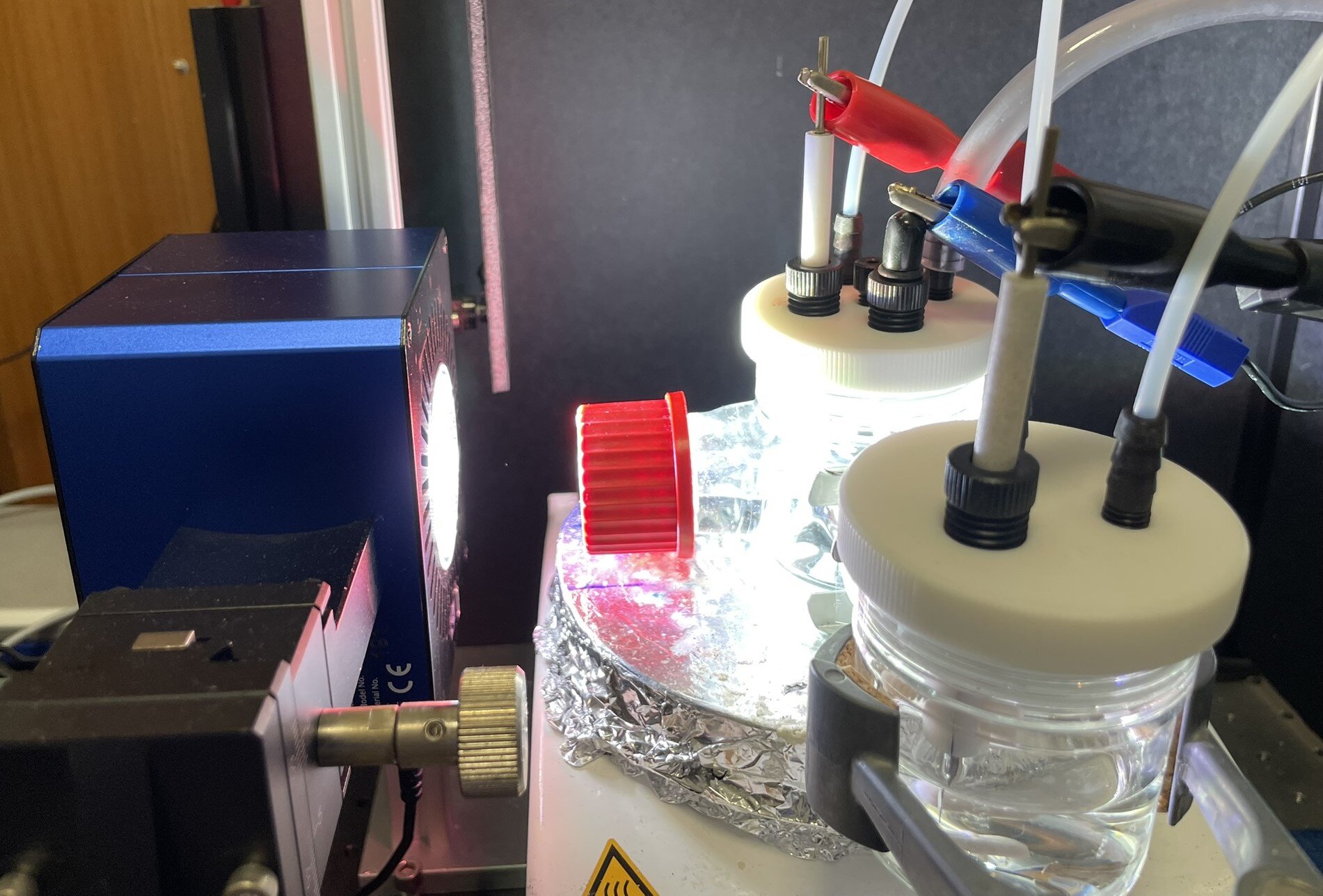
University of Nottingham researchers have developed a solar-powered catalyst system that converts carbon dioxide and biomass-derived material at the same time. The work matters because it links two chemical reactions in one reactor, using sunlight rather than added electricity or heat, according to the team.
The research, published in Communications Materials, describes a bias-free photoelectrochemical reactor with two connected compartments. Nottingham researchers said one side oxidizes a biomass-derived molecule, while the other reduces CO₂ into formate, a chemical used in products including textiles, paints and pharmaceuticals.
How the paired reaction works
According to Dr. Madasamy Thangamuthu, a research fellow in the university’s School of Chemistry, the system uses a nanostructured photoanode made from carbon nitride and tungsten oxide semiconductors, with a cobalt oxide layer. That photoanode is coupled to a cathode in the second compartment.
When solar light hits the photoanode, the researchers said, it generates an electron and leaves behind a hole. Thangamuthu said the electron moves to the cathode, where it helps convert CO₂ into formate, while the hole oxidizes 5-hydroxymethyl-2-furoic acid, or HMFA, a biomass-derived feedstock.
The result is a paired process in which one photon supplies energy for two linked outcomes, according to the university. One product comes from a greenhouse gas, while the other is a building block for sustainable plastic materials made from biowaste-derived feedstock.
Efficiency and materials
The Nottingham team reported conversion efficiencies of about 93% for CO₂-to-formate production and about 95% for biomass oxidation. The researchers said the reactor operated using solar light alone, without extra heat or electrical input.
Dr. Vincenzo Taresco, an assistant professor in the School of Chemistry who works on polymeric materials synthesis, said the study addresses the need for cleaner methods to make sustainable polymers. According to Taresco, using sunlight as the energy source links renewable power directly to sustainable chemical production.
The university said the catalysts differ from many current catalyst systems because they are made with earth-abundant elements rather than costly or scarce materials. Nottingham researchers also said a life cycle assessment supported the environmental benefits of the process and its potential use in lower-carbon chemical manufacturing.
Industrial potential
Dr. Jesum Alves Fernandes, an associate professor in the School of Chemistry, said catalyst fabrication will be central to whether the technology can be developed further. Fernandes said the group’s method assembles metal atoms on surfaces into catalyst particles with controlled size, shape and composition, a feature the researchers see as useful for other chemical processes and for improving CO₂ use.
The Nottingham group has previously reported related catalyst work for hydrogen production and CO₂ conversion to methanol, according to the university. The researchers said the new system could be developed for use with industrial CO₂ streams and biorefineries, allowing chemical production at distributed sites.
Andrei Khlobystov, a professor of nanomaterials in the School of Chemistry, said the finding points to a way to capture sunlight directly for chemical manufacturing while addressing carbon dioxide use and waste-derived feedstocks. The university said the approach could support efforts tied to UK and global net-zero targets if it can be scaled for industrial use.
This story draws on original reporting from Phys.org.