
Expedition records first close-up images of Shackleton’s last ship
A Canadian-led team has filmed Quest in the Labrador Sea, revealing a damaged wreck covered by corals, fish and fishing nets.
By Lucas Ferreira · Science & Environment Writer
3 min read
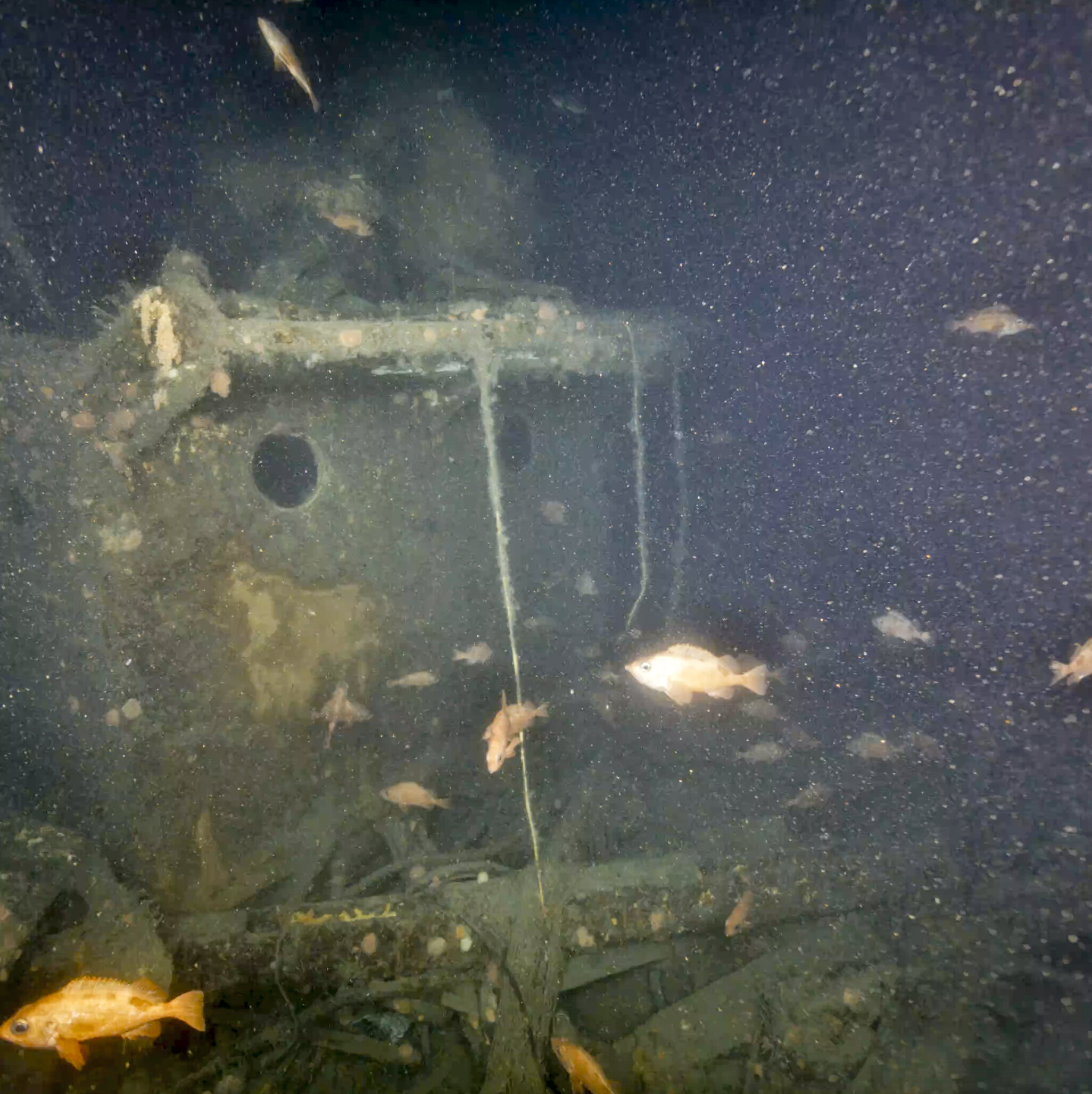
An expedition has captured the first close-up images of Quest, the ship on which Antarctic explorer Ernest Shackleton died, according to the Woods Hole Oceanographic Institution. The work turns a wreck previously known from sonar into a visible archaeological site in the Labrador Sea.
The Royal Canadian Geographical Society led the expedition in partnership with WHOI. The team used WHOI’s Falcon remotely operated vehicle and the human-occupied submersible Alvin, which WHOI said was also the first submersible to visit the Titanic wreck 40 years ago.
Quest was found in 2024 by an RCGS-led search, but that effort produced only side-scan sonar images, according to WHOI. John Geiger, RCGS chief executive and expedition leader, returned with the team to examine the wreck directly and assess its condition.
Wreck seen beneath nets
WHOI said the expedition’s first views showed large fishing nets draped over parts of the site. Geiger said the nets limited what the team could inspect and that the ship had suffered significant damage.
Despite the obstruction, the expedition saw major features of the vessel, including the bow, deck and some portholes, according to WHOI. The main mast was down, and the wreck had become habitat for pink corals and fish, including cod, redfish and wolffish.
Geiger, who observed the first Alvin dive at the site, described the encounter as moving, WHOI said. Mark Pathy, the expedition’s chief mission specialist, said he hoped the work would encourage young people to explore and learn more about the planet.
A ship with polar history
Shackleton died aboard Quest in 1922 at age 47 while traveling toward Antarctica for what was intended to be his last expedition, according to WHOI. He remains best known for leading his crew to safety after Endurance was trapped and lost in Weddell Sea ice.
After Shackleton’s death, Quest was sold to a Norwegian family and worked for about four decades as a sealing vessel in Arctic waters, WHOI said. It sank on May 5, 1962, after being crushed by ice floes while finishing a season in the Labrador Sea.
The current survey was planned over several years and includes specialists from WHOI and other institutions. Alvin pilot Bruce Strickrott said, according to WHOI, that exploring shipwrecks with a human-occupied submersible requires experienced deep-submergence teams because of the difficult surroundings.
The expedition plans to spend three days surveying and mapping Quest. WHOI said the team is using Canadian-made Voyis photogrammetry technology to build a permanent digital twin of the wreck for research and public presentation.
Dwight Coleman, WHOI co-chief scientist for the expedition, said the project would combine Alvin’s crewed observations with advanced imaging to create a 3D model of the ship. WHOI said such modeling has become available in ocean science only in recent years.
Terra Nova survey planned next
After work on Quest, the team is scheduled to sail northeast toward Greenland to survey Terra Nova, another ship linked to Antarctic exploration, according to WHOI. Terra Nova was associated with Robert Falcon Scott, Shackleton’s rival.
Scott reached the South Pole in 1912 after Roald Amundsen’s Norwegian party and died with four men on the return journey, WHOI said. Both Quest and Terra Nova later worked as sealers in Canadian waters, and WHOI said Shackleton had first planned to take Quest to the Canadian Arctic before changing course for Antarctica.
The expedition team includes shipwreck hunter David Mearns, marine archaeologist Cora Annamaiya Norling of the Njord Center at the National Museum of Denmark, WHOI benthic ecologist Kirstin Meyer-Kaiser, RCGS research director Antoine Normandin, historian Jan Chojecki and Fram Museum director Geir Kløver, according to WHOI.
This story draws on original reporting from Phys.org.