
Asteroid impacts may have delayed Earth’s first stable continents
Modeling led by Curtin University and QUT links Hadean impact heating to a thin, unstable early crust and the later rise of continents.
By Lucas Ferreira · Science & Environment Writer
3 min read
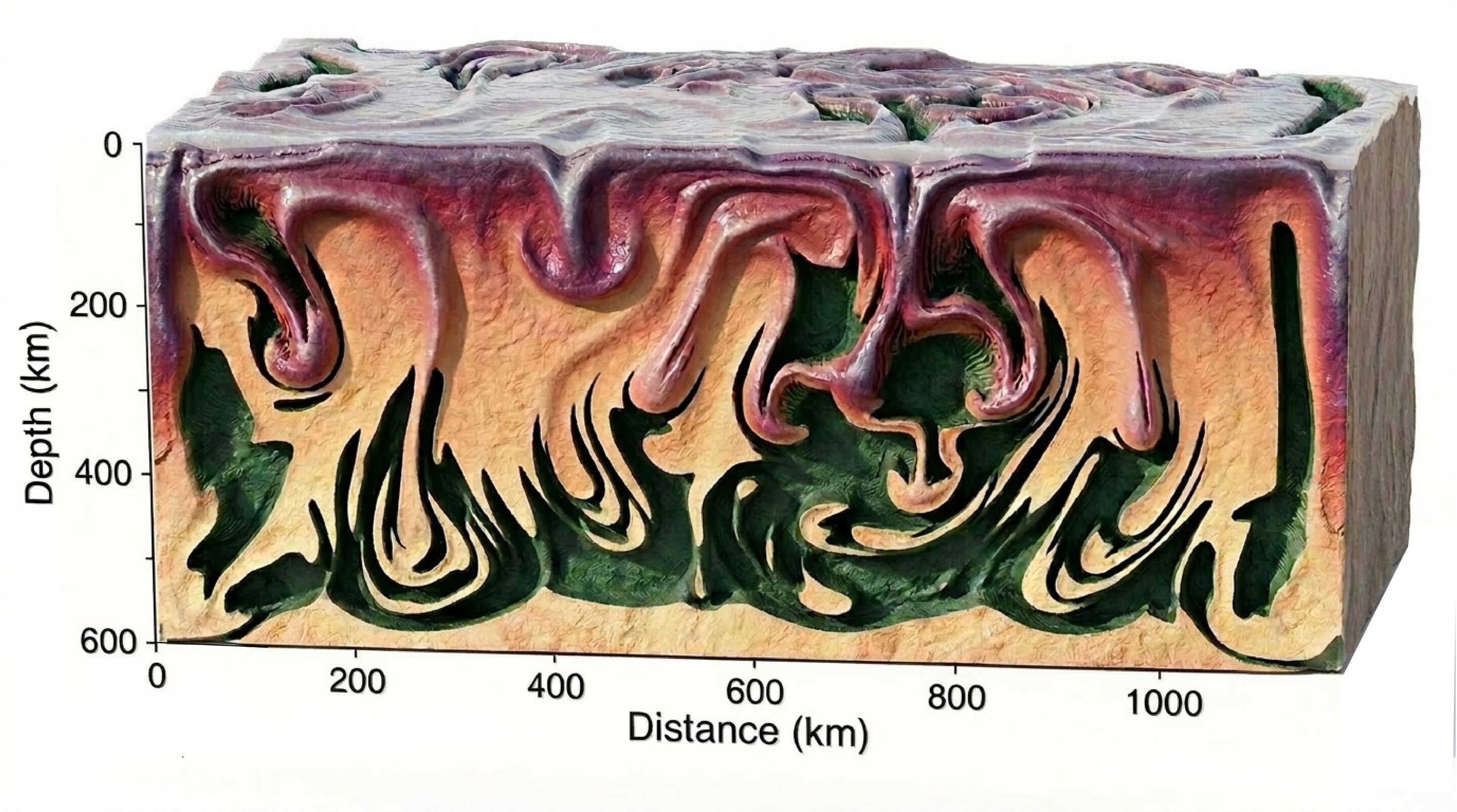
Repeated asteroid strikes may have kept early Earth too hot and unstable to build lasting continents, according to research led by Curtin University and Queensland University of Technology. The work matters because it offers an explanation for why so little rock remains from Earth’s first 500 million years.
The study, published in Science, focuses on the Hadean period, more than 4 billion years ago, when Earth was hit far more often than it is today. The researchers say those impacts did more than mark the surface: they transferred large amounts of energy into the planet’s interior.
Lead author Tim Johnson of Curtin University’s Frontier Institute for Geoscience Solutions said the early solar system’s collision history is still visible on the moon. According to Johnson, the energy from large impacts would have heated early Earth’s crust, leaving much of it weak and partly molten.
That condition, Johnson said, would have made it hard for ancient rocks to persist. The same process may also have promoted the formation of silica-rich crust, material that later became central to continental growth, according to Curtin University.
Heat carried deep into the mantle
Co-lead author Craig O’Neill of QUT said the team’s models indicate impact effects lasted long after each collision. The researchers found that energy from impacts would have entered the mantle, the layer beneath Earth’s crust, as heat.
That heating, O’Neill said, would have driven mantle material below and around impact sites to rise and melt, generating large amounts of magma. The team’s results point to a Hadean Earth with a thin, unstable crust rather than strong plates behaving like modern tectonic plates, according to QUT.
The researchers also concluded that impacts could have kept the crust hot, weak and mobile while encouraging melting and recycling across the planet. According to O’Neill, those effects may have continued for tens to hundreds of millions of years after major collisions.
A clue from the moon
The findings support a view of early Earth as hotter and less stable than some models have suggested, Curtin University said. They also help connect two long-standing observations: the near absence of rocks from Earth’s earliest era and the later appearance of durable continental crust.
Johnson said lunar evidence indicates the global influence of impact heating had fallen sharply by about 3.9 billion years ago. He said that timing lines up with the point when Earth began preserving continental crust, a connection the team considers unlikely to be accidental.
The paper is titled “Impact heating and the hidden Hadean” and was published in Science. Curtin University said the study was led by Johnson, with O’Neill as co-lead author.
This story draws on original reporting from Phys.org.