
Scientists map 68 quadrillion miles of underground fungal networks
A Science study estimates arbuscular mycorrhizal fungi form vast soil networks that move carbon, aid plants and are thinner in croplands.
By Lucas Ferreira · Science & Environment Writer
3 min read
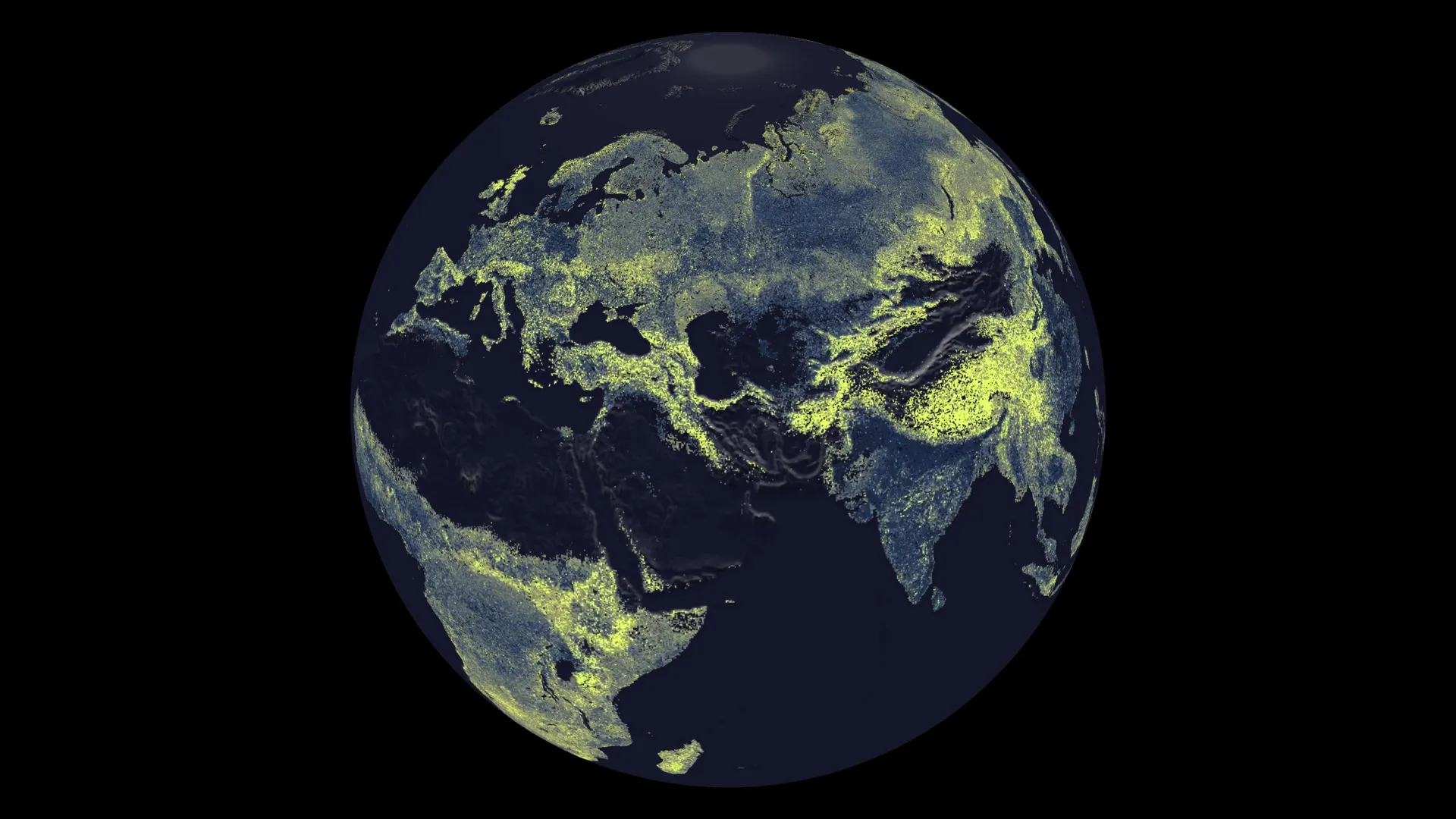
Researchers have produced the first global maps of a vast underground fungal network that helps plants obtain nutrients and moves carbon into soils. The study, published in Science, estimates that arbuscular mycorrhizal fungal networks span about 110 quadrillion kilometers, or 68 quadrillion miles, worldwide.
The work focuses on arbuscular mycorrhizal fungi, often called AM fungi, which form partnerships with about 70% of plant species, according to the Society for the Protection of Underground Networks. Plants supply the fungi with carbon from photosynthesis, while the fungi help deliver water and nutrients.
Justin D. Stewart of SPUN and colleagues estimate that the networks transfer about 4 billion tons of carbon dioxide equivalent into soils each year. The research group said that figure is equal to 11% of human-related carbon dioxide emissions.
How the maps were built
The team compiled measurements from more than 16,000 soil cores collected across different regions and ecosystems. Researchers then used machine-learning models with environmental data from deserts, tundra, forests and other systems to estimate fungal network density in places without direct samples.
Working with the Physics of Behavior group at AMOLF, the researchers also used robotic imaging to study more than 300,000 living AM fungal hyphae grown in laboratory conditions. Hyphae are the thread-like structures that make up the fungal network.
By combining field data, lab measurements and modeling, the team estimated both the length and mass of the global AM fungal network. The study puts the network’s carbon content at roughly 300 megatons, which the researchers said is four to six times the mass of all living humans.
“It is hard to overstate the importance and enormity of these fungi,” Stewart said in a SPUN statement. “There could be up to 10 meters (32 feet) of mycorrhizal network in just a teaspoon of soil.”
Grasslands stand out
The Science study estimates that grasslands hold about 40% of Earth’s arbuscular mycorrhizal fungal infrastructure. The researchers predict especially dense networks in flooded grasslands in South Sudan, the Everglades in Florida and the Tibetan plateau.
SPUN said the maps cover terrestrial land at 1-square-kilometer resolution, excluding ice caps and areas where data were too limited for reliable estimates. The group also released a public Mycorrhizal Infrastructure Map created with data visualization designer Moritz Stefaner.
Corentin Bisot, a co-lead author and AMOLF biophysicist, said advances in imaging, machine learning and robotics are helping scientists study systems that have been difficult to observe. “We are learning how the complex bodies of network-forming fungi transport nutrients and help regulate the climate,” Bisot said.
Croplands show lower densities
The researchers found that large agricultural croplands are predicted to have about 50% lower AM fungal network densities on average than wild ecosystems. They cautioned that less dense fungal networks could reduce soil capacity to store carbon, cycle nutrients and withstand environmental stress.
SPUN said grasslands are among the least protected ecosystems and are being converted to agricultural land four times faster than forests. The group also cited its earlier research finding that 95% of arbuscular mycorrhizal fungal biodiversity hotspots are outside protected areas.
E. Toby Kiers, SPUN’s executive director and a co-author of the study, said fungi should be included in climate and conservation planning. “Fungi have been ignored in climate and conservation for too long. Now is the time to change that trajectory,” Kiers said.
Co-author Merlin Sheldrake said scientists still know too little about how these living transport systems are distributed worldwide. The researchers said large areas remain unsampled, leaving major gaps for future work on one of Earth’s least visible ecological systems.
This story draws on original reporting from ScienceDaily.