
Three science reports point to advances in lunar robots, IBD and brain control
JAXA’s toy-inspired lunar rover, an IBD immune finding and a faster brain-computer interface led a week of science reports.
By Lucas Ferreira · Science & Environment Writer
3 min read
Three new science reports highlighted advances in space robotics, immune disease research and brain-computer interfaces. Phys.org reported that the developments could affect how small machines explore other worlds, how doctors classify some bowel disease cases and how people may learn to control computers through brain activity.
The items were featured alongside other recent science reports, including work on collapsing stars possibly forming mini universes, chimpanzees reacting to unequal treatment and psilocybin temporarily restoring function in an 80-year-old patient with Alzheimer’s disease, according to Phys.org and Medical Xpress.
A toy-inspired rover on the moon
JAXA’s small lunar rover LEV-2 grew out of a collaboration with Japanese toy maker Tomy, Phys.org reported. The rover was deployed in 2024 by Japan’s Smart Lander for Investigating Moon, known as SLIM, after the lander reached the lunar surface.
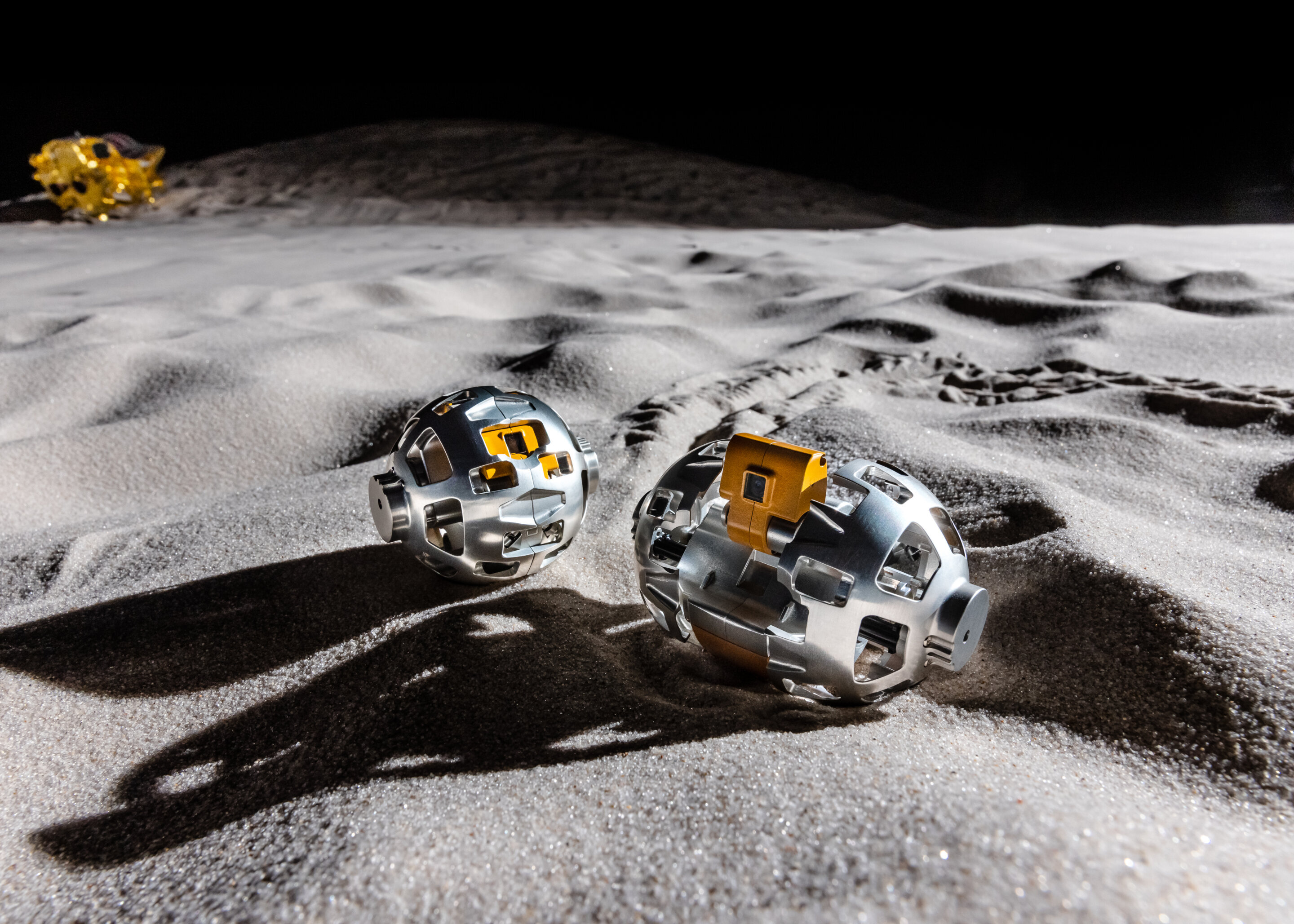
According to Phys.org, the rover was built to address a difficult engineering problem: very small robots can be useful on space missions because they are light and compact, but they can struggle to move through loose, powdery ground. JAXA and Tomy drew on the company’s experience with transforming ball toys to design a rover that could travel in a compact form and then change shape after landing.
LEV-2 arrived as a sphere, then opened to deploy cameras, wheels and a stabilizing tail, according to Phys.org. Its wheels used an off-center rotation pattern intended to help it move across soft terrain.
Phys.org reported that LEV-2 operated autonomously for about two hours near the SLIM landing site. It captured high-resolution images of the lunar surface and of the lander, then sent data to SLIM for relay back to JAXA to conserve power.
Immune response tied to some IBD cases
A medical study involving data from more than 4,900 patients identified an autoimmune mechanism in a subset of people with inflammatory bowel disease, Medical Xpress reported. IBD includes Crohn’s disease and ulcerative colitis and often begins during adolescence or early adulthood.
According to Medical Xpress, the study found that some patients had immune responses against interleukin-10, a molecule involved in controlling immune activity. Those responses neutralized interleukin-10 and were linked to uncontrolled inflammation in the gut.
The study found high levels of interleukin-10-neutralizing antibodies in 3.5% of patients with Crohn’s disease and ulcerative colitis, while healthy individuals in the study did not show the same finding, Medical Xpress reported. Professor Holm Uhlig of the University of Oxford said the work helps connect a known genetic risk factor for severe IBD with recently identified autoimmunity against interleukin-10.
Medical Xpress reported that the findings could support more personalized approaches to diagnosing and treating inflammatory bowel disease.
Brain-computer interface trained in under an hour
Researchers at Yale developed a brain-computer interface that allowed human participants to control a video game directly with brain activity, Medical Xpress reported. The work addresses a recurring weakness in BCI systems, which often require many training sessions and fail to give control to a substantial share of users.
According to Medical Xpress, about one-third of human participants in previous BCI work do not achieve computer control. The Yale team designed its system around each person’s existing neural pathways rather than forcing users to adapt to an arbitrary control scheme.
The researchers first used functional magnetic resonance imaging to monitor healthy participants while they played a navigation-based video game, Medical Xpress reported. An algorithm then mapped each person’s brain-activity patterns, described as a neural manifold, to movement of an avatar in the game.
Participants learned to control the avatar in less than an hour when the BCI matched that neural geometry, according to Medical Xpress. The researchers also reported that participants’ brains reorganized in ways that better matched the demands of the interface.
This story draws on original reporting from Phys.org.