
Review confirms migration in 100 dragonfly and damselfly species
Researchers found long-distance movements across six Odonata families, with some insects traveling thousands of kilometers.
By Priya Raghavan · Science Reporter
3 min read
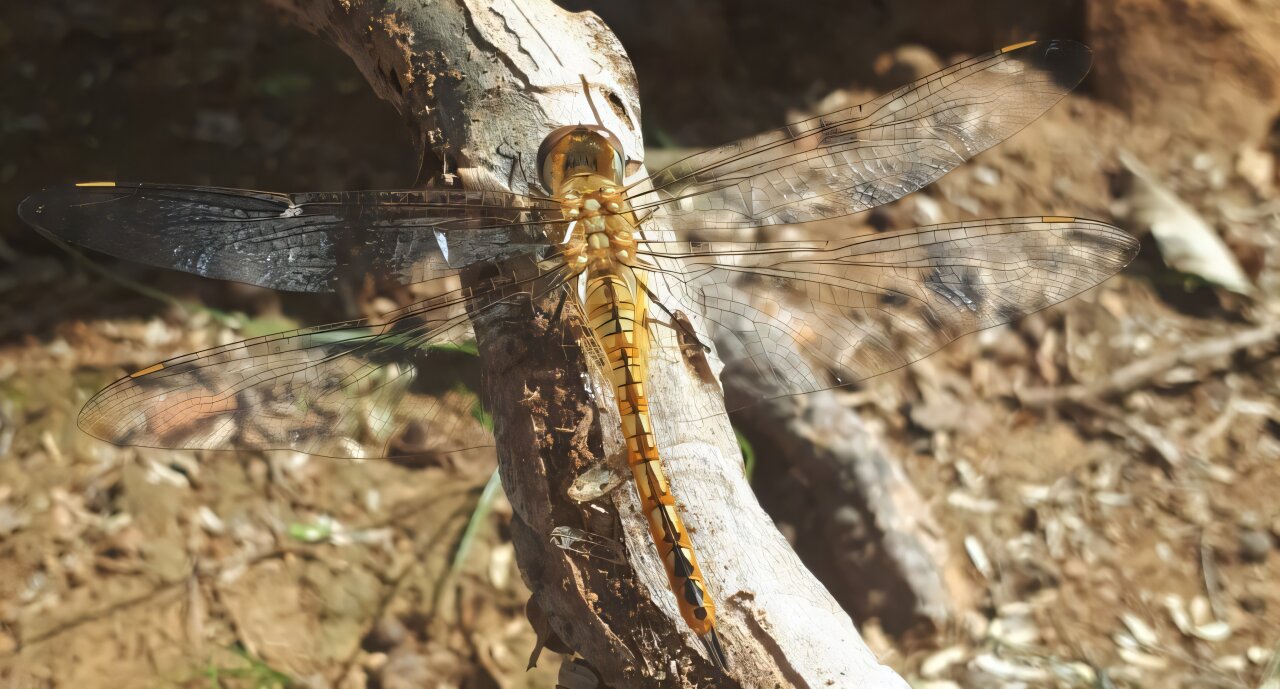
A global review has confirmed migration in 100 species of dragonflies and damselflies, showing that these insects move across far larger areas than many people assume. The findings matter because some migrations involve millions of insects and can shift food, nutrients and pest pressure across ecosystems, according to researchers at the universities of Exeter and Lund.
The study, published in Biological Reviews, assessed evidence from around the world for migration among Odonata, the insect order that includes dragonflies and damselflies. The researchers identified 100 confirmed migratory species and another 85 possible migrants.
That represents a small share of the group: 1.5% of all dragonfly and damselfly species, or 2.9% if possible migrants are included, according to the review. Even so, the distances and numbers can be large, with some species moving thousands of kilometers.
Dr. Johanna Hedlund of Lund University and the University of Exeter’s Center for Ecology and Conservation said the review found migration in four dragonfly families and two damselfly families. The team’s analysis indicates that migration arose independently more than once within the group.
Most of the confirmed migratory species are classified as “Least Concern” on the IUCN Red List of Threatened Species, the researchers said. They suggest that migration may help those species cope with rapid environmental changes linked to human activity.
Why the insects move
The review says dragonfly migration is likely tied to breeding conditions. Some habitats become unsuitable at certain times because of cold, severe heat or drought, pushing insects to leave and return when conditions improve.
Migratory dragonflies and damselflies also tend to spend longer as flying adults than nonmigratory species, according to the researchers. Some live for several months in the adult stage, while species that do not travel long distances spend more of their lives as freshwater nymphs.
Unlike many birds and mammals, insect migrants often do not complete a full out-and-back journey as individuals. The review found evidence for multigenerational migration, in which descendants return to breeding areas used by earlier generations, as well as single-generation migration.
The only single-generation pattern identified in the review was altitudinal migration. In that strategy, insects move upslope to avoid hot or dry conditions in breeding areas, then return when the weather changes.
Japan’s red dragonfly, Sympetrum frequens, known as Akatane, is one example cited by the researchers. After emerging as adults in late spring, the insects leave hot valleys for mountain areas, spend the summer there, and return in autumn to breed when temperatures fall.
Long routes and shifting ranges
The globe skimmer, Pantala flavescens, is among the best-known long-distance travelers in the review. The researchers said it can fly more than 2,500 kilometers from northeast India to the Maldives, using rain-bearing trade winds and breeding in temporary rain pools where fast-developing nymphs avoid predatory fish.
The study also points to the four-spotted chaser, Libellula quadrimaculata, which has formed large swarms in Europe. The review notes that accounts from the mid-1800s described Belgian swarms numbering in the hundreds of millions, although the researchers said that phenomenon has become much less common in recent decades.
Another species, the vagrant emperor, Anax ephippiger, is believed to move between the Sahel and Europe in spring and autumn, sometimes reaching the U.K. and Scandinavia. The researchers said it was once a rare Mediterranean visitor but has become a common breeder there over the past 40 years, with yearly reports in the U.K.
Hedlund said climate change is altering insect migration by changing wind, rainfall and temperature patterns. The researchers said African migratory dragonflies such as the vagrant emperor and red-veined darter are becoming more frequent in Europe.
The review also highlights the role of these insects as prey. According to Hedlund, migrating dragonflies can form swarms that line up with the movements of predators including bats, bee-eaters, falcons and hawks.
This story draws on original reporting from Phys.org.