
Alan Greenspan, long-serving Fed chair, dies at 100
Greenspan led the Federal Reserve from 1987 to 2006, winning praise during a long expansion before the financial crisis reshaped his legacy.
By Hana Yoshida · Markets Reporter
3 min read
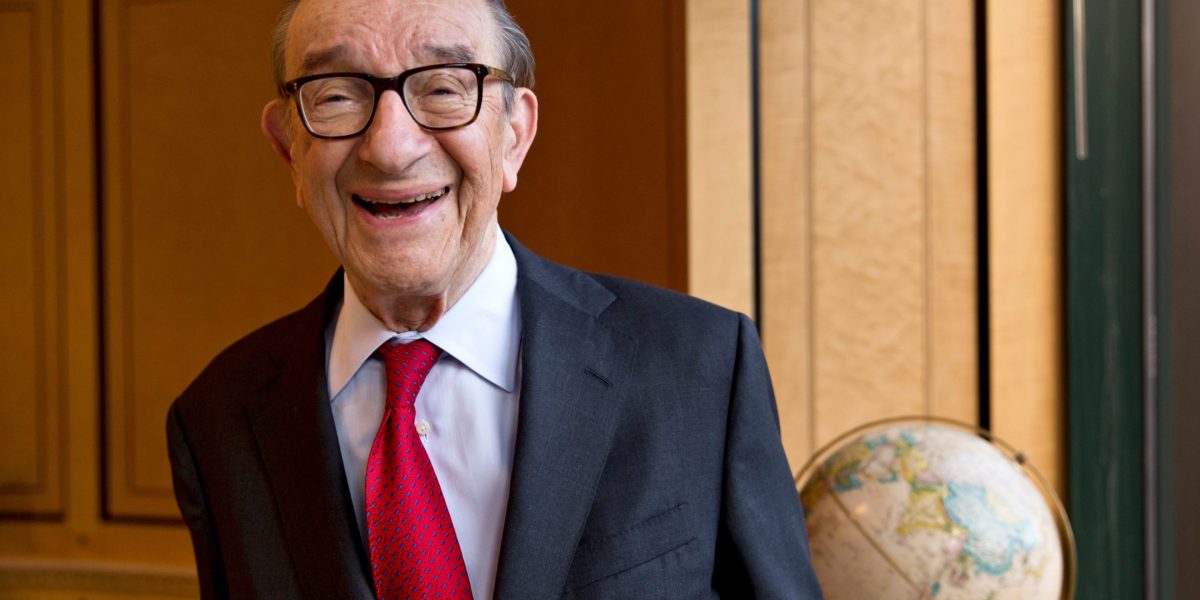
Alan Greenspan, the former Federal Reserve chair whose long tenure helped define U.S. economic policy before the 2008 financial crisis, died Monday at 100. His wife, NBC News correspondent Andrea Mitchell, said he died from complications of Parkinson’s disease, according to The Associated Press.
Greenspan ran the Fed from August 1987 through January 2006, a span of 18 and a half years that made him one of the longest-serving chairs in the central bank’s history. During much of that period, investors, lawmakers and foreign officials treated his statements as signals about the direction of interest rates, markets and the economy.
Mitchell, who was married to Greenspan for 29 years, said he shaped her life from their first date in 1984. She also described his affection for baseball, the Washington Commanders, tennis, golf and jazz, according to the AP.
A long boom under Greenspan
President Ronald Reagan chose Greenspan to lead the Fed in 1987. Two months later, he faced Black Monday, when the Dow Jones Industrial Average fell 22.6% in the worst one-day percentage decline in U.S. history, the AP reported.
Greenspan was credited with helping calm markets after the crash by saying the Fed would provide the money needed to support the financial system, according to the AP. The economy avoided a broader downturn from that episode.
His chairmanship later covered a 10-year U.S. expansion that began in March 1991. The AP reported that unemployment briefly fell below 4% for the first time since 1970, while inflation stayed subdued after having troubled the U.S. and much of the global economy in the 1970s.
Greenspan argued during the expansion that technology had made the economy more productive, allowing faster growth and lower unemployment without setting off inflation, according to the AP. That view supported a case for keeping interest rates low even during strong growth.
Markets parsed his words
Greenspan became known for guarded and sometimes difficult public comments. His phrase “irrational exuberance,” used in 1996 to suggest that share prices might be too high, rattled markets, according to the AP.
The attention around his intentions also produced what became known as the “Briefcase Indicator.” The AP reported that observers read a full briefcase brought to Fed meetings as a possible sign that Greenspan carried charts and research to support a policy change.
Before his central banking career, Greenspan grew up in Manhattan’s Washington Heights neighborhood, studied economics at New York University and later earned a doctorate there. He worked as a professional musician as a teenager, playing clarinet and saxophone, and later ran an economic consulting firm for much of three decades, according to the AP.
In the 1950s, he became associated with libertarian writer Ayn Rand. When President Gerald Ford swore him in as chief economic adviser in 1974, Rand attended the ceremony, the AP reported.
A legacy altered by the crisis
Greenspan’s standing changed after he left the Fed. The U.S. housing market collapsed, the banking system came under severe strain and the economy entered the Great Recession of 2007-2009, according to the AP.
Critics blamed Greenspan’s low-rate policies and his support for lighter financial regulation for helping create dangerous conditions in housing and finance. Greenspan later acknowledged that he had erred in assuming banks could largely oversee their own risks, according to the AP.
The Financial Crisis Inquiry Commission, created by Congress to examine the meltdown, said more than 30 years of deregulation and reliance on self-regulation, championed by Greenspan and others, had removed safeguards that could have helped prevent disaster.
After leaving the Fed, Greenspan ran Greenspan Associates, advised Wall Street clients, gave paid speeches and wrote books, including his memoir and works on the economy, according to the AP. In January 2026, he joined other former senior economic officials in a statement criticizing the Trump administration’s investigation of Fed Chair Jerome Powell and warning that attacks on Fed independence could have harmful consequences for inflation.
This story draws on original reporting from Fortune.